In the grand theater of global logistics, the standard shipping container is the undisputed star. It is the Lego brick of trade, uniform and predictable. But what happens when the brick doesn’t fit? What happens when a manufacturer in Jiangsu needs to ship a 120-ton hydroelectric generator to a dam site in Norway? Or when a German automotive giant needs a 50-meter press line moved from a factory in Chongqing to Munich? This is the moment the standard playbook is thrown out the window. This is the realm of Oversized Cargo (Project Cargo), where the only solution is a bespoke one. For businesses navigating the complexities of moving massive industrial assets from China to Europe or North America, the choice is simple: struggle with generalist forwarders or partner with a specialist who speaks the language of Specialized Container Shipping (Special Cabinets) and Breakbulk/RO-RO Chartering. This article delves into the high-stakes world of moving the immovable, exploring the engineering, strategy, and execution required to solve the largest transport puzzles in the world.
Chapter 1: Defining the “Impossible” – What is Oversized Cargo?
Before we discuss solutions, we must define the challenge. Oversized cargo, often referred to as Out-of-Gauge (OOG) or Project Cargo, falls into several categories:
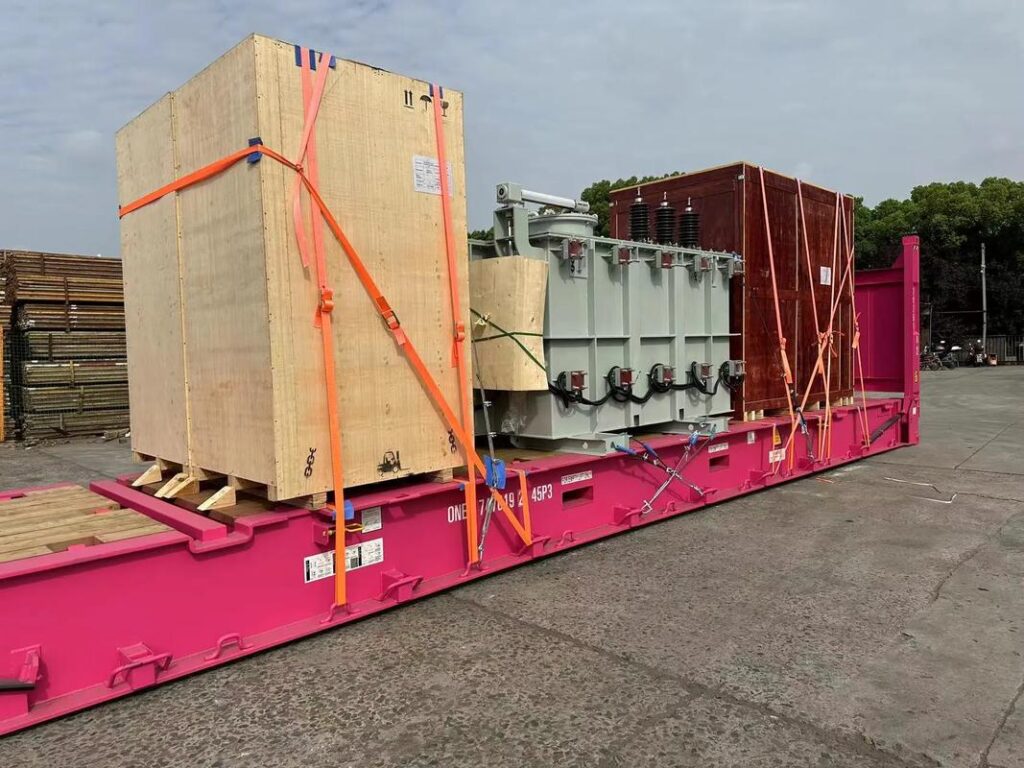
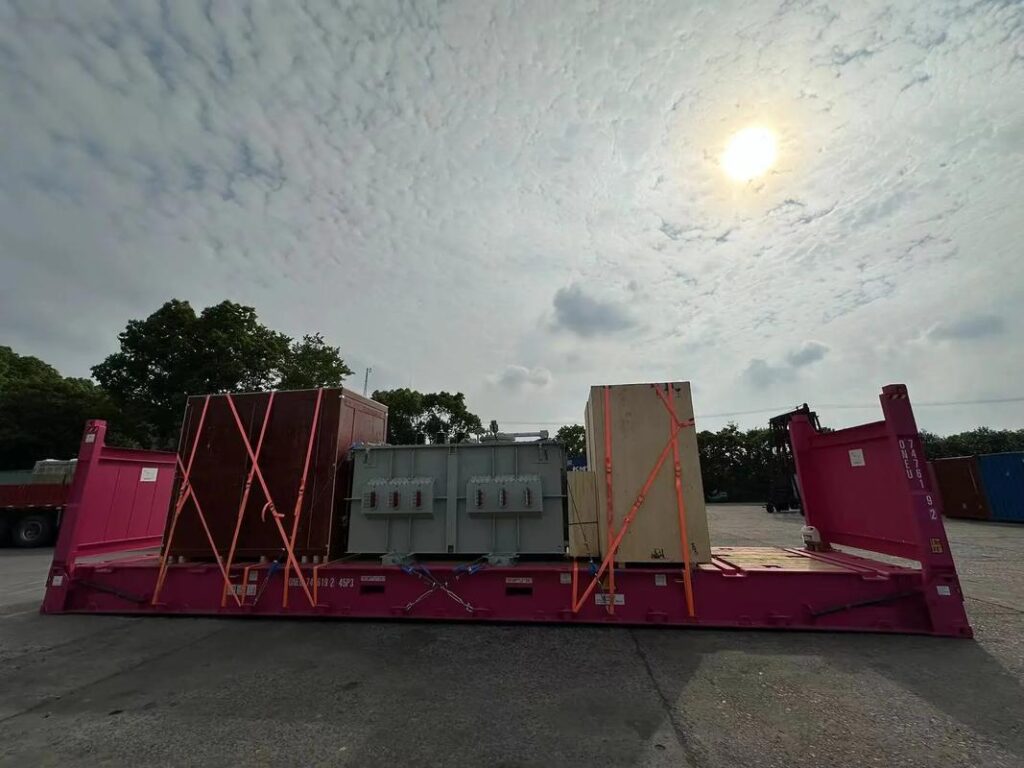
- Heavy Lifts: Items exceeding the standard payload of a container (typically >28 tons). This includes transformers, reactors, and large industrial molds.
- Dimensional Overloads: Items that physically cannot fit into a standard 20′ or 40′ box. Think wind turbine blades, construction cranes, or large yachts.
- Complex Assemblies: Entire production lines that must be dismantled, shipped in multiple formats (containers, crates, and loose), and reassembled at the destination.
The primary routes from China to the West—specifically the trans-Pacific to the US West Coast (Los Angeles/Long Beach) and the Asia-Europe route via the Suez Canal to Northern Europe (Hamburg/Rotterdam)—are crowded with mega-vessels. While these ships carry thousands of containers, they have limited capacity for heavy lifts or deck cargo. Solving this puzzle requires two distinct strategies: Specialized Containers and Breakbulk/RO-RO Vessels.
Chapter 2: The Art of the Special Cabinet (特种柜)
When cargo is too big or too heavy for a standard box but too valuable or sensitive to be left exposed on deck, we turn to specialized containers. China’s manufacturing hubs, particularly around Shanghai, Ningbo, and Qingdao, are experts in utilizing these.
1. The Flat Rack (FR)
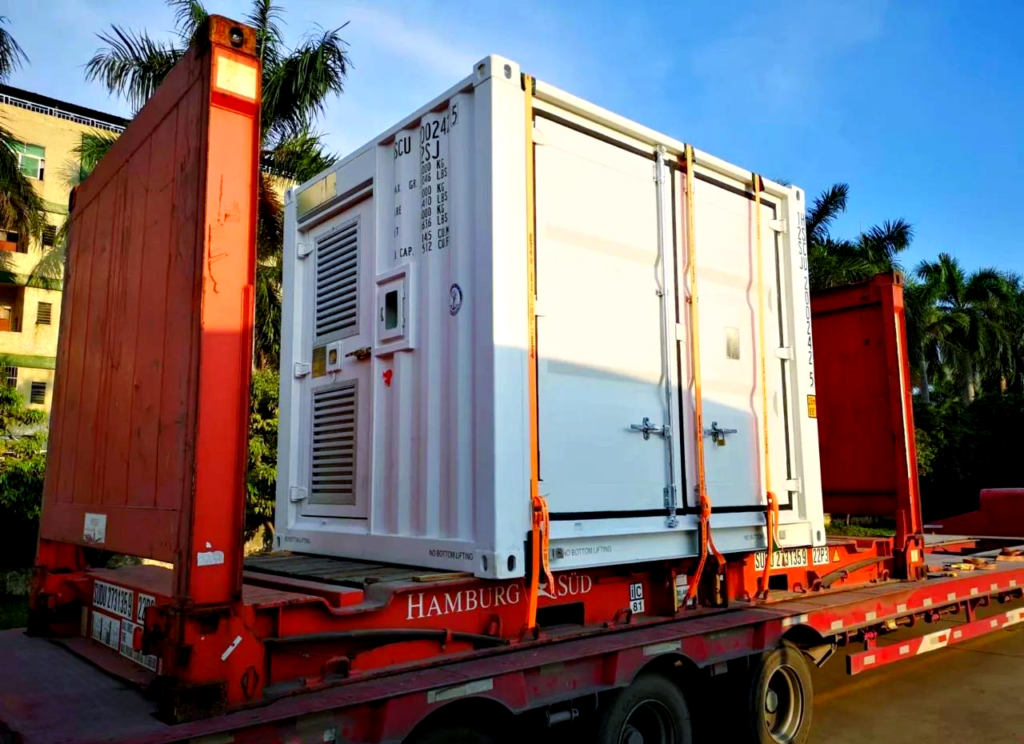
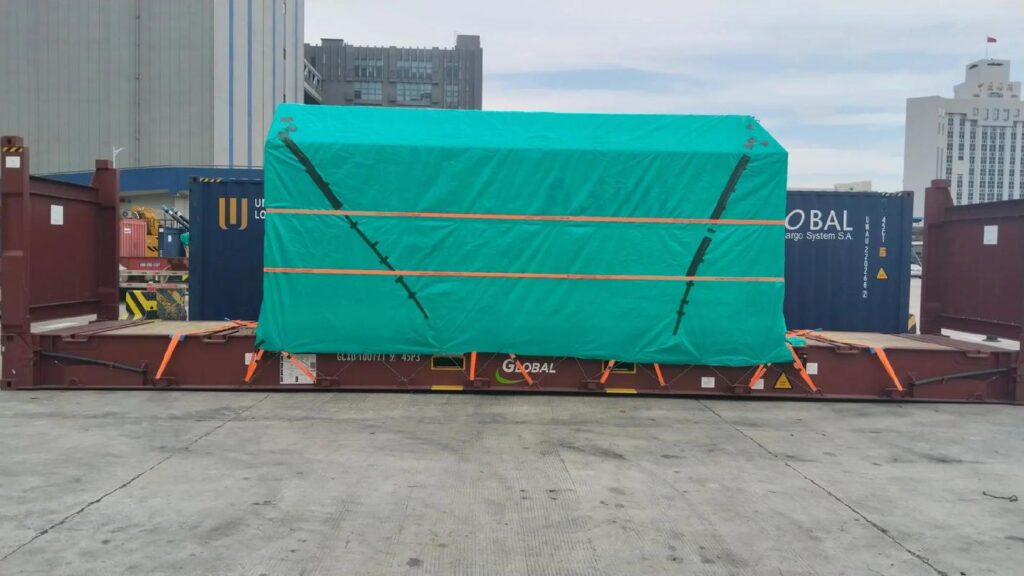
Imagine a standard container cut down to its floor, with walls that can be collapsed. This is the Flat Rack.
- Use Case: Ideal for heavy machinery, pipes, boats, and vehicles.
- Expertise Required: The challenge isn’t just fitting the item, but securing it. A specialist calculates the lashing plan. On a rolling ship, a 30-ton excavator exerts immense lateral forces. We use high-tensile steel wires, chains with certified tensioners, and wooden chocking to create a matrix that locks the cargo to the rack. A mistake here leads to the cargo shifting and puncturing the ship’s hull.
2. The Open Top (OT)
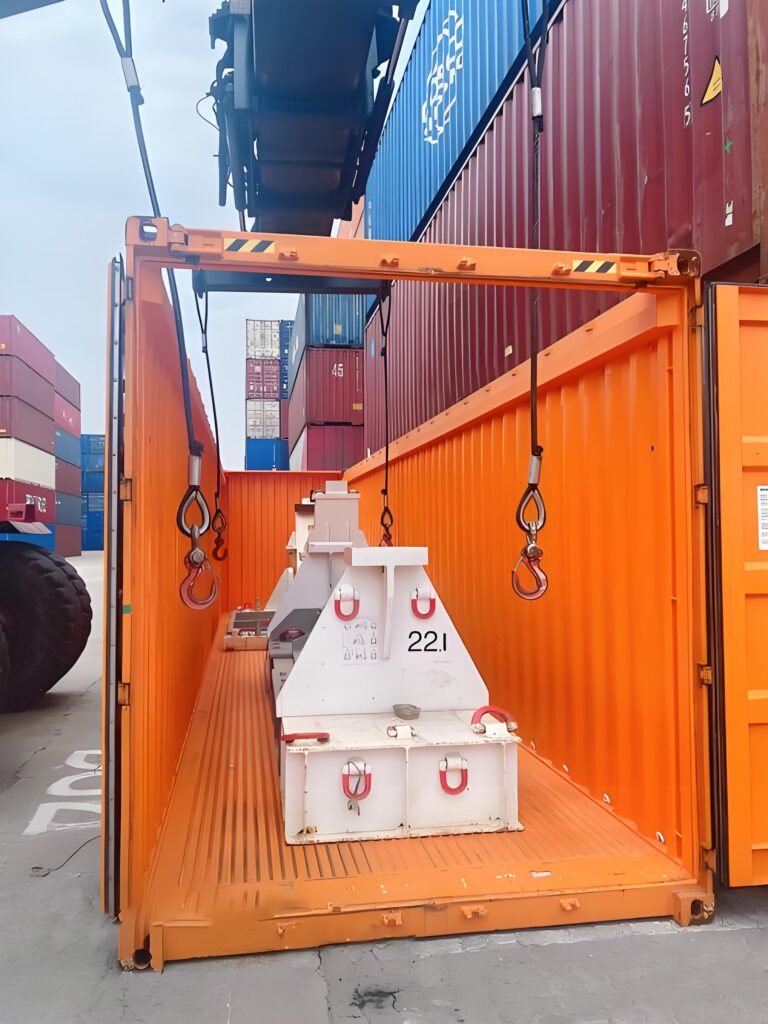
For cargo that is too tall for a standard door, but needs protection from the elements.
- Use Case: Tall machinery, glass panels, or marble slabs.
- Expertise Required: Loading is done via crane from the top. The expert must ensure the tarpaulin (the “roof”) is securely fastened and waterproofed, and that the cargo is stowed in a way that prevents water accumulation (ponding) which can collapse the roof.
3. The Platform (PF)
A simple, thick steel base with no walls or posts.
- Use Case: Extremely heavy items like power generators or large castings.
- Expertise Required: Weight distribution. Unlike a standard container, the weight is not spread across a floor structure. The specialist must ensure the load is evenly distributed to match the vessel’s cell guides and deck strength.
The Booking Strategy: Securing space for these is a nightmare for amateurs. There are fewer special cabinets than standard ones. A China-based expert uses their relationship with carriers (like COSCO, OOCL, or Hapag-Lloyd) to pre-book equipment and ensure the vessel’s deck has the structural reinforcement (lashings and strongpoints) to accommodate the load.
Chapter 3: When Boxes Fail – The World of Breakbulk and RO-RO
When cargo is too massive for any container—such as a 100-ton transformer or a 70-meter wind blade—we move to Breakbulk (loose cargo) or RO-RO (Roll-on/Roll-off).
Breakbulk: The Return to the Old School
Breakbulk involves loading individual pieces of cargo directly into the hold or onto the deck of a ship.
- The Vessels: We use Multi-Purpose Vessels (MPVs) or Heavy Lift Vessels. These ships are equipped with their own massive cranes (often with 500+ ton lifting capacity).
- The Port Challenge: Most modern container ports are not designed for Breakbulk. An expert must identify secondary ports or specific terminals in China (like those in Tianjin or Lianyungang) that have the heavy-lift gear and open storage areas.
- The Stowage Plan: This is a 3D chess game. The heaviest items must be placed at the bottom of the hold to maintain the ship’s center of gravity. Lighter, fragile items go on top. The expert must also consider the unloading sequence at the destination port (e.g., Rotterdam or Houston). If you need Item C first, it must be the last item loaded.
RO-RO: Floating Parking Lots
For wheeled cargo (trucks, buses, tractors, construction vehicles), RO-RO is the king of efficiency.
- The Process: Vehicles are driven directly onto the ship via a ramp.
- The Expertise: It sounds easy until you factor in the height of the ramp, the turning radius on the ship’s decks, and the securing of the vehicles against rolling. Furthermore, if the vehicles are new, they must be transported without mileage accumulation, requiring specialized lashing to prevent the wheels from turning during transit.
Chapter 4: The Ground Game – From Factory Floor to Port Gate
Solving the ocean transport is only half the battle. The inland journey within China is often more perilous.
Road Surveys and Permits
Moving a 60-ton transformer from a factory in interior Sichuan to the port of Shanghai is a military-style operation.
- Route Survey: A specialist drives the route beforehand. They measure bridge heights, check roadbed strength, and identify low-hanging power lines.
- Escort Vehicles: In China, oversized loads require police escorts. The expert coordinates with local traffic police to close lanes and reroute traffic.
- Axle Load Management: Trucks have legal weight limits per axle. For超重 (overweight) cargo, specialized hydraulic modular trailers are used to distribute the weight across dozens of axles.
Customs and Documentation for the Unusual
Chinese Customs (GACC) is highly suspicious of irregular cargo. A standard container scanner cannot scan a 40-ton press.
- Physical Inspection: Customs may require a physical inspection. A specialist prepares the documentation to justify why the cargo is OOG and arranges for a safe unpacking/repacking area if needed.
- HS Code Classification: Misclassifying a complex machine can lead to massive fines. Experts ensure the HS code reflects the exact nature of the cargo to avoid delays.
Chapter 5: Case Studies in Complexity
To illustrate the level of service required, let’s examine two hypothetical scenarios handled by a China-based expert. Case Study 1: The Wind Farm Project (China to Germany)
- Cargo: 20 sets of wind turbine components (blades, nacelles, towers). Each blade is 65 meters long.
- Solution: This cannot go by container. The expert charters space on a Heavy Lift Vessel.
- Execution: The blades are transported via river barge from the factory to the port of Shanghai, then lifted onto the deck. Custom cradles are built to support the aerodynamic shape. The nacelles (heavy and delicate) are secured below deck. The expert manages the Letter of Credit (L/C) to ensure payment is released only after the strictest loading photos are verified.
Case Study 2: The Chemical Plant Relocation (China to Texas)
- Cargo: An entire chemical processing line weighing 800 tons.
- Solution: A mix of Flat Racks for the reactors and Breakbulk for the distillation columns.
- Execution: The cargo is packed in anti-rust, vacuum-sealed wrapping to survive the 30-day ocean journey. The expert books a direct vessel to Houston to avoid transshipment risks (where cargo is moved between ships). Upon arrival, the expert coordinates with US customs for a smooth entry under the Temporary Import Bond (TIB) since the machinery is for a trade show.
Chapter 6: Why China is the Global Hub for This Expertise
There is a reason the world comes to China for this. It’s not just the manufacturing; it’s the ecosystem.
- Equipment Availability: Chinese ports have the highest concentration of Flat Racks and Open Tops in the world.
- Skilled Labor: The lashing teams in Ningbo and Qingdao are arguably the best in the world, accustomed to securing bizarrely shaped objects daily.
- Cost Efficiency: While the service is premium, the base cost of the equipment and the labor in China remains competitive compared to starting the journey from Europe or the US.
- Integrated Supply Chains: A Chinese expert can coordinate the manufacturing, the packing, the insurance, and the freight in one seamless loop.
Conclusion: Certainty in an Uncertain World
Shipping a standard shoebox from China to the US is a commodity. Anyone can do it. Shipping a 50-ton stamping press is a liability. Only an expert can do it. When you choose a partner for oversized cargo, you are not buying a “shipping rate.” You are buying peace of mind. You are paying for the engineering calculation that ensures the cargo won’t shift, the relationship with the carrier that ensures space is available, and the local knowledge that clears Chinese customs without a hitch. In the high-stakes game of global project logistics, don’t gamble on a generalist. Invest in a specialist who treats your oversized cargo not as a burden, but as an engineering challenge waiting to be solved.


