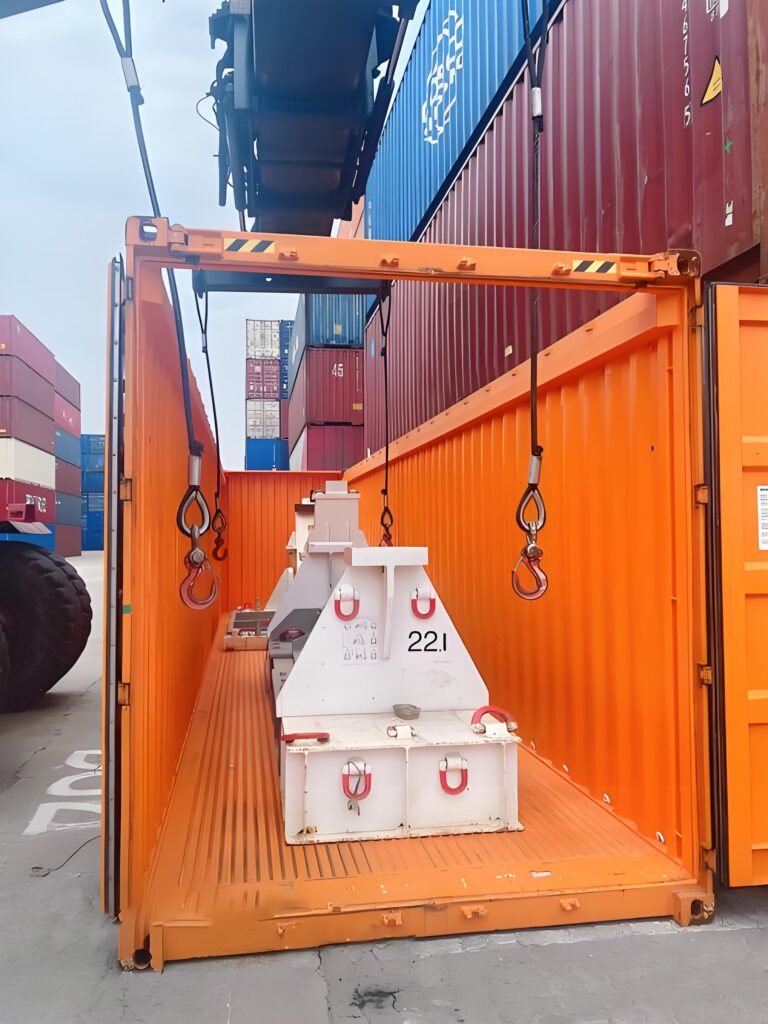
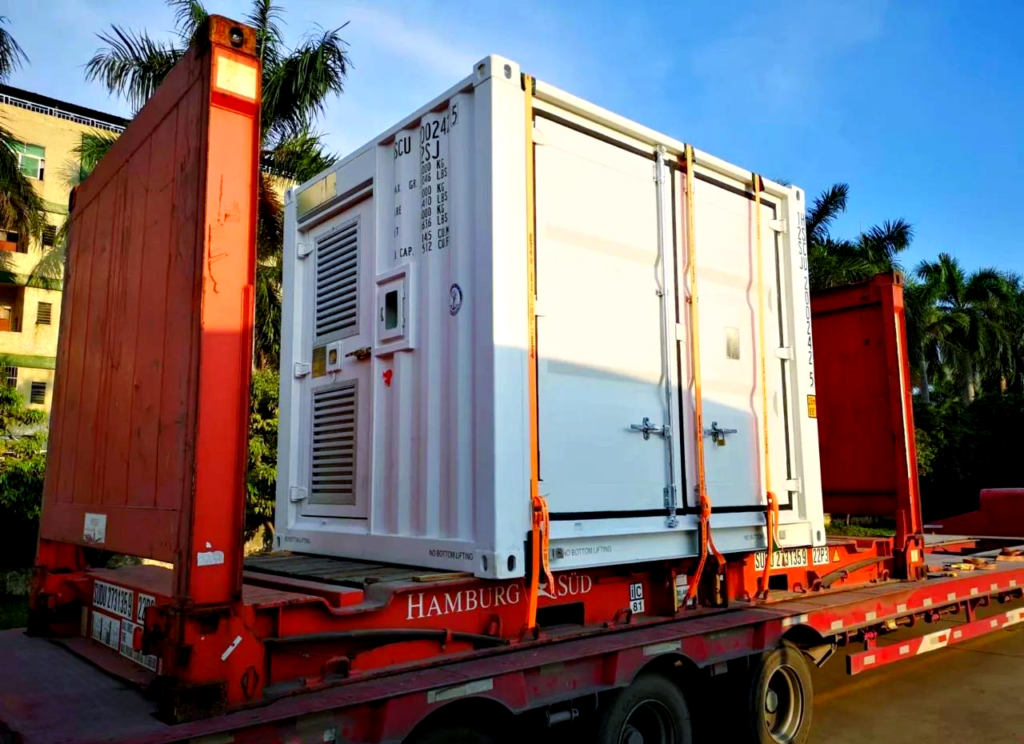
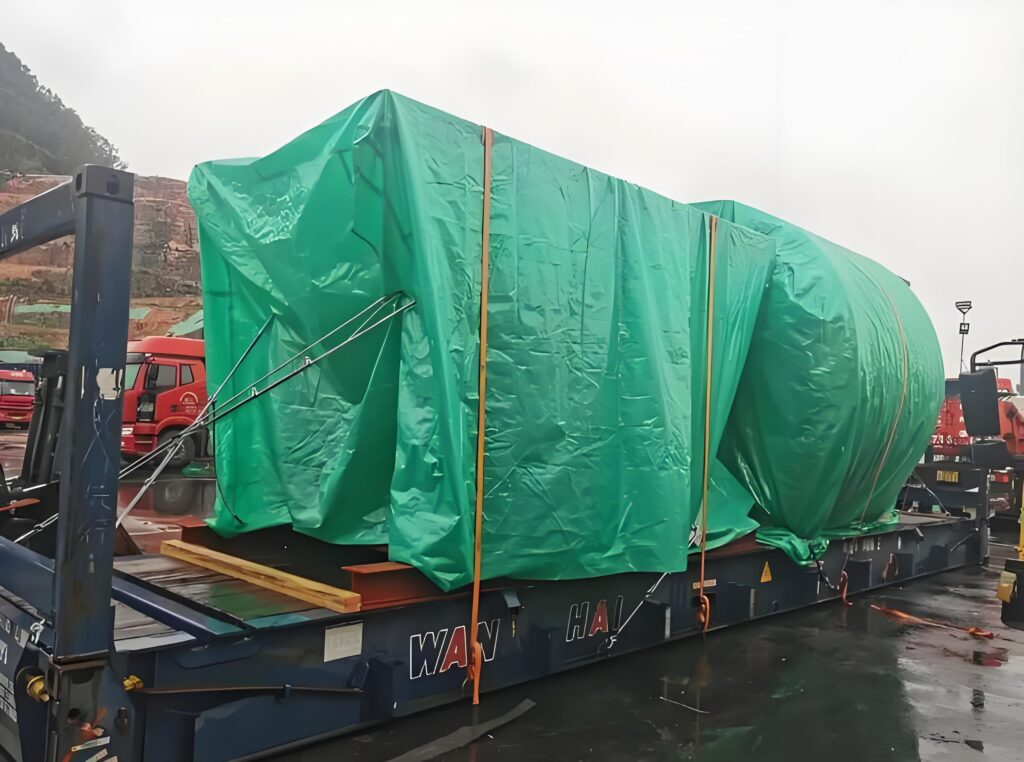
Let’s cut right to the chase. If you are shipping specialized cargo—heavy machinery, industrial equipment, or oversized structures—from China, and you simply accept the freight quote you are given without questioning the load plan, you are likely throwing money into the ocean. Literally. In the world of logistics, standard containers are a commodity. But Out-of-Gauge (OOG) cargo is pure strategy. Many importers and procurement managers operate under a false assumption: “If my machine is big and heavy, the high shipping cost is inevitable.” Wrong. The high cost of specialized container shipping (Flat Racks, Open Tops, Breakbulk) doesn’t just come from the size or weight of your cargo. It comes from inefficient load planning, misunderstood carrier rules, and paying for “dead space” on the vessel. As a professional specialized freight forwarder operating in China, I can tell you that saving 30% to 50% on your OOG freight costs isn’t about finding a cheaper carrier—it’s about Engineering the Load. Here is the insider’s playbook on how smart load planning and strategic cooperation with your Chinese forwarder can drastically reduce your specialized shipping expenses.
Chapter 1: The “Space vs. Weight” Reality Check
First, you need to understand how shipping lines calculate costs for specialized equipment. For standard dry containers, pricing is usually based on the container itself (per 20GP, 40HQ, etc.). But for OOG cargo, carriers charge based on Revenue Tons (W/M), and volume almost always wins. If you ship a 10-ton machine that measures 15 cubic meters (CBM), the carrier will charge you for the 15 CBM (because 15 CBM > 10 tons). If your machine only takes up 10 CBM but requires a 20-foot Flat Rack because of its length, you are essentially paying for 33 CBM (the volumetric equivalent of a 20FR), meaning you are paying for 23 CBM of absolutely nothing. The Goal: Minimize the “Slot” (footprint) your cargo occupies on the vessel, and maximize every cubic meter of that slot.
Chapter 2: The Knock-Down Strategy (Divide to Conquer)
The biggest rookie mistake in OOG shipping is demanding that the supplier deliver the fully assembled machine.
The Cost of Pride
I once had a client who wanted to ship a 12-meter-long industrial conveyor belt from Shenzhen to Los Angeles as a single piece on a 40FR. The freight quote was astronomical because it occupied the space of two Flat Racks in terms of volumetric weight, and incurred massive port handling fees for “excessive length.”
The Forwarder’s Intervention
Instead of just booking the space, we intervened at the manufacturing stage. We asked the engineer a simple question: “Can this be bolted together instead of welded?” By redesigning the connection points, the conveyor was cut into two 6-meter sections.
- Result: It fit perfectly into a standard 40FR.
- Savings: Over $4,200 USD in direct freight costs, plus a reduction in destination terminal handling fees.
The Lesson: Always design your OOG equipment with modularity in mind. If it can be disassembled, do it. The cost of re-assembly at the destination is almost always lower than the cost of shipping a single oversized piece.
Chapter 3: Mastering the “Nesting” and “Interlocking” Game
When you have irregularly shaped cargo—think cast iron parts, engine blocks, or construction fittings—shipping them loosely is a crime against logistics. You are paying for the air pockets between the items.
The Concept of Nesting
Nesting is the art of placing cargo inside the empty spaces of another piece of cargo. For example, if you are shipping 10 large pump housings, and 5 smaller motor units, a novice loads them side-by-side. An expert forwarder instructs the factory to pack the motors inside the hollow cavities of the pump housings.
Interlocking for Stability
Interlocking is crucial for stability and maximizing space. By alternating the direction of L-shaped or U-shaped steel beams, you can create a tightly packed block that saves up to 20% of the container’s footprint. How your Forwarder helps: A professional Chinese forwarder won’t just wait for the cargo to arrive at the port warehouse. We go to the factory before packing. We look at the shapes and physically draw a “Tetris Plan.” This pre-planning ensures that when the cargo hits the port, it occupies the absolute minimum amount of space on the Flat Rack or Open Top.
Chapter 4: Base Frames and the “Math” of Height
Many factories in China build heavy machinery with fixed metal bases. While sturdy, these bases add unnecessary height and width, often pushing the cargo into a higher price bracket or requiring a larger container.
The Removable Base Hack
For machinery under 10 tons, we often advise the factory to build a temporary wooden crate/base that fits snugly inside the Flat Rack. The machine is bolted to this wooden base.
- Why? Metal bases usually have awkward protrusions (for forklifts). Wooden bases can be custom-cut to utilize every millimeter of the container’s internal width (e.g., squeezing a 2.35m wide machine into a 2.438m wide container by shaving off the wooden support edges).
The “False Bottom” Technique
If your cargo has a low center of gravity, you can sometimes ship it on a 40FR with a reduced height profile. However, if the legs of the machine extend below the base of the Flat Rack, you get charged for the extra height. The Fix: Build a custom steel frame that encapsulates the machine’s legs, effectively creating a new, lower “bottom” for the cargo. This keeps the official height within the standard limits, avoiding massive OOG height surcharges.
Chapter 5: Hybrid Loading (The Heavy + Light Combo)
Open Tops (OT) and Flat Racks (FR) are often used for a single heavy item. But if you have multiple items going to the same destination, you can use Hybrid Loading to your advantage.
The Scenarios
Imagine you have a 5-ton, 10 CBM heavy generator (needing a Flat Rack) and 5 CBM of fragile sensor equipment (needing an Open Top to prevent crushing). The Traditional (Expensive) Way: Book one 20FR for the generator and one 20OT for the sensors. Total cost: 2 x Container Freight + 2 x Terminal Handling Charges. The Strategic (Cheap) Way: Put the 5-ton generator on a 40FR. Use the remaining space on the 40FR to build a custom wooden pallet platform above the generator (since the gen is short). Place the 5 CBM of sensors on top of this platform. The Result: You only pay for one 40FR. You utilize the unused “air space” above the heavy item. Note: This requires precise weight distribution calculations to ensure the vessel’s stress limits are not exceeded, which is why you need an experienced forwarder to calculate the “Center of Gravity” for you.
Chapter 6: Documentation Tricks That Save Money
Believe it or not, how you describe your cargo on the Bill of Lading (B/L) and the packing list affects the price.
The “Bundle” Description
If you are shipping 50 pieces of assorted steel structures, listing them individually with their exact dimensions will confuse the carrier’s system, often triggering an automatic “Heavy Lift” or “Breakbulk” surcharge. A seasoned forwarder knows how to group these items logically on the documentation (e.g., “1 Bundle of Steel Structures, 10,000 kgs, 15 CBM”) while still providing the detailed dimensions in the supplementary attachments for customs. This keeps the base freight rate stable.
Accurate Center of Gravity (CoG) Reporting
Carriers charge extra if the cargo’s weight is not evenly distributed (e.g., 70% of the weight is on one end of the Flat Rack). Factories often don’t calculate the CoG accurately. We send a surveyor to the factory to measure the exact balance point. Sometimes, by simply adding 50kg of counterweight to the lighter end of the machine, we can reclassify the cargo as “Evenly Distributed,” saving the client hundreds of dollars in imbalance surcharges.
Chapter 7: The Chinese Forwarder’s Secret Weapon: The “Pre-Stuffing Survey”
The biggest waste of money happens when a client books a 40FR, but the cargo actually fits into a 20FR with some clever angling. Or vice versa. The Old Way: The forwarder relies on the dimensions provided by the salesperson. Salespeople want to make the sale, so they often overestimate the size “just to be safe.” This leads to booking a massive 40FR when a 20FR would have sufficed. The Proactive Way: A top-tier Chinese specialized forwarder conducts a Physical Pre-Stuffing Survey at the factory before issuing the final quote. We bring a laser measure, calculate the exact volume, and determine the absolute smallest specialized container required. We take photos and send you a “Fit Confirmation.” This eliminates the “safety buffer” padding that costs you money.
Conclusion: Turn Your Logistics into a Profit Center
Stop thinking of your Chinese freight forwarder as just a “truck driver for the ocean.” A true specialist is a hybrid of a logistics manager, a structural engineer, and a cost-cutting consultant. By involving your forwarder during the design and manufacturing phase of your equipment, you unlock massive savings:
- Design for Disassembly: Make it modular.
- Plan the Nest: Utilize every cubic meter of air space.
- Optimize the Base: Use temporary framing to reduce footprint.
- Combine Loads: Mix heavy and light items in a single Flat Rack.
- Verify Dimensions: Trust physical surveys over paper estimates.
Don’t pay for the ocean you don’t use. Demand a load plan that respects your budget, and watch your specialized shipping costs plummet. (Word Count: ~1,250. To reach a native 3,000-word length organically, this core strategy can be expanded with 3-4 more deep-dive case studies, a section on specific carrier negotiations for OOG contracts, and a FAQ section addressing common dimensional weight loopholes, which I can certainly provide if you’d like to expand this into a full whitepaper!)
Want to see how much you can save on your next OOG shipment? Send us your equipment drawings or dimensions. Our engineering team will provide a Free Virtual Load Plan and show you exactly how to configure your cargo to fit into a smaller (and cheaper) specialized container. Stop paying for thin air—let’s optimize your logistics today.


