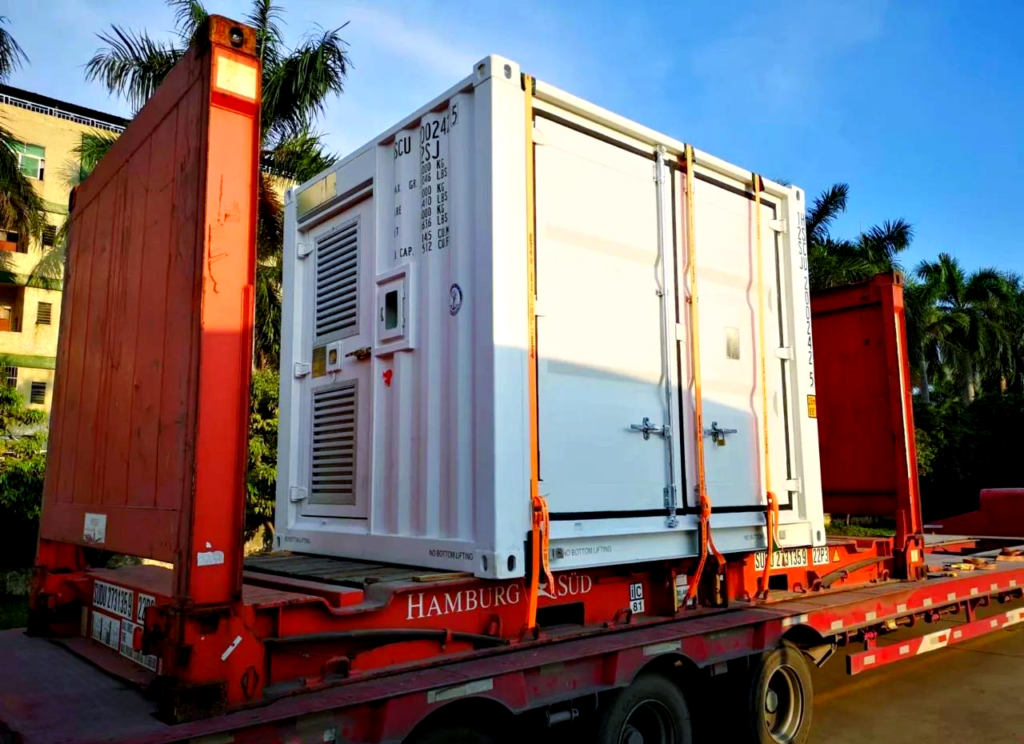
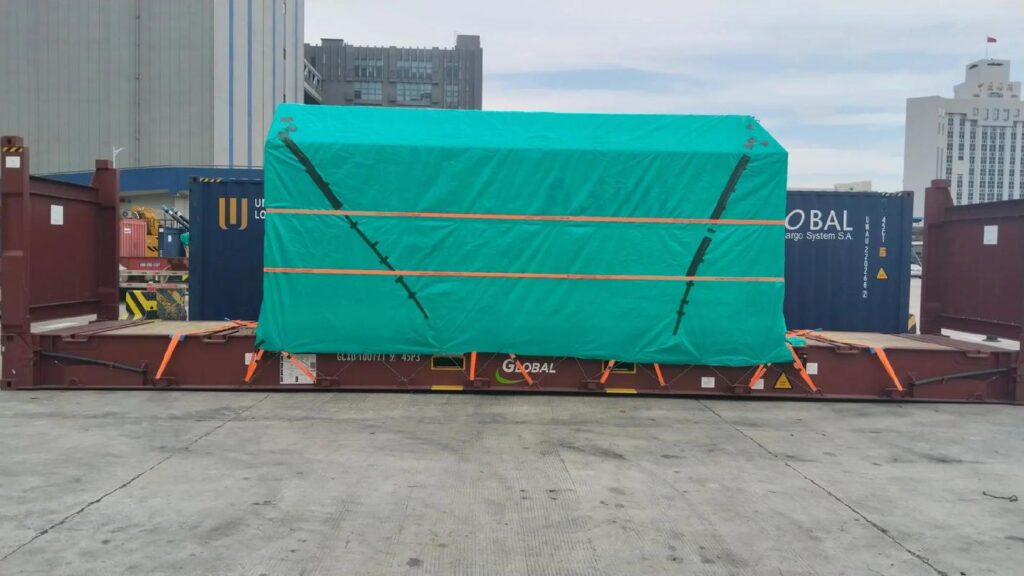
The global supply chain is witnessing one of the largest mass migrations of manufacturing history. Driven by rising labor costs and geopolitical shifts, hundreds of Chinese factories are relocating their production lines, heavy machinery, and industrial infrastructure to Southeast Asia. Vietnam, Thailand, and Indonesia are the primary beneficiaries of this exodus. However, while moving standard consumer goods (FCL/LCL) across the South China Sea is now a commoditized, highly competitive business, moving the factories themselves is a completely different ball game. When you need to ship a 25-ton injection molding machine to an emerging industrial park in Binh Duong, Vietnam, or a massive steel structure to a power plant near Jakarta, standard logistics playbooks go out the window. You are dealing with Specialized Containers (Out-of-Gauge – OOG)—Flat Racks, Open Tops, and heavy-lift cargo. Furthermore, you don’t want the headache of dealing with foreign customs, unfamiliar port authorities, and uncooperative local truckers. You want “Double Clearance, Tax-Included, and Door-to-Door” (DDP/DDU) service. In the world of freight forwarding, offering a DDP quote for a 40-foot Flat Rack is easy. Actually executing it without costly delays, hidden fees, or damaged cargo is what separates the true ASEAN logistics specialists from the fly-by-night brokers. This article pulls back the curtain on the complexities of shipping specialized containers from China to Vietnam, Thailand, and Indonesia under DDP/DDU terms. We will explore the unique challenges of each destination, reveal the hidden costs that plague inexperienced shippers, and demonstrate how an expert logistics partner can save your overseas factory setup project.
Chapter 1: The “Perfect Storm” of OOG Logistics in Southeast Asia
If you are an engineer or a procurement manager tasked with relocating equipment to Southeast Asia, you need to understand why your regular courier or standard freight forwarder will likely fail you when it comes to OOG cargo. 1. The Infrastructure Bottle-Neck Unlike the highly automated ports of Shanghai or Shenzhen, many terminals in Southeast Asia struggle with specialized equipment. A 40-ton Flat Rack arriving in Ho Chi Minh City or Jakarta requires specific heavy-lift cranes and specialized trailers (low-bed trailers). If your logistics provider hasn’t pre-booked this equipment, your container sits at the port, accruing demurrage and detention (D&D) charges daily. 2. The Regulatory Roulette Customs clearance for heavy machinery in ASEAN is a minefield.
- In Indonesia, used machinery imports are heavily restricted and require strict technical appraisals to prove the equipment isn’t “junk.”
- In Vietnam, the Temporary Import for Re-export (which is basically what DDP is) requires meticulous documentation matching the investment license of the recipient factory.
- In Thailand, the Thai Customs Department recently updated its HS code classifications for industrial parts, catching many importers off guard with sudden 20% import duties.
3. The “Last Mile” Brutality Getting a 12-meter long, 4-meter wide steel beam from the port to a remote industrial park often involves navigating narrow village roads, weak bridges, and low-hanging power lines. Police escorts are frequently required. A standard DDP quote rarely accounts for the actual difficulty of this terrain. The Core Truth: When you ship OOG cargo DDP to ASEAN, you are not buying a shipping service; you are buying a risk mitigation strategy.
Chapter 2: Indonesia – Taming the “Customs Dragon” for Heavy Machinery
Indonesia is arguably the most challenging market in ASEAN for specialized container DDP. The sheer size of the archipelago, combined with a notoriously complex customs bureaucracy, makes it a nightmare for the uninitiated. Let’s say you are shipping a complete production line from Ningbo to Jakarta (Tanjung Priok Port) for a new textile factory in Karawang.
The Customs Hurdles (Bea Cukai)
Indonesia applies a strict “National Standard” (SNI) to many industrial imports. More importantly, Indonesian Customs operates on a Yellow/Green/Red line system that is highly subjective.
- The Used Machinery Trap: If your equipment looks even slightly weathered, Indonesian Customs may classify it as “used machinery,” which triggers an immediate ban or an excruciatingly slow permit process.
- The Valuation Battle: Indonesian Customs often disputes the declared Commercial Invoice value, demanding duties based on their internal (often inflated) price index.
The Expert Strategy: A professional forwarder doesn’t just file the paperwork. We pre-audit the machine’s condition, ensure the HS codes align perfectly with the Indonesian Harmonized System, and provide a highly detailed packing list that leaves zero room for interpretation. We also leverage our relationships with local customs brokers in Jakarta to ensure the shipment stays on the “Green Line” (fast-track clearance).
The Inland Haulage Reality
Once cleared, moving a 40FR through Jakarta’s traffic is a tactical operation. Indonesian bridges have strict weight limits (often 40 tons Gross Vehicle Weight). If your machine weighs 28 tons, plus the 5-ton Flat Rack, plus the 10-ton trailer, you are over the limit. The Fix: We calculate the exact GVW and arrange for multi-axle hydraulic trailers if necessary. We also secure the required police escorts and road opening permits (SATNIAL) from the Indonesian Ministry of Transport before the vessel even departs China.
Chapter 3: Vietnam – The “Paperwork Maze” and Last Mile Precision
Vietnam has absorbed the lion’s share of manufacturing relocating from China. Whether it’s electronics in Bac Ninh, furniture in Binh Duong, or textiles in Hai Phong, the demand for OOG logistics is exploding. Shipping from China to Vietnam is geographically short (sometimes just 2-3 days sailing), but operationally long.
The Documentation Trap
For DDP shipments into Vietnam, the cargo is technically imported temporarily. Vietnamese Customs (General Department of Vietnam Customs) requires a flawless alignment between:
- The Investment License of the Vietnamese factory.
- The Equipment List approved by the Vietnamese government.
- The Actual Packing List and Bill of Lading.
If the dimensions on the B/L differ by even 10cm from the approved equipment list, the cargo is held at the port until a government inspection is completed. The Cost: Delays of 2-4 weeks and fines up to $2,000 USD. The Expert Strategy: We conduct a “Pre-Loading Survey” at the Chinese factory. We measure the cargo with laser tools, take high-resolution photos, and draft a preliminary packing list. This draft is sent to our Vietnamese partner to cross-reference with the client’s factory license before the container is even booked. This proactive step eliminates 95% of potential customs holds.
Navigating the Industrial Park Gates
Vietnamese industrial parks (IPs) are notorious for their strict entry protocols. Many IPs in the South (like VSIP or Amata) have weight restrictions on their internal roads. If you are delivering a 30-ton press brake on a low-bed trailer, you need to coordinate the exact arrival time with the IP management to avoid peak traffic hours. Furthermore, the unloading at the destination—which is part of the DDP promise—requires a 100-ton capacity mobile crane. We pre-negotiate these crane costs locally to prevent the “surprise invoices” that Vietnamese truckers are famous for.
Chapter 4: Thailand – Navigating the Hub of ASEAN with Open Tops & Flat Racks
Thailand remains the automotive and heavy industry hub of ASEAN. The primary gateway is Laem Chabang Port, supplemented by Bangkok Port and the Eastern Seaboard ports like Map Ta Phut. Thailand is generally more efficient than Indonesia and Vietnam regarding customs clearance, but it presents unique challenges in multimodal transport.
The Open Top (OT) Advantage
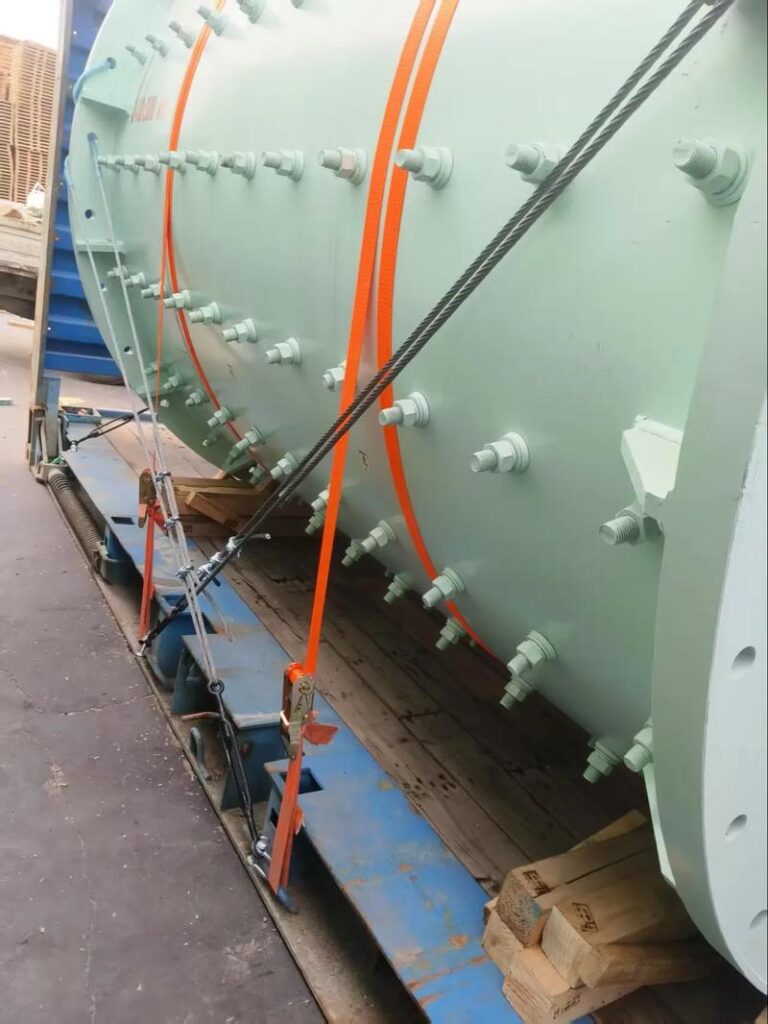
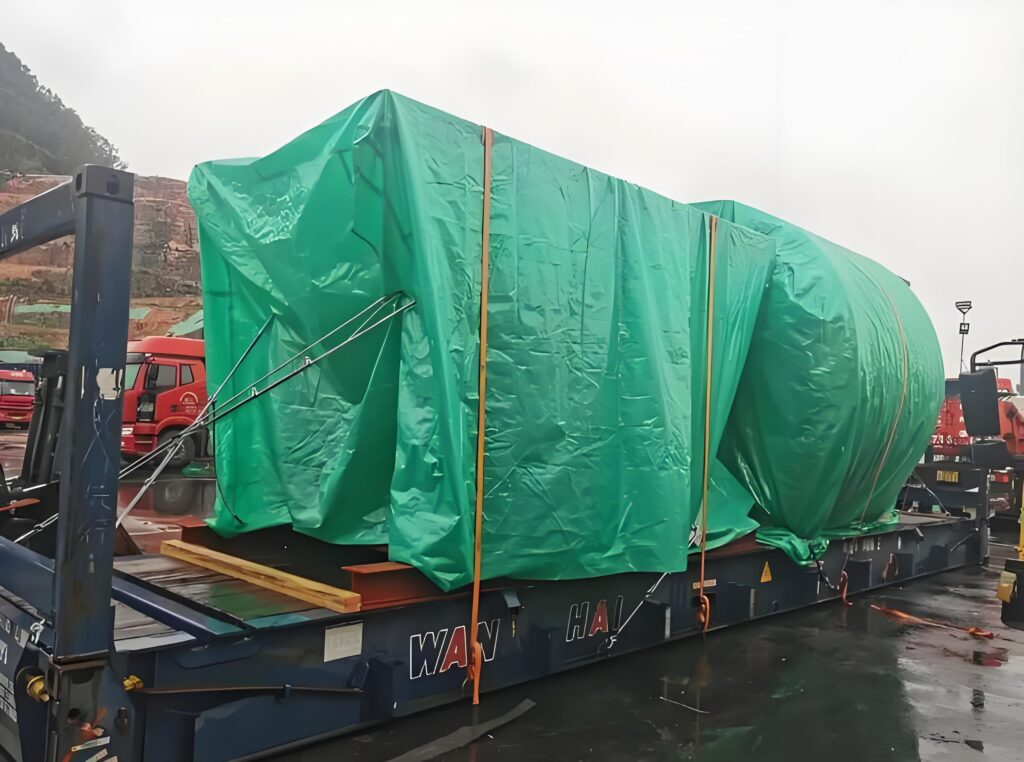
Many industrial components, such as oversized tanks or generators, are shipped via 40FT Open Tops because they are too tall for standard containers but don’t require the heavy-lift capabilities of a Flat Rack. Thai customs allows for “top lifting” inspections using port cranes. However, if your cargo is not properly lashed inside the OT, and it shifts during the rough seas of the Gulf of Thailand, Thai Customs will reject the unloading due to “safety hazards.” The Expert Strategy: We utilize specialized lashing teams in Chinese ports like Shanghai and Shenzhen. We don’t just use standard wood bracing; we use steel welding and anti-slip mats for OT shipments to Thailand. We provide a “Lashing Certificate” that satisfies both the shipping line and Thai Customs.
Beyond the Port: Cross-Border and Upcountry Delivery
A huge advantage of Thailand is its robust highway system, allowing for efficient trucking to neighboring countries (Myanmar, Laos, Cambodia, and Southern China). If your final destination is an OOG delivery to an upcountry province like Chiang Mai or Khon Kaen, you are looking at a 500km+ journey on winding roads. The Fix: For long-haul OOG deliveries in Thailand, we mandate the use of GPS-tracked, multi-axle trailers. We also split the customs clearance at Laem Chabang but arrange for a “Through Transport” permit, allowing the specialized truck to carry the cargo directly to the upcountry factory without offloading at a transit warehouse. This saves 3-5 days of transit time and significantly reduces the risk of damage.
Chapter 5: The Anatomy of a True “Door-to-Door” Quote
When you solicit quotes for your OOG shipment to ASEAN, you will receive a wide array of prices. Be very wary of the lowest bidder. A comprehensive, honest DDP quote for a 40FR or 40OT shipment from China to ASEAN should explicitly itemize the following. If a forwarder cannot explain these items to you, do not hire them.
- Terminal Handling Charges (THC) – Origin & Destination: OOG cargo attracts much higher THC because it requires special cranes. In ports like Jakarta or Ho Chi Minh, heavy-lift surcharges are applied per ton.
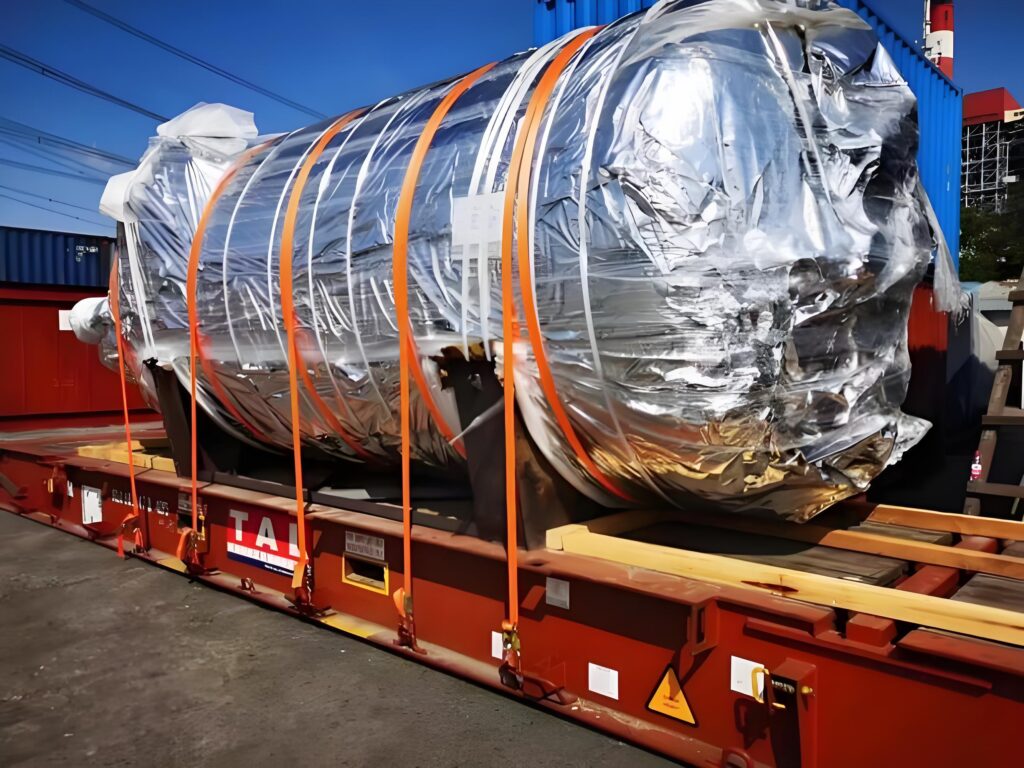
- Lashing and Securing Fees: This should be done at a specialized warehouse or the port CFS (Container Freight Station) in China. Never let the factory lash an OOG item themselves; if it’s done poorly, the shipping line will reject the container.
- Customs Duties and VAT: The forwarder must confirm the exact HS code and the applicable import duty rate in the destination country. (Pro Tip: Ask the forwarder to provide the HS code they are using for the quote. Look it up yourself on the destination country’s customs website to verify the tax rate).
- Chassis/Special Trailer Fees: A standard truck in Vietnam costs $200. A 50-ton low-bed trailer with a police escort permit costs $1,500. The quote must specify which one is being used.
- Unloading at Destination (Crane & Labor): Since it’s DDP, the forwarder is responsible for getting the cargo off the trailer. For a 20-ton machine, this requires a mobile crane. The quote must include a specific allowance for crane rental and manpower.
- Contingency / Demurrage Buffer: Experienced forwarders know that things go wrong. A professional quote will either include a small contingency fee or clearly state the free time allowed at the destination port (usually 3-5 days) and the daily rate thereafter.
Chapter 6: Case Studies – Saving the Factory Setup Project
To illustrate the value of hiring a specialized ASEAN OOG forwarder, here are three anonymized case studies from our recent operations.
Case 1: The 35-Ton Extrusion Line (Shanghai to Jakarta)
- The Client: A major Chinese aluminum manufacturer setting up a plant in Surabaya, Indonesia.
- The Cargo: A 35-ton extrusion press (40FR) and auxiliary tanks (40OT).
- The Challenge: The client initially hired a standard forwarder who quoted a low DDP rate. Upon arrival in Tanjung Perak, the port authorities rejected the heavy-lift crane booking because the forwarder didn’t account for the Ramadan holiday schedule. The cargo sat for 21 days, accruing $4,200 in detention fees.
- The Expert Solution: We were called in to rescue the situation. We negotiated with the port authority, paid expedited crane fees, and utilized our pre-existing heavy-lift chassis contract. We delivered the machines to the factory floor, and although the total cost was slightly higher than the initial bad quote, it was $3,000 cheaper than what the client ended up paying the first forwarder after penalties.
Case 2: The 12-Meter Steel Beams (Shenzhen to Hai Phong, Vietnam)
- The Client: A bridge construction company in Northern Vietnam.
- The Cargo: 80 tons of 12-meter long steel beams (Shipped as 2 x 40FR).
- The Challenge: The beams were too long to turn into the factory entrance. Standard DDP trucking wouldn’t work.
- The Expert Solution: We arranged for the 40FRs to be delivered to a nearby storage yard in Hai Phong. We then hired a local crane company to transfer the beams onto a specialized 14-wheel flatbed truck capable of telescopic extension. We coordinated with the local district police for a Sunday morning delivery when traffic was non-existent. The beams were delivered safely, and the client’s construction project stayed on schedule.
Case 3: The Transformer (Guangzhou to Laem Chabang, Thailand)
- The Client: A power solutions provider in Bangkok.
- The Cargo: A 22-ton electrical transformer (20FR).
- The Challenge: The transformer contained insulating oil, requiring a Dangerous Goods (DG) declaration alongside the OOG handling. Thai Customs strictly prohibits the import of certain types of mineral oils.
- The Expert Solution: We reviewed the MSDS (Material Safety Data Sheet) and confirmed the oil was environmentally friendly and compliant with Thai regulations. We prepared the DG declaration and the OOG permit simultaneously in China. Upon arrival in Laem Chabang, we utilized our “Green Channel” customs broker. The container was cleared and loaded onto a Thai heavy-haul trailer within 48 hours, bypassing the usual 5-day inspection hold for DG/OOG cargo.
Conclusion: Don’t Gamble with Your Heavy Assets
Relocating industrial equipment to Southeast Asia is a high-stakes endeavor. The margins for error are slim, and the costs of delays can run into tens of thousands of dollars, jeopardizing your entire market entry strategy. Shipping specialized containers (Flat Racks, Open Tops, Breakbulk) on a Double Clearance, Tax-Included, Door-to-Door (DDP) basis to Vietnam, Thailand, and Indonesia requires more than just a freight forwarder. It requires a logistics partner with:
- Deep regulatory knowledge of ASEAN customs.
- On-the-ground heavy-haulage networks.
- Meticulous attention to detail in documentation and lashing.
- The financial stability to handle contingencies.
If you are planning an overseas factory setup or need to move heavy machinery to Southeast Asia, do not rely on a standard shipping quote. Contact our specialized OOG logistics team today. We provide comprehensive site surveys, meticulous load planning, and transparent, all-inclusive DDP quotes. Let us handle the complexities of the ocean, the customs, and the roads, so you can focus on what you do best—building your business in ASEAN.


