In the world of international shipping, time is the only true measure of expertise. Anyone can book a standard dry container, but it takes two decades of scars, successes, and near-disasters to truly master the art of Specialized Container Logistics (特种柜物流). For twenty years, I have stood on the docks of Shanghai, Ningbo, Qingdao, and Shenzhen. I have watched the industry evolve from telex releases and fax machines to blockchain and AI. But one thing has never changed: Physics and Regulations. No algorithm can replace the intuition of a veteran when a 40-ton transformer starts shifting on a Flat Rack during a typhoon, or when Chinese Customs decides to inspect a delicate Open Top shipment at midnight. This article is not a sales pitch. It is a masterclass from the trenches. I will walk you through the four pillars of specialized containers—Open Tops (OT), Flat Racks (FR), Reefers (RH), and High Cubes (HC)—from the perspective of a 20-year veteran freight forwarder in China.
Chapter 1: The Open Top (OT) – It’s Not Just a Missing Roof
Many novices think an Open Top is just a box you can load from the top. It is much more.
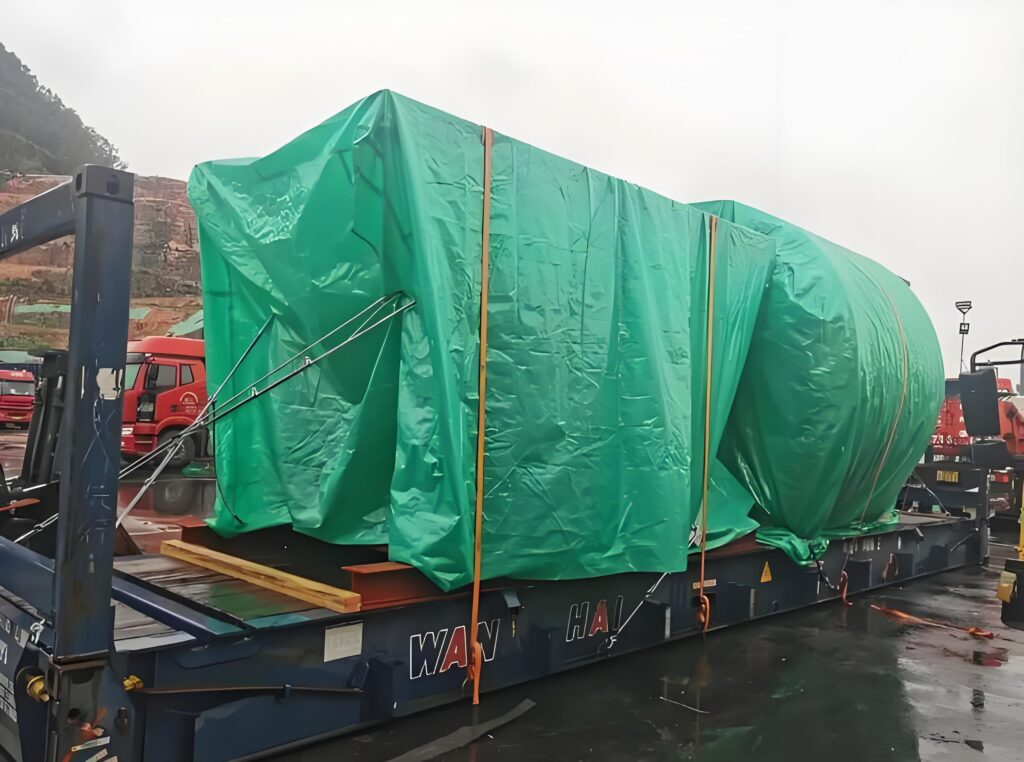
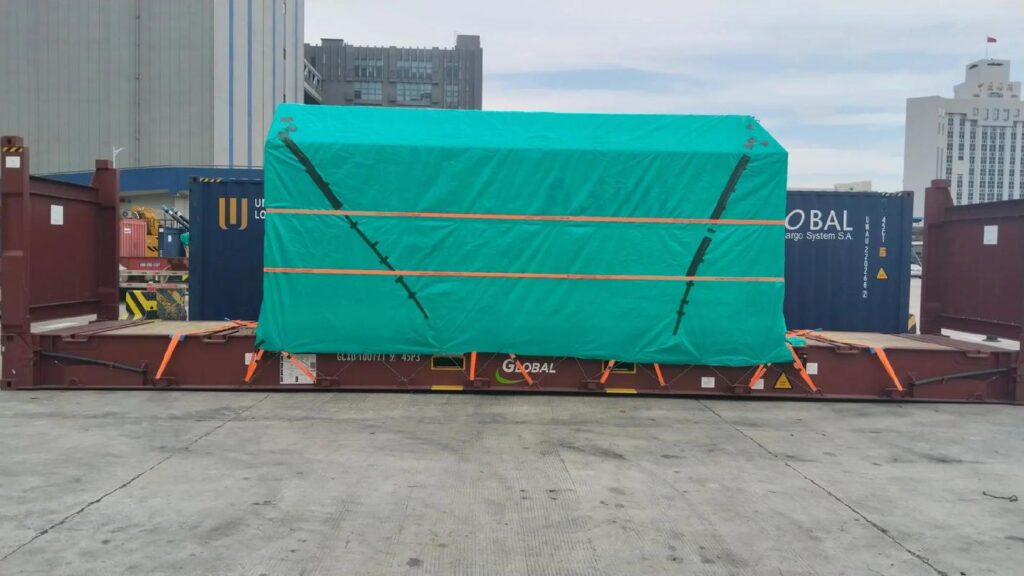
The 20-Year Lesson: The Tarpaulin is Everything
In my early years, I lost a shipment of precision marble blocks because the forwarder used an old, brittle tarpaulin. A storm in the Taiwan Strait tore it open. The cargo was ruined by saltwater.
- The Veteran’s Protocol: Today, I personally inspect the Tarpaulin (Tarp) grade. For valuable cargo, we use PVC-coated high-strength tarps with double-layer protection. We never use the rusty, repaired tarps that carriers often try to push for cost savings.
- The Loading Angle: Loading an OT is an art. You cannot just drop cargo in with a crane. A veteran calculates the center of gravity. If the cargo is top-heavy, we build internal wooden braces to prevent it from swaying and breaking the tarp during heavy seas.
When to Use OT:
- Heavy Machinery: Presses, injection molding machines.
- Tall Structures: Glass panels, steel coils, timber.
- Pro Tip: If your cargo is slightly over-height for a standard HC, use an OT. It’s often cheaper than a Flat Rack.
Chapter 2: The Flat Rack (FR) – The Engineering Nightmare
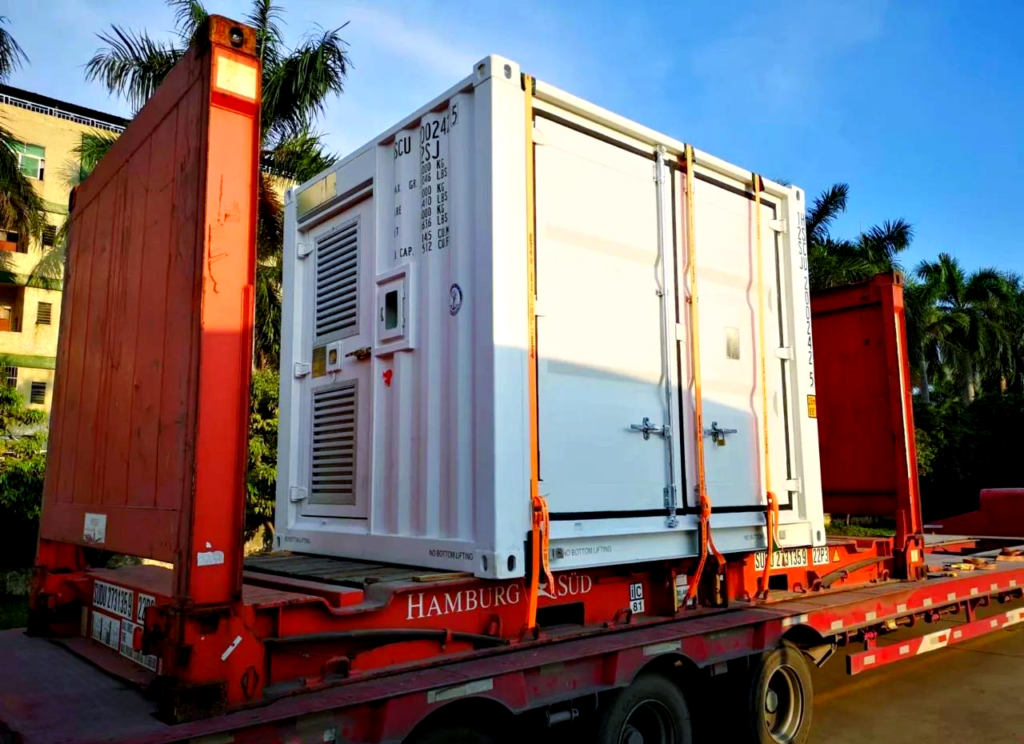
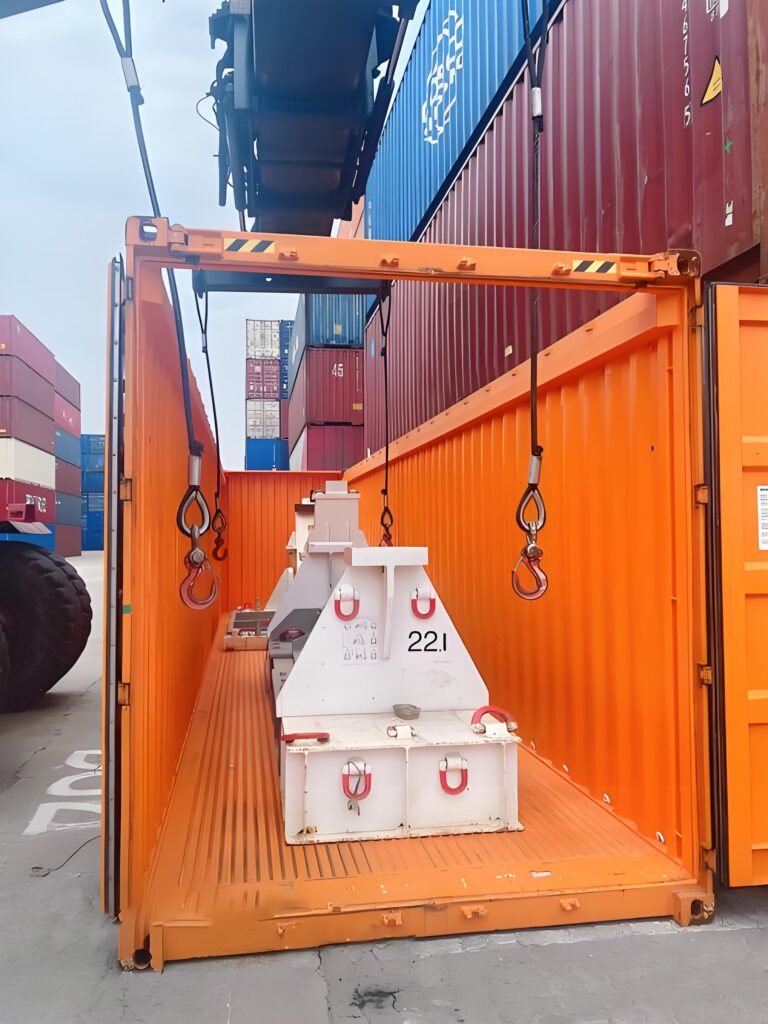
The Flat Rack is where most amateurs fail. It is the most dangerous piece of equipment on a vessel if not handled correctly.
The 20-Year Lesson: Lashing is Life
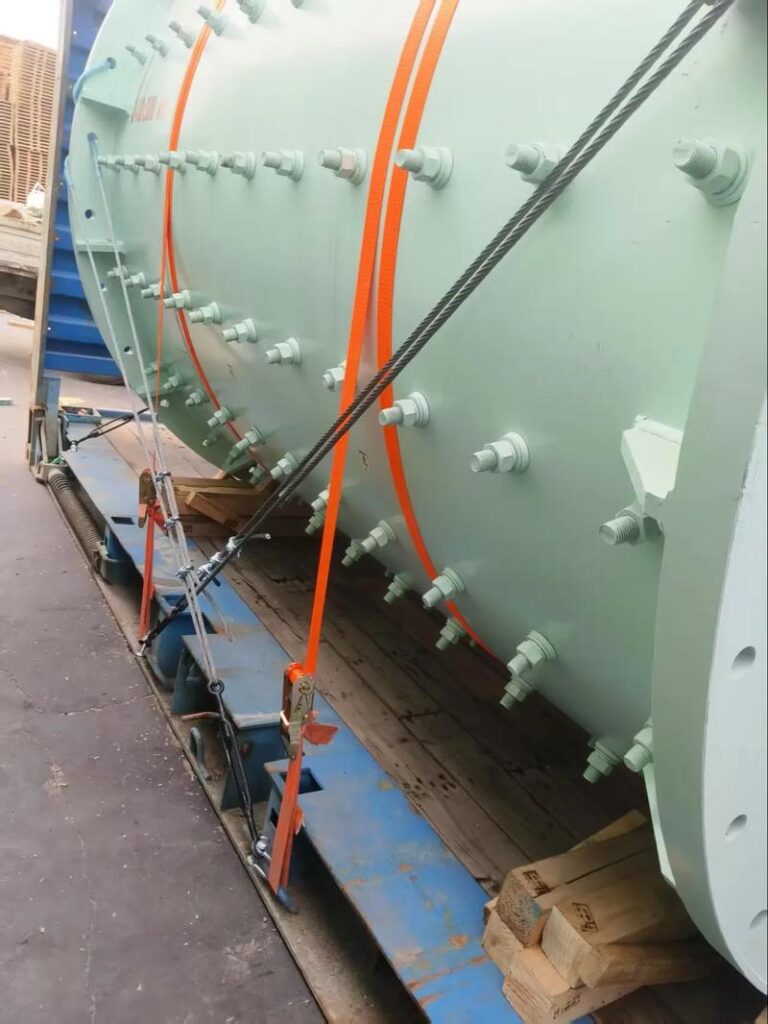
I once saw a 25-ton excavator shift on a Flat Rack because the forwarder used nylon straps instead of steel wires. It nearly punched a hole in the ship’s hull.
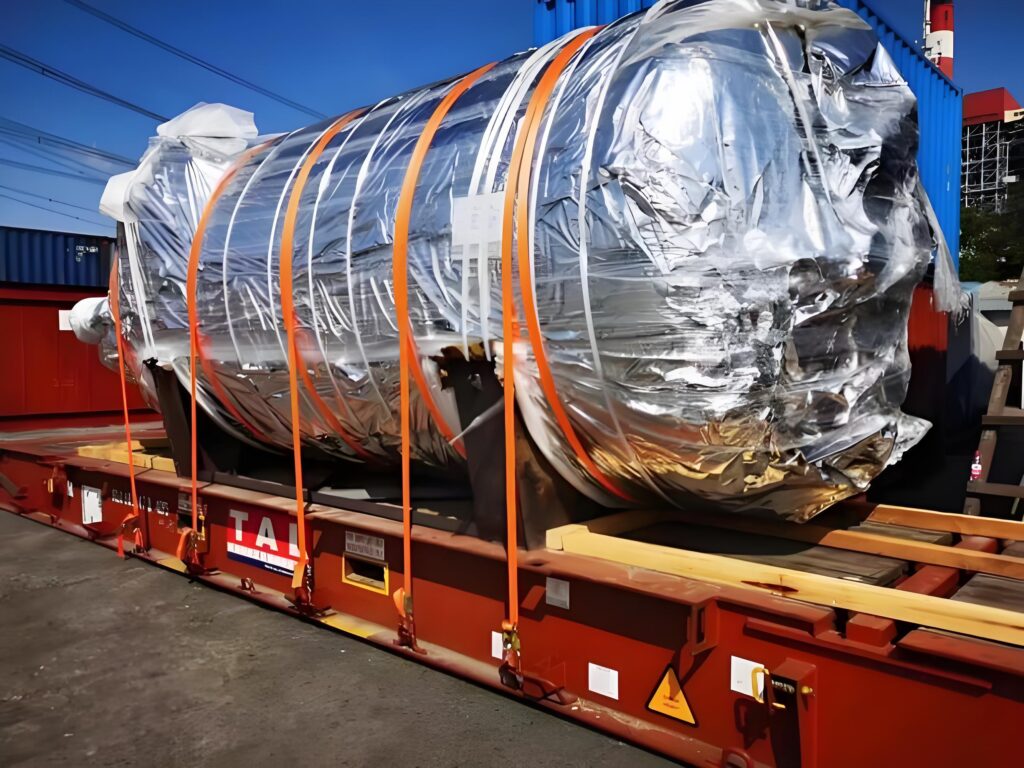
- The Veteran’s Protocol: We provide a Certified Lashing Plan. We calculate the Lashing Angle (must be 30-60 degrees). We use Grade 80 Chains and High-Tensile Steel Wires exclusively. We take high-resolution photos from 8 angles and submit them to the carrier for Pre-Approval. No approval, no sailing.
The Over-Dimensional Challenge
When cargo overhangs the sides of a 40FR, you face a different beast: Road Permits.
- The Veteran’s Protocol: I have spent countless hours coordinating with the Traffic Police (交警) in cities like Changsha and Tianjin. We conduct Route Surveys to check bridge heights. We know exactly which backroads to take to avoid low-hanging power lines. If the forwarder doesn’t talk about permits, they are planning to smuggle your cargo illegally.
When to Use FR:
- Heavy Lifts: Transformers, generators, turbines.
- Wide Loads: Industrial boilers, construction vehicles.
- Pro Tip: If your cargo is long and heavy, use a 40FR. If it’s just heavy but compact, use a 20FR. Never let the factory decide; let the physics decide.
Chapter 3: The Reefer (RH) – Beyond the Thermometer
Everyone thinks a Reefer is just a refrigerator. After 20 years, I can tell you it is a life-support system.
The 20-Year Lesson: The Pre-Trip Inspection (PTI) is a Lie
Many forwarders just plug in the container and assume it works. I’ve seen shipments of pharmaceuticals ruined because the cooling unit worked but the Fresh Air Exchange (FAE) vent was stuck closed.
- The Veteran’s Protocol: We conduct a Dual PTI. We check the compressor, the insulation, and the data logger. For sensitive cargo (like bananas or vaccines), we set the Pulp Temperature rather than the ambient temperature.
The Power Reality
The biggest threat to a Reefer is not the ocean; it’s the port stay.
- The Veteran’s Protocol: We pre-book Reefer Plugs at the terminal. We monitor the vessel’s reefer slots. If the vessel is full, we find an alternative route. We also use Real-Time Monitoring—if the temperature rises by 0.5 degrees in Rotterdam, I get a text message instantly.
When to Use RH:
- Food: Meat, seafood, fruits, vegetables.
- Pharma: Vaccines, chemicals, enzymes.
- Pro Tip: For high-value pharma, use Pharma Reefers with GDP compliance. Don’t settle for standard food-grade boxes.
Chapter 4: The High Cube (HC) – The Illusion of Space
The 40HC is the workhorse. But even here, veterans see pitfalls that rookies miss.
The 20-Year Lesson: The Weight Distribution Trap
A 40HC can hold 76 CBM, but it has a weight limit (usually 26-28 tons). I’ve seen factories stuff 28 tons of tiles into a 40HC, only for the chassis to collapse at the port gate.
- The Veteran’s Protocol: We calculate the Floor Load Limit. Heavy cargo (tiles, metals) must be stacked no more than 8 feet high and must be evenly distributed. We use Load Calculators to ensure the weight doesn’t exceed the maximum payload per axle for road transport in China.
When to Use HC:
- Light but Voluminous: Furniture, apparel, plastics, auto parts.
- Pro Tip: If your cargo is exactly 28 tons, do not use a 40HC. Use a 20GP. The risk of overweight fines and road accidents is too high.
Chapter 5: The Veteran’s Playbook – How to Spot a Fake Expert
After 20 years, I can spot a fake forwarder in 30 seconds. Here is how you can too:
- The “Instant Quote” Test: If they quote you a 40FR rate in 5 minutes without asking for the Center of Gravity or the lashing points, run. They are guessing.
- The “Equipment Source” Test: Ask: “Where is the 40FR located right now?” A veteran knows the depot inventory in Shanghai and Ningbo. A broker says, “I’ll check with the carrier.”
- The “Lashing Plan” Test: Ask: “Will you provide a certified lashing plan?” If they say, “The stevedores will handle it,” they are gambling with your cargo.
- The “Customs” Test: Ask: “What is the HS code for my machine?” A veteran knows the exact code. A rookie copies it from Google.
Chapter 6: The Future of Specialized Shipping in China
The industry is changing. With 20 years of experience, I see the trends:
- Green Shipping: Carriers are demanding Carbon Emission Reports for heavy lifts. We now calculate the carbon footprint of your OOG shipment.
- Digital Twins: We are moving toward 3D Scanning of cargo. Before the machine is built, we scan the CAD drawing and simulate the loading into a virtual container.
- Integrated Insurance: We no longer separate cargo insurance from logistics. A veteran ensures the policy specifically covers “Improper Stowage”—the #1 cause of specialized cargo loss.
Conclusion: Experience is the Only Insurance
When you ship a standard shoe, you buy a ticket. When you ship a $2 million turbine, you buy certainty. A 20-year veteran forwarder in China is not just a booker of space. We are engineers, regulators, and crisis managers. We have the scars to prove it, and the systems to prevent you from getting new ones. If you are moving specialized cargo from China, don’t gamble on a rookie. Hire the eye of experience.


