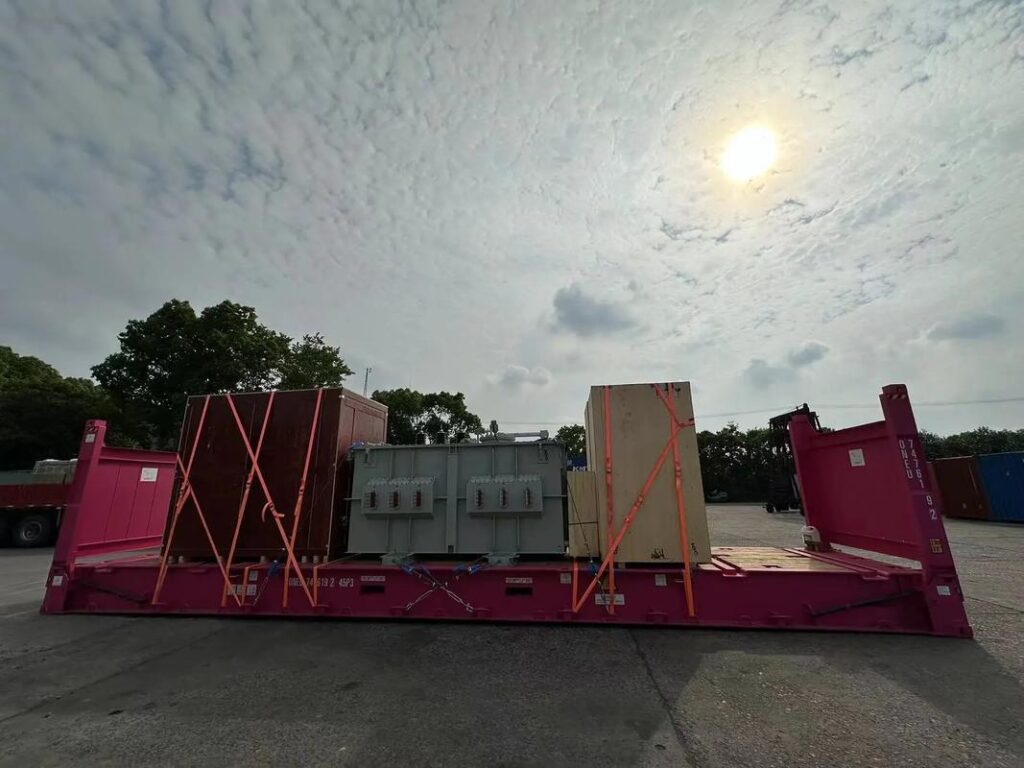
In the vast, interconnected web of global commerce, the narrative is often dominated by the sheer volume of standardized goods—the millions of TEUs (Twenty-foot Equivalent Units) moving through Shanghai, Ningbo, and Shenzhen every week. We see the photos of stacked containers on massive vessels and think of uniformity. However, beneath this layer of standardization lies a far more complex, high-stakes world. This is the world of specialized container shipping—the movement of Out-of-Gauge (OOG), Dangerous Goods (DG), and Reefer (Refrigerated) cargo. For businesses dealing in heavy machinery, sensitive chemicals, or perishable goods, the difference between success and catastrophic failure lies not with the standard carrier, but with the Specialized Container Expert. China, as the world’s manufacturing epicenter, is the undisputed launchpad for these complex logistics. But navigating the export of a 40-ton transformer from Wuhan to Germany, or a shipment of lithium batteries from Shenzhen to California, requires more than just booking space on a vessel. It requires a symphony of engineering, regulatory compliance, and on-the-ground execution. This article explores the intricate art and science of providing一站式 (one-stop) specialized container services from China.
Chapter 1: The Realm of the Giants – Out-of-Gauge (OOG) and Breakbulk
Standard containers are boxes with fixed dimensions. They are efficient until you need to ship something that doesn’t fit. Out-of-Gauge cargo refers to items that exceed the dimensions of a standard container, while Breakbulk refers to cargo that must be loaded individually, not in containers.
The Challenge of Dimension
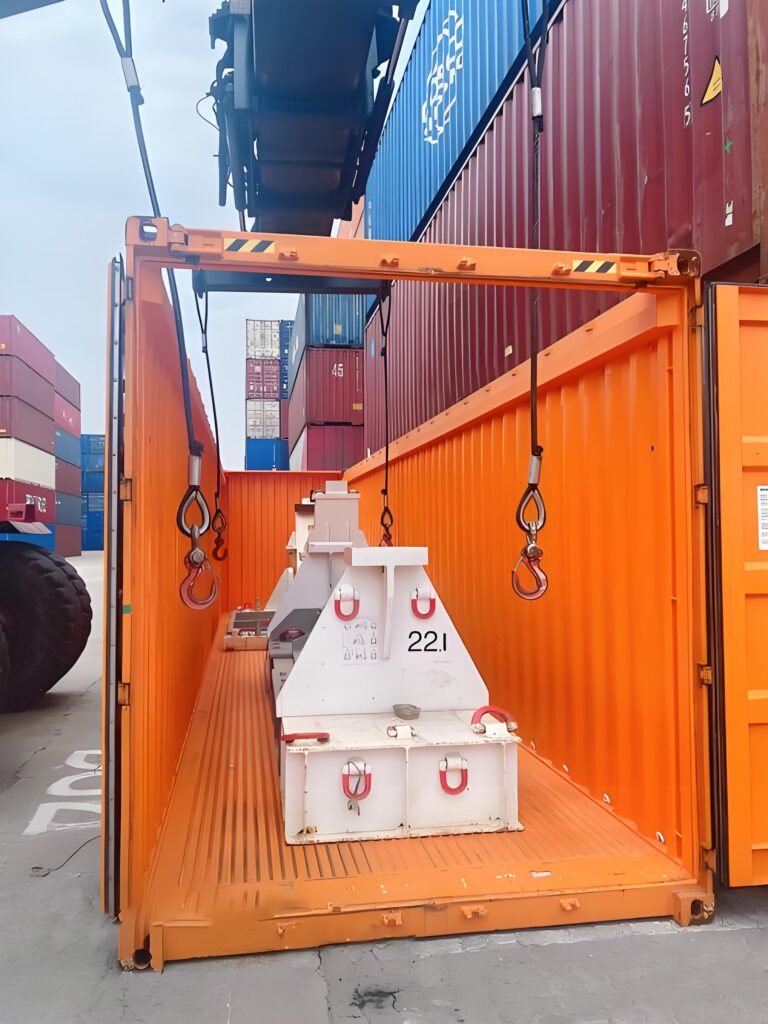
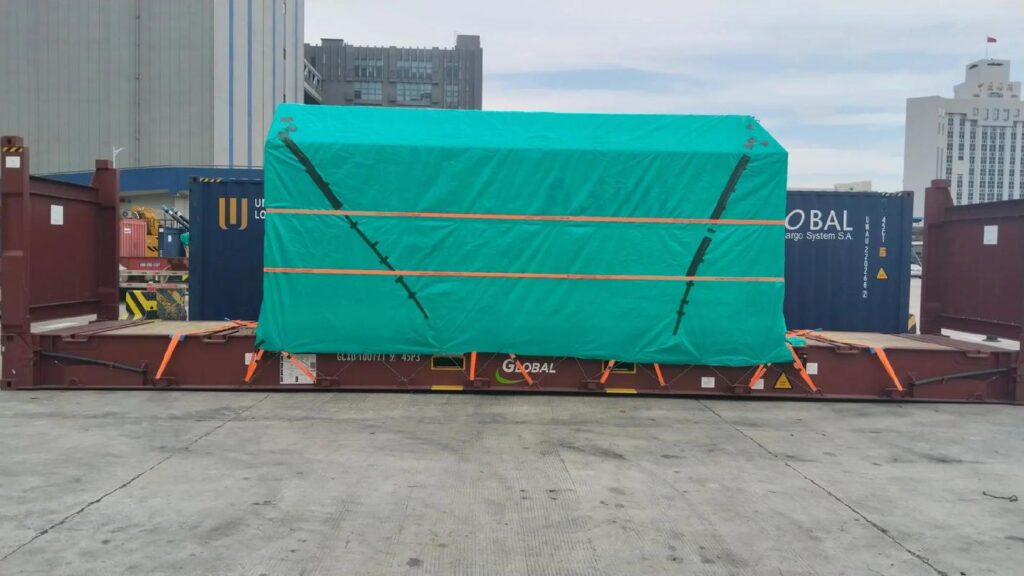
Imagine a manufacturer in Xuzhou producing a massive excavator. The boom arm is too long, the counterweight too heavy, and the chassis too wide. You cannot disassemble it without compromising its structural integrity. This is where OOG expertise comes into play. A true specialist doesn’t just look at the cargo; they look at the entire journey. The first question isn’t “Can we fit it?” but “How do we secure it?” In China, OOG cargo is typically shipped using:
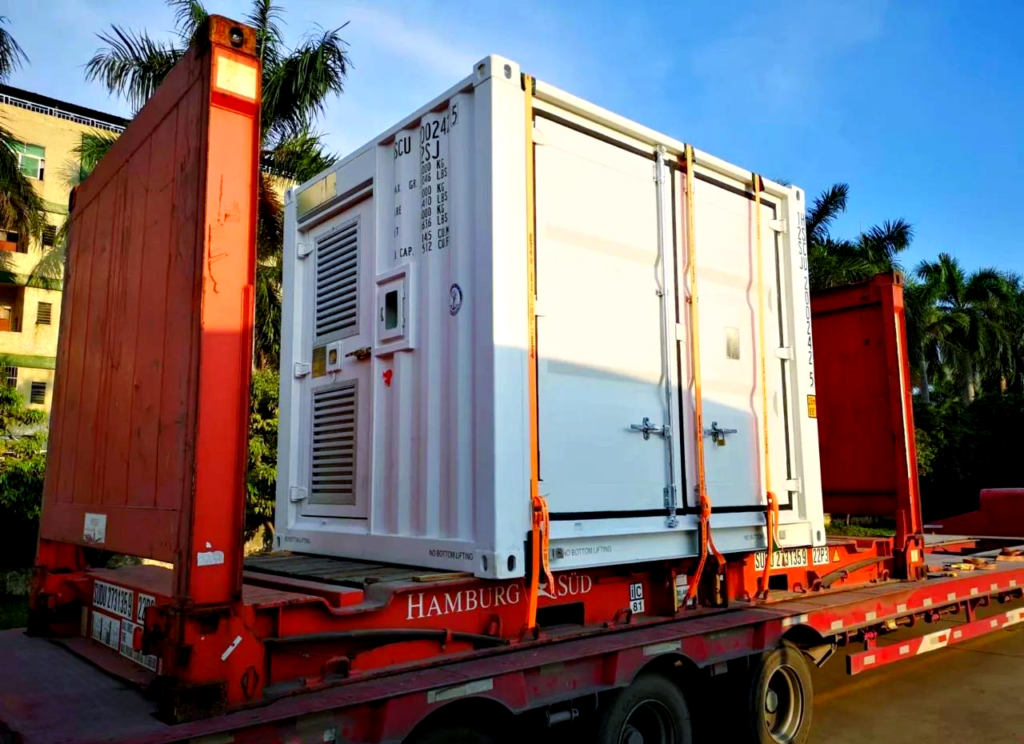
- Flat Racks: Platforms with collapsible ends, ideal for heavy machinery.
- Open Tops: Containers without a roof, allowing for crane loading of tall items.
- Platforms: Simple bases for extremely heavy loads.
The expertise required here is multi-layered:
- Structural Engineering: Calculating the lashing points. A miscalculation in weight distribution on a flat rack can cause the cargo to shift during heavy seas, potentially sinking a vessel. Experts use software to simulate sea conditions and stress points.
- Permit Management: Moving OOG cargo from the factory to the port involves road surveys. Can the bridges on the route support the weight? Are there low-hanging power lines? A specialist conducts a pre-movement survey to obtain the necessary oversized transport permits from local Chinese authorities.
- Port Handling: At the port of Shanghai or Qingdao, specialized heavy-lift cranes are required. An expert coordinates with terminal operators to ensure the equipment is available and the stowage plan on the vessel places the heavy lift on the deck with adequate support.
Case Study: The Wind Turbine Blade
Consider a shipment of wind turbine blades from a factory in Baoding to a wind farm in Texas. These blades are often over 70 meters long. They cannot go by standard container. A specialist provider will coordinate a Breakbulk solution. This involves chartering space on a heavy-lift vessel or finding a liner service with suitable deck space. The logistics involve custom cradles to protect the blade’s aerodynamics, constant monitoring of weather windows for loading, and coordination with customs in both China and the US for non-standard documentation.
Chapter 2: Walking the Tightrope – Dangerous Goods (DG) Logistics
If OOG is about size, Dangerous Goods logistics is about risk management. China is a global hub for chemicals, batteries, and flammable materials. Shipping these items is a highly regulated process where ignorance is a crime and a mistake can lead to loss of life.
The 9 Classes of Danger
A specialist understands the nuances of the IMDG Code (International Maritime Dangerous Goods Code). It’s not enough to know that a product is “dangerous.” You must classify it:
- Class 3: Flammable Liquids (e.g., paints, solvents).
- Class 6: Toxic and Infectious Substances.
- Class 8: Corrosives.
- Class 9: Miscellaneous (this includes Lithium-ion batteries, one of the most challenging cargoes today).
The Lithium Battery Conundrum
The rise of electric vehicles and consumer electronics has made Lithium Batteries the most scrutinized cargo in China. A single battery short-circuit can cause a fire that sinks a ship. Therefore, the requirements are extreme:
- UN38.3 Testing: Every battery type must undergo rigorous testing to ensure it can withstand transportation shocks.
- Packaging: Specific UN-certified packaging is mandatory.
- Declaration: Mis-declaring DG cargo is a massive issue in China. Shippers often try to hide batteries as “general cargo” to avoid costs. A professional expert conducts pre-shipment inspections to verify the cargo matches the declaration. They ensure the correct DG Manifest is filed with the terminal and the vessel.
The One-Stop Solution
A specialist provides a closed-loop system. From the factory in Dongguan, they provide DG-certified warehouses for temporary storage (as you cannot store batteries in a regular warehouse), arrange DG-compliant trucking with licensed drivers, and book with carriers who have the specific DG acceptance for that class. They manage the Material Safety Data Sheet (MSDS) and ensure the container is placarded correctly before it even reaches the port gate.
Chapter 3: The Cold Chain – Reefer Container Mastery
Reefer containers are not just refrigerators; they are sophisticated climate-controlled environments. China exports billions of dollars worth of food, pharmaceuticals, and chemicals requiring precise temperature control.
Beyond Cooling
The complexity of reefer logistics lies in the “Cold Chain” integrity. A break in this chain—even for a few hours—can spoil a $200,000 shipment of seafood or render a vaccine useless. The Pre-Trip Inspection (PTI): Before a container is loaded, a specialist ensures a thorough PTI is conducted. This checks the compressor, the temperature settings, and the fuel levels. Power Continuity: The journey involves multiple points where power must be maintained.
- Factory Stuffing: If stuffing perishable goods at the factory, a generator is needed.
- Port Stay: The container must be plugged into the Reefer Points at the terminal.
- Vessel Transit: The vessel must have adequate power outlets (slots) for reefers.
- Transshipment: At hubs like Singapore or Rotterdam, the container must be quickly moved from one powered slot to another.
Specialized Reefer Services:
- Super Freezers (-60°C): Used for high-end tuna or certain pharmaceuticals. Not all carriers offer this.
- Controlled Atmosphere (CA): Used for fruits like apples or pears to slow down ripening by controlling oxygen and CO2 levels.
- Pharmaceutical Grade: Compliance with GDP (Good Distribution Practice). This requires real-time monitoring devices (data loggers) and contingency plans for power failure.
A specialist doesn’t just book the box; they monitor it. Using IoT technology, they track the temperature and humidity in real-time during the voyage from China to Europe. If the temperature deviates, they alert the consignee immediately.
Chapter 4: The Value of “One-Stop” – Integration and Efficiency
What does “One-Stop Service” actually mean in this context? It means the elimination of friction. In a traditional setup, a shipper might hire a trucker, a customs broker, a forwarder, and a port agent separately. When something goes wrong—say, a flat rack is delayed at customs—everyone points fingers. A Specialized Container Expert integrates these services:
- Consultation & Engineering: Before the cargo is packed, the expert provides a Cargo Securing Plan. For OOG, they calculate the center of gravity. For DG, they verify the segregation rules (you cannot put certain acids next to certain flammables).
- Customs Clearance: Specialized cargo attracts more scrutiny from Chinese Customs (GACC). An expert knows how to prepare the declaration to avoid inspections that can delay a time-sensitive shipment.
- Warehousing & Stuffing Supervision: For OOG and DG, the stuffing process is critical. A specialist supervises the lashing of the cargo onto the flat rack or the packing of dangerous goods into the container to ensure it meets international safety standards.
- Documentation: Managing the Bill of Lading, the Dangerous Goods Declaration, the packing list, and the certificate of origin—all tailored for the specific nature of the cargo.
- Insurance: Standard cargo insurance often excludes OOG or DG unless specifically declared. A specialist secures specialized all-risk coverage.
Chapter 5: The Chinese Ecosystem Advantage
Why is China the best place to source these experts? Because the infrastructure is built for it. Port Infrastructure: Ports like Shanghai, Ningbo-Zhoushan, and Qingdao have dedicated terminals for heavy-lift and specialized cargo. They have specialized equipment like gantry cranes capable of lifting hundreds of tons. Manufacturing Proximity: Being close to the factories in the Pearl River Delta and the Yangtze River Delta means faster response times. If a lashing fails during packing, the expert can be on-site within hours to fix it. Regulatory Familiarity: Chinese regulations regarding hazardous materials and oversized transport are complex. Local experts have the relationships (“Guanxi”) and knowledge to navigate the bureaucracy efficiently.
Conclusion: Choosing Your Partner
When your business relies on moving a $500,000 CNC machine, a container of Class 8 corrosives, or a shipment of live lobsters, you are not buying a shipping service; you are buying certainty. The cheapest quote for a specialized container is often the most expensive mistake you will make. The market is filled with generalists who will book your space but vanish when the container is stuck at the port because the lashing certificate was incorrect. A true China Specialized Container Expert acts as an extension of your own team. They understand that a delay of one day in the arrival of a transformer can cost a power plant millions in downtime. They understand that a temperature spike in a reefer container means a total loss. They understand that a misdeclared dangerous good is a potential environmental disaster. In the high-stakes game of global logistics, don’t bet on a standard player. Bet on the specialist who sees the invisible risks and builds a bridge over them. That is the true value of one-stop specialized container shipping from China.


