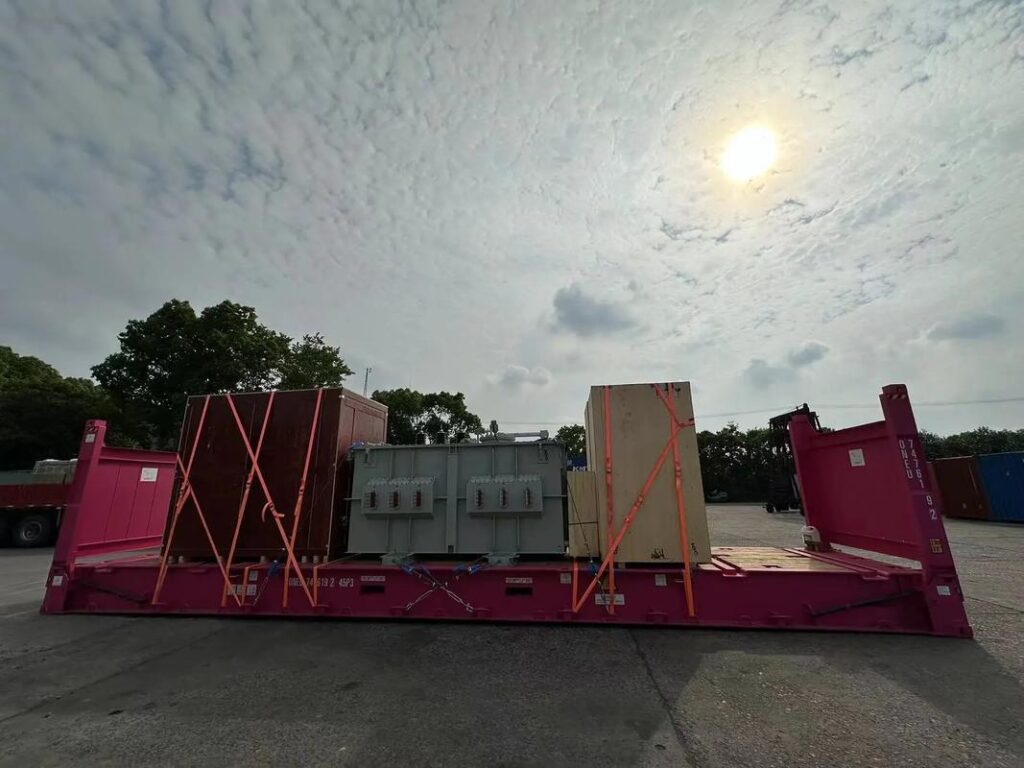
The email lands in the inbox with a sense of urgency: “[Special Container] Looking for 20’FR frame rates from China to Los Angeles, URGENT!” To the uninitiated, this might look like just another RFQ (Request for Quotation). But to those of us entrenched in the world of project cargo and breakbulk logistics, this single line signals the start of a high-stakes logistical ballet. A 20-foot Flat Rack (20’FR) moving from the manufacturing hubs of China to the congested docks of Los Angeles is not just a container move; it is a carefully orchestrated operation involving engineering, negotiation, and risk management. This article will dissect what happens behind the scenes when such an inquiry is received. We will move beyond the surface-level rate quote to explore the technical specifications, the hidden costs, the geopolitical factors, and the strategic decisions that determine whether your oversized cargo arrives safely or becomes a costly statistic.
Chapter 1: Deconstructing the 20’FR – More Than Just a Box
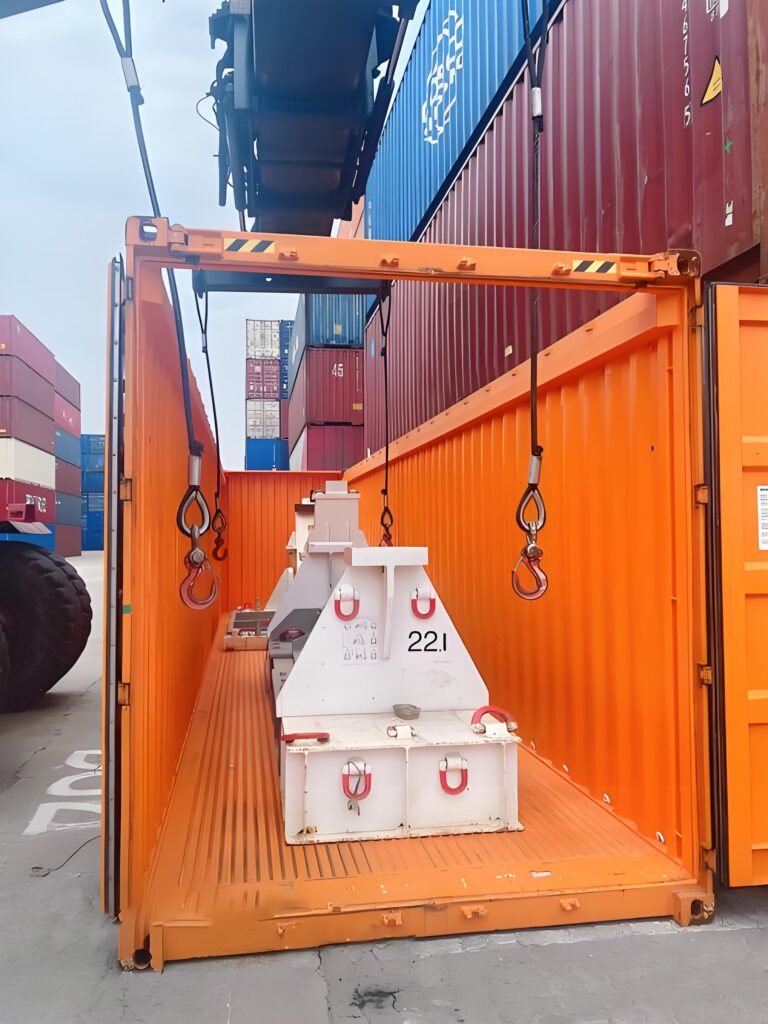
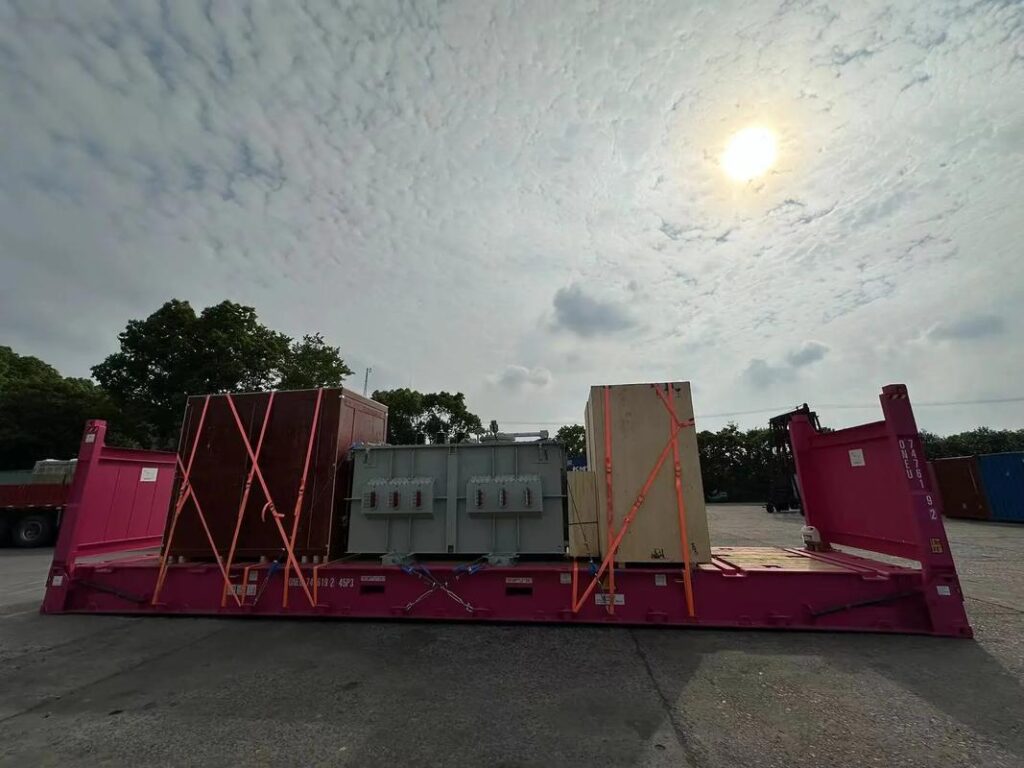
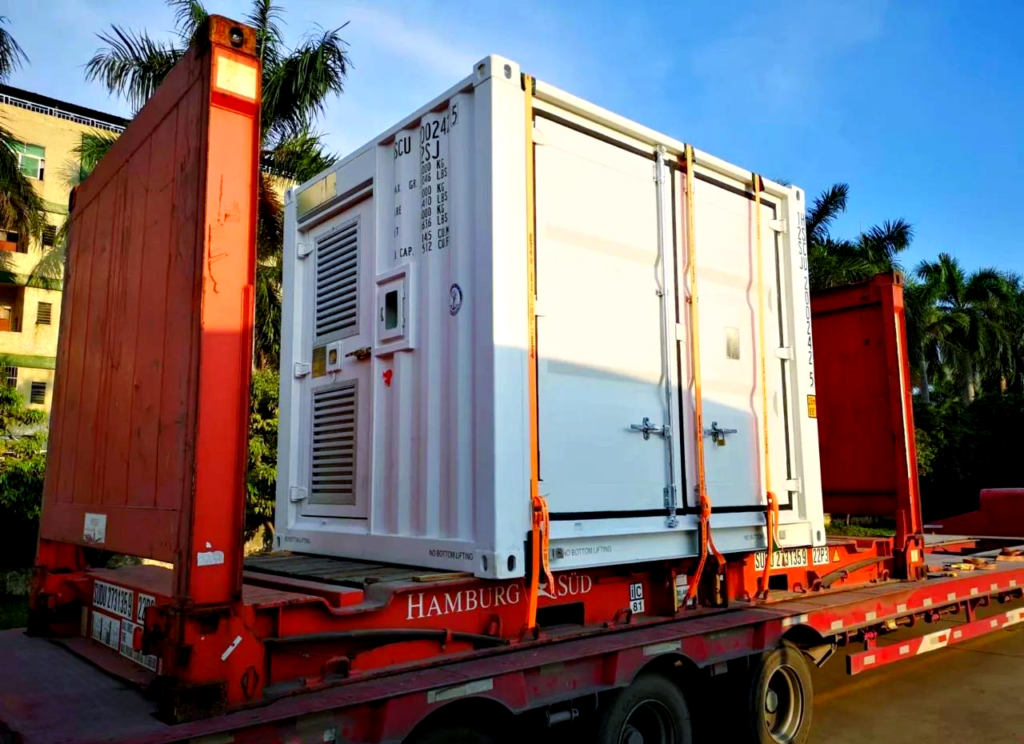
When a client requests a 20’FR, they are typically dealing with cargo that defies the dimensions of a standard dry container. A Flat Rack is essentially a floor with end walls (or sometimes no walls, known as a platform). It has no sides and no roof. This design allows for top-loading and side-loading of cargo that is too wide, too tall, or too heavy for conventional boxes. For the China-to-Los Angeles trade lane, the most common commodities requesting 20’FRs include:
- Heavy Machinery: Excavators, bulldozers, and road rollers.
- Industrial Components: Large transformers, generators, and engine blocks.
- Steel Structures: Prefabricated bridge sections, large coils, or structural beams.
- Mold & Dies: Massive injection molds used in automotive manufacturing.
The urgency in the inquiry usually stems from the fact that these items are often “critical path” items for construction projects or factory production lines in the U.S. A delay in the flat rack shipment means a halted project in Texas or Ohio.
Chapter 2: The Geography of Origin – Why China is Complex
China is not a monolith. Where the cargo is located dictates the logistics plan. A shipment originating in Shanghai or Ningbo has different challenges than one coming out of Qingdao or Shenzhen.
- Inland Haulage: Most heavy machinery factories are located inland (e.g., Xuzhou for construction machinery). Moving a 20’FR loaded with a 25-ton excavator requires specialized low-bed trailers. Unlike standard containers that can be double-stacked on a chassis, a flat rack with overhangs requires police escorts and route surveys if the width exceeds 3 meters.
- Factory Loading vs. CFS Loading: For heavy cargo, loading usually happens at the factory. However, the lashing and securing (lash) must comply with international standards (CTU Code). If the factory lacks experience, the carrier may reject the unit at the port, leading to demurrage and storage charges.
- Port Congestion Dynamics: The major Chinese base ports (Shanghai, Ningbo, Shenzhen) operate at near-saturation levels. Securing a slot for a special equipment (SPE) unit like a flat rack is harder than booking a standard container. Carriers prioritize standard dry boxes because they are faster to turn around. A flat rack requires manual planning for stowage on the vessel.
Chapter 3: The Vessel Stowage Plan – A Game of Tetris
Once the 20’FR is lashed and delivered to the terminal at Yantian or Shanghai, the next challenge begins: stowage. On a Post-Panamax vessel heading to Los Angeles, flat racks cannot be stacked on top of each other like Lego bricks. They require deck space or specific slots within the ship’s cell guides.
- Deck Stowage: Most 20’FRs are stored on the weather deck. This exposes them to saltwater spray and heavy seas. This is why marine-grade rust prevention and waterproofing of the cargo are critical.
- Bay Planning: The Chief Mate must ensure the weight distribution of the ship is balanced. A 30-ton flat rack placed incorrectly can cause stress fractures in the ship’s hull.
- Over-dimensional (OOG) Fees: Since the flat rack takes up more space than a standard container (due to its width or height), carriers charge OOG fees based on the “slot” it occupies. Sometimes a 20’FR can occupy the space of 1.5 or even 2 TEUs (Twenty-foot Equivalent Units).
Chapter 4: The Los Angeles Puzzle – Arrival and Drayage
Arriving in Los Angeles (POLA) is where many urgent shipments hit a wall. The Port of Los Angeles and Long Beach are among the most complex gateways in the world. The Rail vs. Truck Decision: If the final destination is Chicago or Dallas, the flat rack will likely be loaded onto a well-car (double-stack rail). However, not all flat racks fit on domestic rail cars. If the cargo is too wide, it must be transloaded onto a flatbed truck. Chassis Shortages: In Southern California, finding a chassis for a 20’FR is notoriously difficult. Most chassis pools are optimized for standard 40-foot containers. Securing a specialized heavy-lift chassis (which can handle the weight of both the cargo and the rack) often requires pre-booking weeks in advance. An “urgent” shipment without a chassis booked is a shipment sitting on the pier, accruing $200-$400 per day in detention and demurrage. PierPass and Port Congestion Surcharges: The LA/LB port complex operates under the PierPass system, which mandates fees for off-peak hours to reduce congestion. Furthermore, since 2021, the volatility of the market has introduced various surcharges (e.g., Congestion Surcharges, Peak Season Surcharges) that can double the base ocean freight rate.
Chapter 5: Cost Breakdown – Beyond the Ocean Freight
When a forwarder quotes a rate for a 20’FR from China to LA, the savvy shipper looks past the headline number. Here is the anatomy of the real cost:
| Cost Component | Description | Typical Range (USD) |
|---|---|---|
| Ocean Freight (Base Rate) | The cost of the slot on the vessel. | $1,500 – $4,000 |
| BAF (Bunker Adjustment Factor) | Fuel surcharge linked to oil prices. | $300 – $800 |
| CAF (Currency Adjustment Factor) | Adjusts for USD/CNY fluctuations. | $100 – $300 |
| OOG (Out of Gauge) Fee | Charge for occupying extra space. | $500 – $1,500 |
| Lashing & Securing Fee | Cost for materials and labor to secure the cargo. | $200 – $600 |
| Terminal Handling Charges (THC) | Port fees at origin and destination. | $150 – $400 |
| Documentation Fee | Bill of Lading and customs paperwork. | $50 – $100 |
| Destination Demurrage | Storage at the port if not picked up quickly. | $100+/day |
| Destination Detention | Cost for holding the chassis/containers. | $150+/day |
A “cheap” ocean freight quote often hides exorbitant local charges. An experienced forwarder will provide an “All-In” rate or a clear breakdown to avoid surprises.
Chapter 6: Risk Management and Insurance
Moving a 20’FR is inherently riskier than moving a dry box. Because the cargo is exposed, it is vulnerable to damage from shifting during heavy swells. The Lashing Certificate: Before departure, a surveyor should inspect the lashing. A certificate of lashing is often required by the carrier. Poor lashing leads to cargo shifting, which can result in the carrier refusing to discharge the cargo until it is re-secured at the shipper’s expense. Cargo Insurance Nuances: Standard marine cargo insurance often excludes “improper packing.” If the machinery shifts because the lashing was insufficient, the insurance company may deny the claim. It is vital to use a forwarder who can certify the packing or work with a surveyor.
Chapter 7: The Forwarder’s Role in an “Urgent” Scenario
When the inquiry says “URGENT,” the forwarder’s job is to triage. Here is the internal process we follow:
- Feasibility Check: Is there a vessel sailing in the next 72 hours with available deck space? If not, we look at alternative routes via Oakland or even Seattle to get the cargo closer to the destination.
- Permit Pre-Check: If the cargo is overweight (over 24 tons), does it have the necessary permits for U.S. highway transport? Some states have strict limits.
- Carrier Relationship: We leverage relationships with specific carriers known for handling heavy lift. Not all carriers accept 20’FRs on the same trade lanes. For example, some prefer to move them via their “special equipment” service rather than the regular weekly sailings.
- Customs Clearance Prep: For the U.S., we need the ISF (Importer Security Filing) filed 24 hours before departure. Any error here triggers a $5,000 fine. For urgent shipments, we double-check the HTS codes for the machinery to ensure no anti-dumping duties apply (a common issue with steel products from China).
Chapter 8: Future Trends and Strategic Outlook
The landscape for special equipment shipping is changing. The push towards decarbonization means vessels are slowing down (slow steaming) to save fuel. This increases transit times, making the “urgency” factor even more critical to manage. Furthermore, the availability of 20’FR containers themselves is tightening. Many carriers are scrapping older flat racks and not replacing them, preferring to invest in standard dry containers. This means shippers may need to source SOC (Shipper Owned Containers) or pay premium rates for COC (Carrier Owned Containers).
Conclusion: The Value of Expertise
A 20’FR shipment from China to Los Angeles is a microcosm of global supply chain complexity. It involves heavy engineering, international regulations, and intense coordination across multiple time zones. When you send out that urgent inquiry, you aren’t just buying a piece of steel to carry your goods. You are hiring a partner to navigate the bottlenecks of the San Pedro Bay, the complexities of U.S. Customs, and the physical limitations of the equipment itself. The lowest price is rarely the best value; the fastest transit is only valuable if the cargo arrives intact. In this business, “urgent” is not a problem; it is a test of preparation. And the forwarders who survive are the ones who have already mapped the route, secured the chassis, and calculated the risks before the first email even hits their screen.


