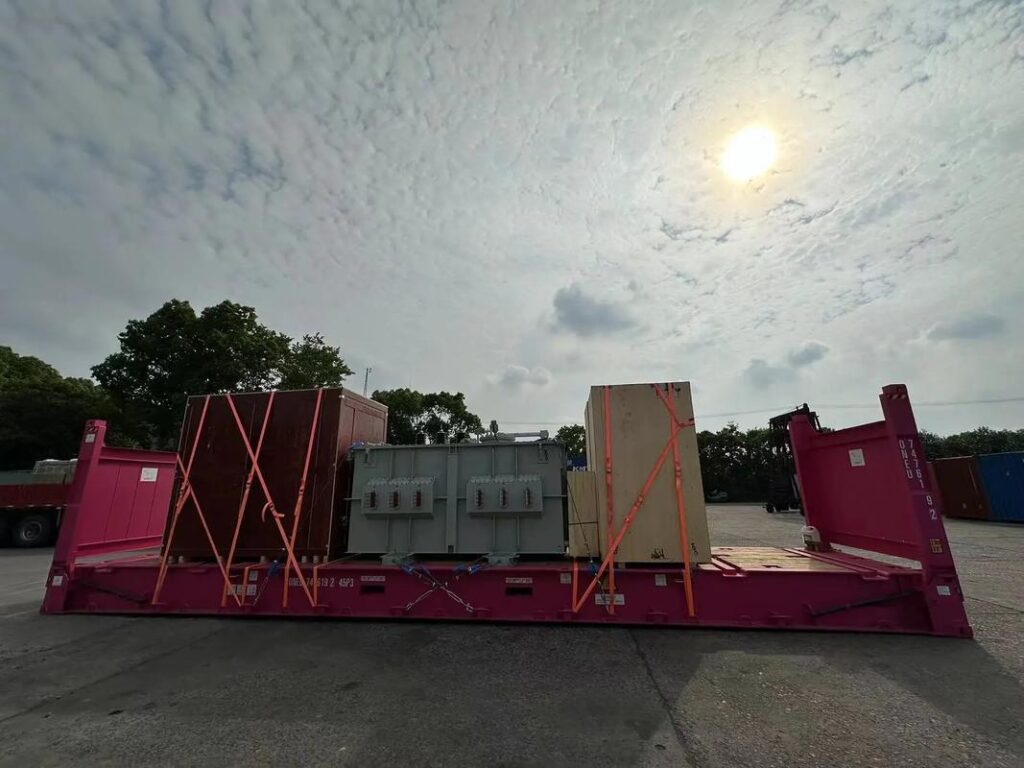
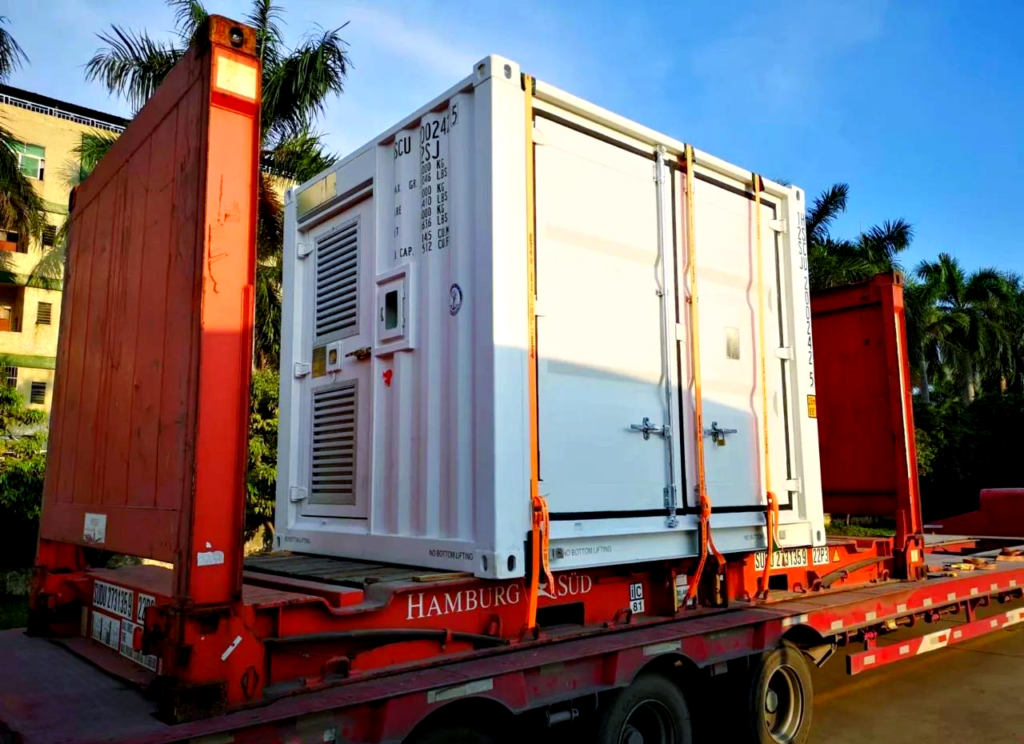
In the high-stakes theater of global heavy logistics, few tasks are as deceptively complex as shipping wide steel coils via ocean freight. When your cargo consists of massive, heavy, and inherently unstable steel rolls, and your route spans from the industrial powerhouse of Qingdao to the sun-baked hub of Jebel Ali in Dubai, “standard shipping” ceases to exist. You are now operating in the realm of Out of Gauge (OOG) project cargo. This is not merely a matter of booking a container; it is an exercise in structural engineering, financial precision, and risk mitigation. This comprehensive guide will dismantle the complexities of shipping wide steel coils from Qingdao to Jebel Ali, offering a strategic blueprint to protect your assets and your bottom line.
The Anatomy of the Challenge: Why Standard Containers Fail
Imagine trying to fit a square peg into a round hole, except the peg weighs 28 metric tons and can crush the walls of the hole if it shifts even an inch. Standard dry containers are designed for uniform, palletized, or loose cargo. A wide steel coil violates almost every safety and spatial parameter of a standard box:
- Dimensional Breach: A “wide” steel coil often exceeds the internal width of a standard 40-foot container (approximately 2.35 meters). If the coil is too wide to fit through the doors, it cannot be loaded horizontally.
- The Point Load Problem: Steel coils are incredibly dense. Placed on a standard container floor, the intense pressure of the coil’s contact points can buckle the corrugated steel flooring or rupture the container’s structural integrity.
- The Rolling Hazard: Without the rigid confinement of a steel frame, a loose steel coil is a literal wrecking ball. In the turbulent waters of the Indian Ocean, an unsecured coil can snap lashings, crush container walls, and even compromise the vessel’s stability.
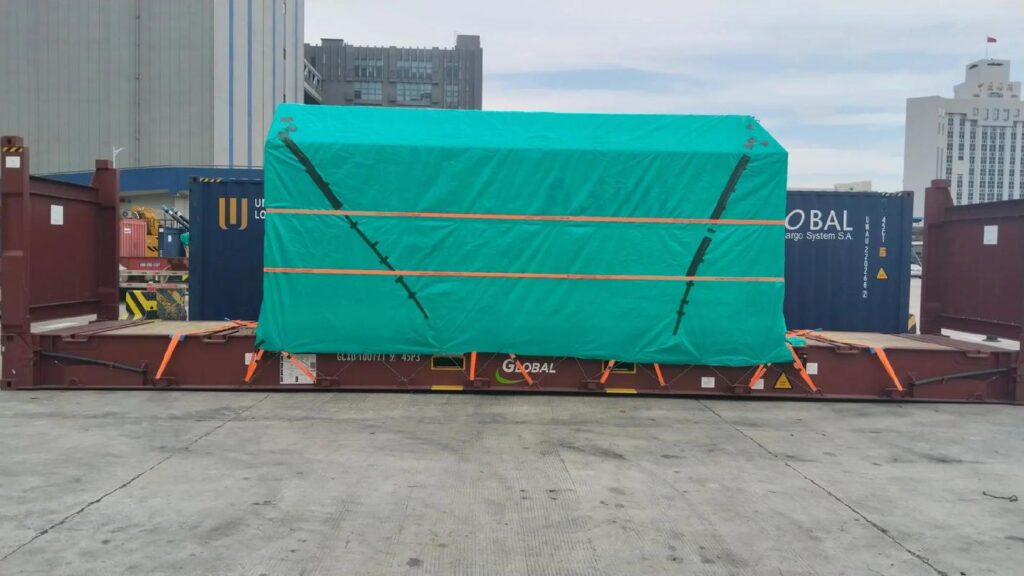
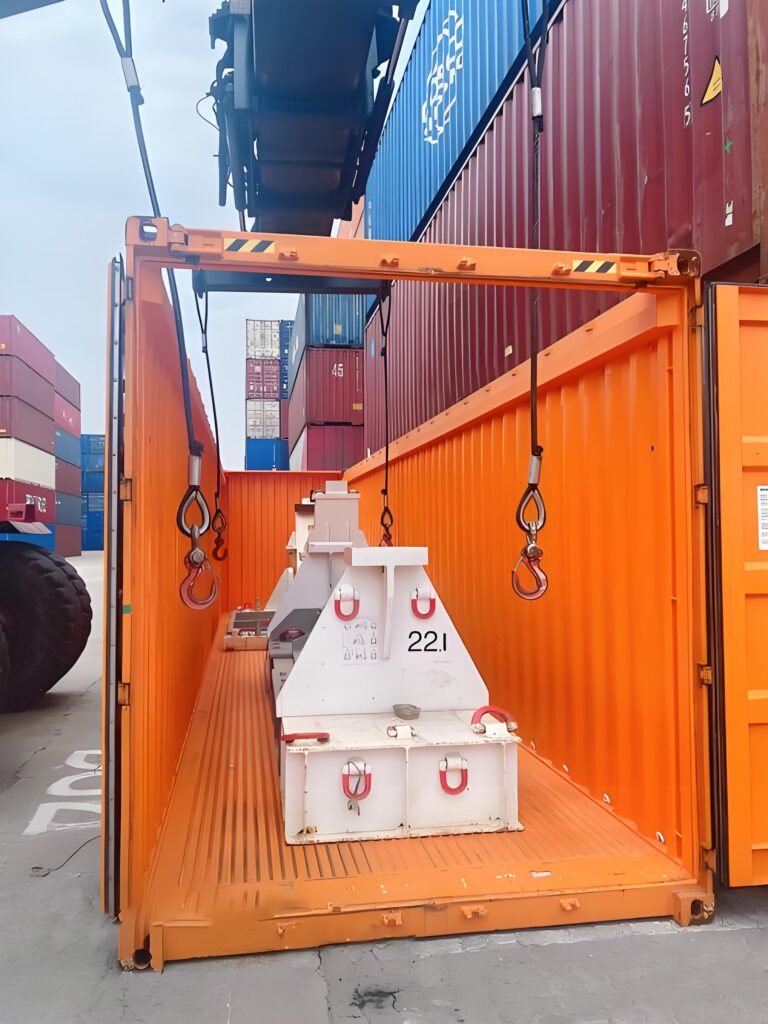
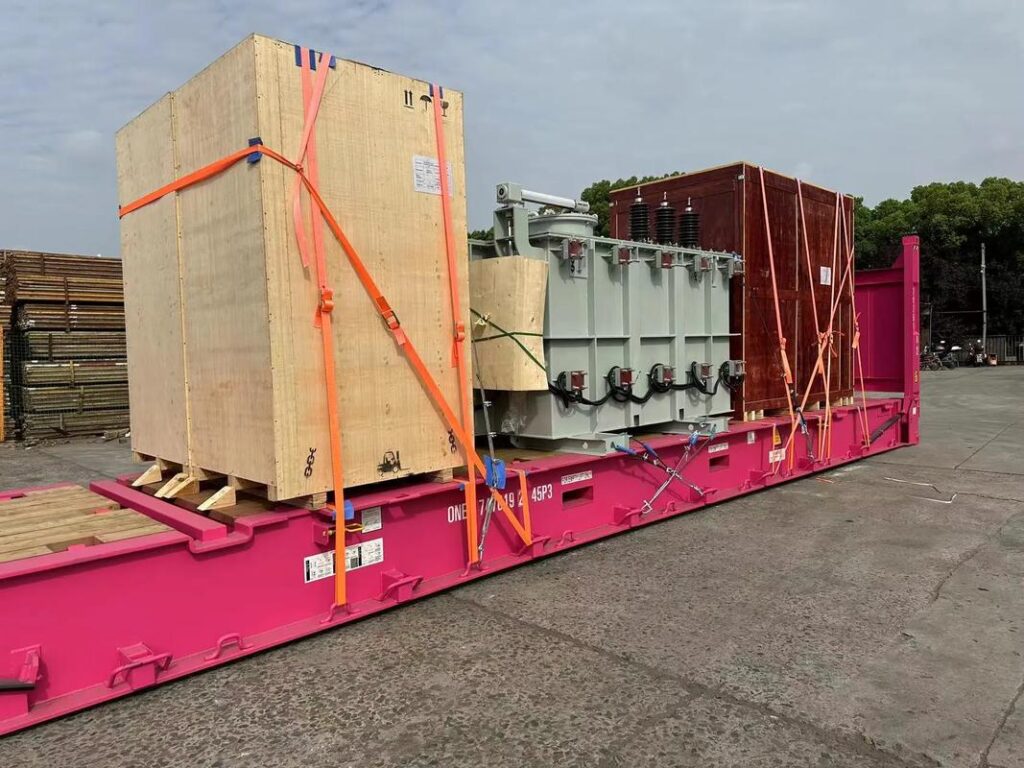
The solution is unequivocal: you need a 40-foot Flat Rack (40’FR) or a specialized platform. By eliminating the side walls and roof, a Flat Rack allows the wide coil to protrude safely beyond the frame’s edges, resting securely on a heavily reinforced steel bed designed to bear immense point loads.
Deconstructing the OOG Quote: A Financial Autopsy
When you request a quote for an OOG shipment from Qingdao to Jebel Ali, a standard “all-in” rate is a fantasy. A professional quote is a layered document where every line item reflects a specific operational reality. Scrutinize these five critical cost centers:
1. The Base Ocean Freight & Opportunity Cost
Carriers like COSCO, Evergreen, or OOCL view OOG cargo as a double-edged sword. While it pays well, a wide Flat Rack occupies the slot space of multiple standard containers (often counted as 2 TEUs or more). This “lost opportunity cost” is baked into the base ocean freight, making it significantly higher than standard dry freight.
2. Out of Gauge (OOG) Surcharges
This is the premium you pay for the privilege of exceeding normal boundaries. The OOG fee is typically calculated based on exactly how much your cargo overhangs the Flat Rack’s base dimensions. Since your steel coil is wide, it likely enters a specific pricing tier (e.g., 2.50m to 3.00m over-width).
3. Terminal Handling Charges (THC) and Heavy Lift Fees
The Port of Qingdao is a behemoth of efficiency, but it operates on strict protocols. Moving a 40’FR loaded with a 25+ ton coil requires specialized heavy-lift cranes and reinforced terminal beds. The export THC will reflect these heavy-handling requirements. Furthermore, if your coil exceeds the standard weight limits handled by the terminal’s regular equipment, a specific “Heavy Lift Charge” will be levied.
4. Stuffing and Lashing Supervision Fees
In Qingdao, you cannot simply show up at the terminal with a loaded Flat Rack. The lashing and securing of the steel coil must be supervised and certified by either the shipping line’s surveyor or a third-party marine surveyor. This ensures the “Non-Allowable Stress” limits of the Flat Rack are not exceeded. Skipping this step to save a few hundred dollars will result in the terminal rejecting your cargo outright.
5. Destination Charges at Jebel Ali
Jebel Ali is one of the busiest ports in the Middle East. While highly efficient, its import Terminal Handling Charges (THC) and documentation fees are substantial. More importantly, space at the container yards is at a premium. If your coil is not picked up immediately after discharge, the per-diem detention and demurrage fees in Dubai can escalate rapidly.
The Engineering of Stability: Lashing the “Unstable Sphere”
Shipping a steel coil on a Flat Rack is not a packing job; it is a structural engineering project. The goal is to create a unified, immovable mass where the coil and the Flat Rack behave as a single entity, regardless of the ship’s pitch and roll.
Calculating the Center of Gravity (CoG)
Before a single chain is tightened, the exact Center of Gravity of the coiled steel must be calculated. If the CoG is too high, the entire Flat Rack becomes top-heavy and prone to tipping during crane lifts or severe weather. If it is too low but off-center laterally, it will induce dangerous torsional stress on the vessel.
The Art of the “Bedding” and Chocking
You cannot place a rounded steel coil directly onto a flat steel bed. It needs a cradle.
- Timber Bedding: Thick, high-density hardwood beams are laid across the Flat Rack’s deck to create friction and distribute the immense downward pressure.
- Triangular Chocking: Custom-cut wooden or steel wedges are hammered tightly against the curves of the coil on both sides. This prevents longitudinal and lateral shifting.
- Steel Lashings and Turnbuckles: High-tensile steel chains are looped around the coil and anchored to the Flat Rack’s designated lashing points. These are tightened using heavy-duty turnbuckles until they achieve a specific tension (measured in Newtons), ensuring the coil cannot budge even if the ship lists 30 degrees.
The Surveyor’s Seal
Once lashed, a certified marine surveyor will inspect the work in Qingdao. They will check the torque on the turnbuckles, the placement of the chocks, and the overall stability. Only with the surveyor’s signed approval will the shipping line accept the cargo. This certificate is your ultimate legal protection against claims of improper packing should damage occur at sea.
Battling the Elements: Rust Prevention and the “Middle East Factor”
Steel and saltwater air are mortal enemies. The voyage from Qingdao to Jebel Ali traverses some of the most humid and saline environments on earth, culminating in the extreme heat of the Arabian Gulf.
The VCI Shield
Standard desiccants are insufficient for wide steel coils. You must mandate the use of Vapor Corrosion Inhibitors (VCI). This involves wrapping the entire coil in VCI-impregnated paper or stretch film before it leaves the factory. The VCI molecules vaporize and form an invisible, protective molecular layer on the steel surface, actively repelling moisture and oxygen.
The White Rust Menace
If stainless steel coils are exposed to chlorides in the ocean air (especially prevalent when crossing the equator near Malaysia/Singapore), they can develop “white rust” (zinc corrosion) in a matter of days. To combat this, the top and sides of the Flat Rack should be covered with heavy-duty, UV-resistant tarpaulins, creating a makeshift shelter that deflects salt spray and torrential equatorial rains.
Monitoring the Journey
While you cannot control the temperature in the middle of the Indian Ocean, you can monitor it. Requesting a reefer container’s data logger (even if shipped on a Flat Rack) or placing independent temperature/humidity data loggers inside the coil’s eye can provide crucial evidence of environmental exposure during transit.
Navigating the Bureaucracy: Qingdao Export and Jebel Ali Import
The Qingdao Export Machine
China Customs is notoriously rigorous regarding OOG cargo. The dimensions declared on the Bill of Lading must match the physical measurement of the widest point of the coil down to the centimeter. Any discrepancy during the physical inspection at the Qingdao terminal gates will result in heavy fines, cargo holds, and potential delays that could cost thousands in missed connections.
The Jebel Ali Clearance Gauntlet
Dubai is a major transshipment hub. While this means excellent connectivity, it also means strict security and customs protocols.
- The HS Code Precision: Steel products entering the UAE are subject to various GCC Common Customs Law tariffs. Ensure your HS code is hyper-accurate to avoid misclassification penalties.
- The “Mirsal 2” System: All import documentation for Jebel Ali must be meticulously aligned with the UAE’s Mirsal 2 customs clearance system. Discrepancies in the consignee’s details or the invoice value can trigger a physical inspection, which is highly problematic for an OOG Flat Rack requiring heavy equipment just to open.
The Final Mile: Drayage in the Desert
Your responsibility does not end when the Flat Rack hits the pier in Jebel Ali. You must arrange for a heavy-duty low-bed trailer to transport the coil to its final destination (e.g., a steel service center in Dubai Industrial City or Sharjah). In the UAE, road transport for OOG cargo requires special permits from the Roads and Transport Authority (RTA), especially if the load exceeds standard width limits. The logistics provider handling the drayage must be vetted for their experience with heavy, unstable loads. A sudden braking maneuver on the Sheikh Zayed Road with an unsecured steel coil could result in a catastrophic accident.
Conclusion: Precision as the Ultimate Currency
Shipping wide steel coils from Qingdao to Jebel Ali is a high-wire act where profit margins are protected only by meticulous planning. The cheapest quote is invariably a trap, hiding subpar lashing materials, overlooked surcharges, or inadequate corrosion protection. Success in OOG logistics is measured not by how much you spend, but by how well you control the variables. By investing in certified lashing, robust VCI protection, and a logistics partner who treats your shipment as a structural engineering project rather than just another container, you ensure that your steel arrives in Jebel Ali not as a liability, but as the valuable asset it was meant to be.
Are you currently evaluating a specific quote for steel coils on a 40’FR? I can help you audit the terms, identify hidden risks in the fine print, and provide a customized lashing specification sheet to present to your forwarder.


