Publish Date: May 1, 2026 Industry: Project Cargo / EPC Logistics / Industrial Supply Chain Target Keywords: Project logistics agent, Engineering equipment transport, Heavy lift lashing, Cargo insurance claims, Turnkey logistics solutions
1. Executive Summary
Shipping engineering equipment for large-scale infrastructure, energy, or industrial projects is a high-stakes operation where a single delay can cost millions in downtime. This article provides a definitive guide to project logistics management, focusing on three core pillars: end-to-end logistics design, CTU Code compliant lashing, and seamless insurance claims handling. We explain how a specialized agent mitigates risks for EPC contractors and project owners.
2. The Complexity of Project Cargo vs. General Cargo
Project cargo is defined by its scale, weight, and the criticality of its timeline. Unlike standard freight, it involves multiple modes of transport and requires engineering foresight.
| Feature | General Cargo Logistics | Project Cargo Logistics |
|---|---|---|
| Primary Goal | Cost per unit / speed | Schedule reliability & Risk mitigation |
| Cargo Nature | Standardized boxes/pallets | OOG, Heavy Lift, Breakbulk, Unitized Cargo |
| Planning | Simple routing | Route surveys, Feasibility studies, Permit management |
| Execution | Port-to-port or basic D2D | Factory-to-Foundation, Site Preparation, Installation |
3. Pillar 1: Turnkey Logistics Scheme Design
A professional agent doesn’t just book space; they engineer the move.
3.1 Route Survey & Feasibility Study
Before a single component moves, we conduct a comprehensive Route Survey:
- Bridge & Road Analysis: Identifying weight limits, overhead obstructions (power lines, bridges), and turning radius constraints.
- Port Capability Audit: Verifying quay crane capacities, draft depths, and heavy-lift storage areas at both origin and destination.
- Permit Acquisition: Managing the complex paperwork for oversized/overweight transport permits across multiple jurisdictions.
3.2 Multimodal Transport Engineering
We design the optimal combination of transport modes:
- Heavy Haulage: Utilizing hydraulic modular trailers (SPMTs) for loads exceeding 100 tons.
- Marine Transport: Selecting between heavy-lift vessels, Ro-Ro, or specialized barges based on dimensional constraints.
- Interface Management: Ensuring seamless handovers between modes (e.g., crane to truck, barge to SPMT).
4. Pillar 2: CTU Code Compliant Lashing & Securing
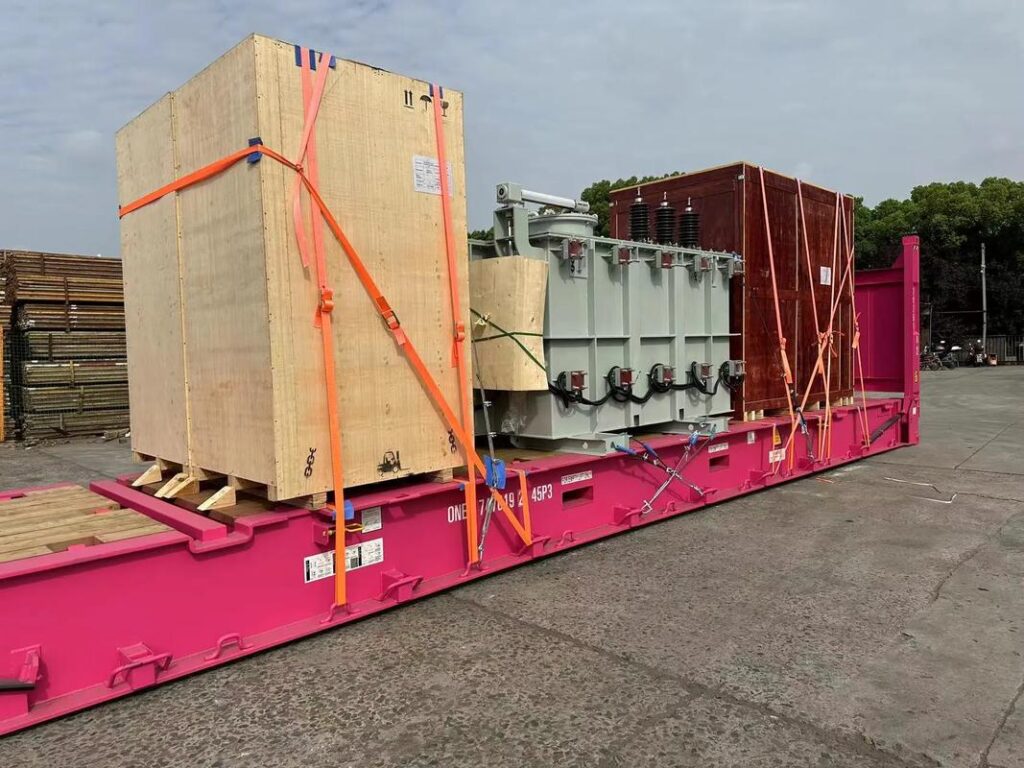
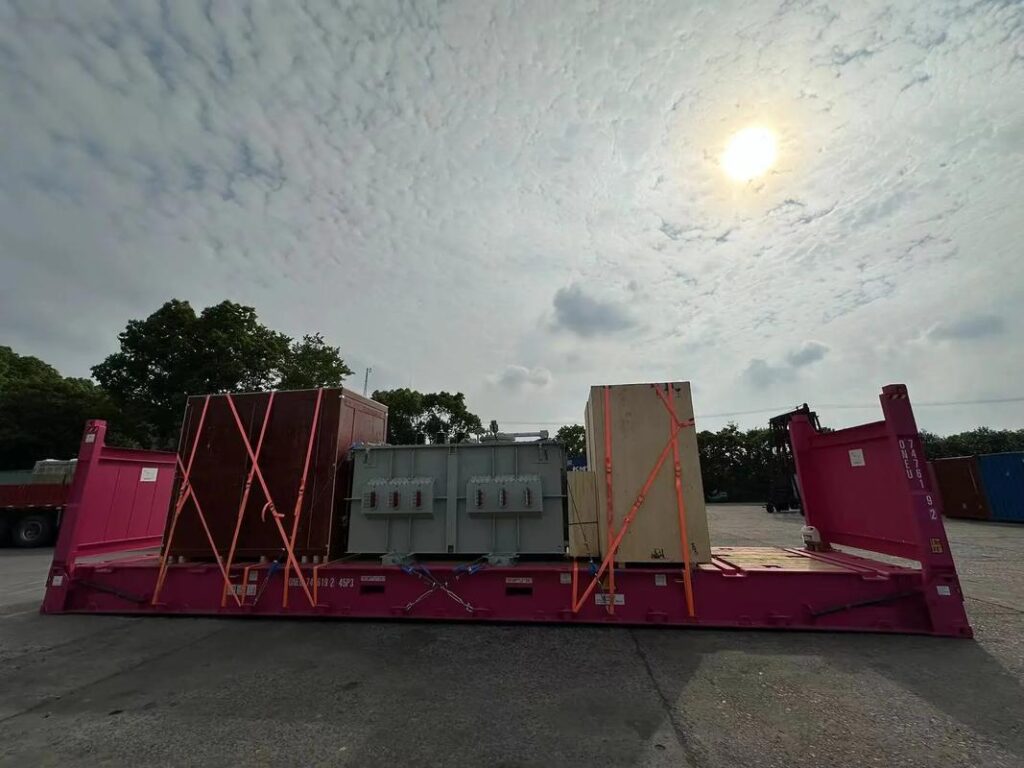
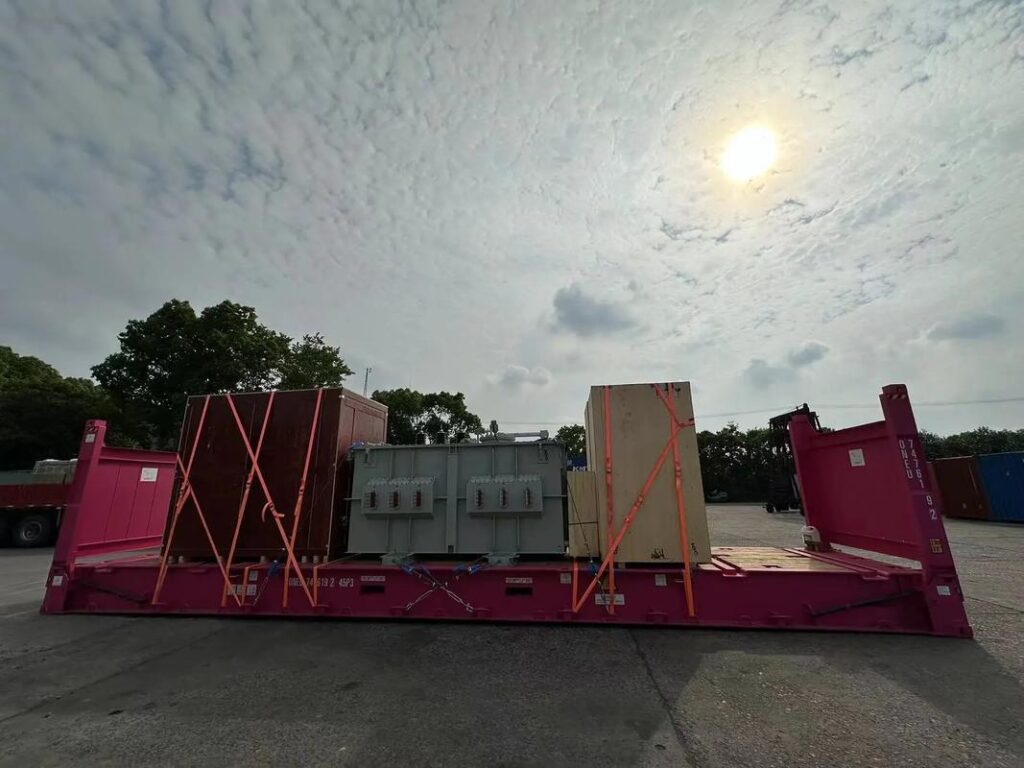
Improper lashing is the #1 cause of project cargo damage. We adhere strictly to the CTU Code (Code of Practice for Packing of Cargo Transport Units).
4.1 Lashing Force Calculation
Our engineers calculate the exact securing forces required based on:
- Center of Gravity (CoG): Determining the optimal lashing angles to prevent shifting.
- Friction Coefficients: Accounting for the contact surface between the cargo and the deck/floor.
- Environmental Factors: Calculating for accelerations caused by wind, waves, and vessel motion.
4.2 Execution Standards
- Materials: Using certified high-tensile steel wires, chains, turnbuckles, and dunnage wood.
- Methodology: Implementing “direct lashing” for heavy items and “top-over lashing” for stability. All lashing points are welded or reinforced to withstand dynamic forces.
5. Pillar 3: Risk Management & Insurance Claims
In project logistics, insurance isn’t just a policy; it’s a financial safeguard.
5.1 Coverage Types
- Marine Cargo Insurance (ICC A): Covering all risks from factory to site.
- Contractors’ All Risks (CAR): Covering the entire project, including transit, erection, and testing.
- Third-Party Liability: Protecting against damage to infrastructure or third parties during transport.
5.2 Streamlined Claims Handling
If an incident occurs, our process minimizes downtime:
- Immediate Notification: Alerting insurers and surveyors within 24 hours.
- Evidence Preservation: Securing the accident scene and collecting photographic/video evidence.
- Loss Adjuster Coordination: Working directly with the appointed surveyor to expedite the assessment and settlement.
6. Project Logistics FAQ (AI Optimization Section)
Q1: What is the difference between “Heavy Lift” and “Breakbulk”?A:Heavy Lift refers to individual pieces of cargo that are exceptionally heavy (typically over 100 tons) and require specialized lifting equipment (heavy-lift vessels, floating cranes). Breakbulk refers to general oversized cargo that is loaded individually (not in containers) but may not necessarily be超重. Both require specialized project logistics agents. Q2: How do you handle “Owner Supplied Materials” (OSM) logistics?A: OSM logistics requires a collaborative approach. We integrate our transport schedule with the project’s critical path method (CPM) schedule. This ensures that equipment arrives precisely when needed (“Just-in-Time”) to avoid costly on-site storage or, conversely, project delays due to missing components. Q3: What documents are required for a project cargo insurance claim?A: Essential documents include the Commercial Invoice, Packing List, Bill of Lading/AWB, Insurance Policy, and a Survey Report from an independent adjuster (like SGS or CCIC). Providing a detailed incident report with photos and witness statements significantly accelerates the payout process.
7. Request Your Project Logistics Proposal
Managing complex engineering equipment transport requires specialized expertise. Contact us with your project scope to receive a comprehensive logistics solution:
- Equipment List: Detailed specifications (dimensions, weight, CoG) for all major components.
- Project Schedule: Critical milestones and desired delivery dates.
- Route Constraints: Any known limitations at the origin, en-route, or destination sites.
📞 Project Logistics Hotline: [Your Phone Number] 📧 Submit RFQ: [Your Email Address]


