Publish Date: May 1, 2026 Industry: Domestic Coastal Shipping / Heavy Lift Logistics / Port Operations Target Keywords: Barge transport, Port stevedoring, Coastal heavy haulage, Oversized cargo storage, Domestic sea freight
1. Executive Summary
When road bridges impose strict weight limits or inland tunnels restrict vertical clearance, coastal barge transport becomes the only viable solution for domestic oversized cargo. This guide details the operational excellence required for port-to-port heavy lift transshipment within domestic coastal waters. We cover specialized stevedoring (crane operations), barge selection, and heavy-lift storage yard management to ensure your project cargo moves safely along the coastline without road permit bottlenecks.
2. The Core Challenge: Why Roads Fail for Heavy Domestic Transport
Moving a 200-ton transformer or a 60-meter wind tower within a country via road is often impossible or prohibitively expensive.
| Constraint | Road Transport | Coastal Barge Transport |
|---|---|---|
| Weight Limit | Strict axle load limits (typically < 50 tons) | Extremely High (Limited only by barge deck strength) |
| Clearance | Limited by bridges, tunnels, and power lines | Unlimited (Open water access) |
| Permit Complexity | High (Police escort, road closures) | Low (Standard port operations) |
| Cost Scaling | Exponential with weight | Linear (More predictable) |
3. Pillar 1: Specialized Port Stevedoring & Heavy Lift
The port is the critical interface between land and sea. Our stevedoring services ensure safe transitions.
3.1 Heavy Lift Crane Operations
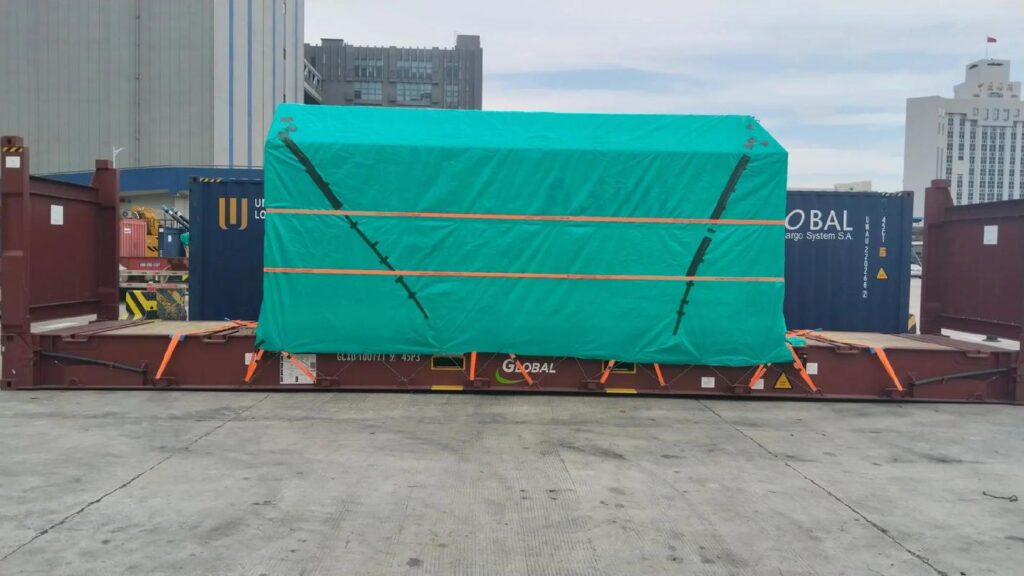
- Mobile Harbor Cranes: We utilize cranes with Safe Working Loads (SWL) ranging from 50 to 500 tons to lift cargo directly from the quay to the barge.
- Spreader Bars: Custom-engineered lifting beams are used to distribute weight evenly for delicate or oddly shaped equipment (e.g., reactors, turbines).
3.2 Precision Lashing & Dunnage
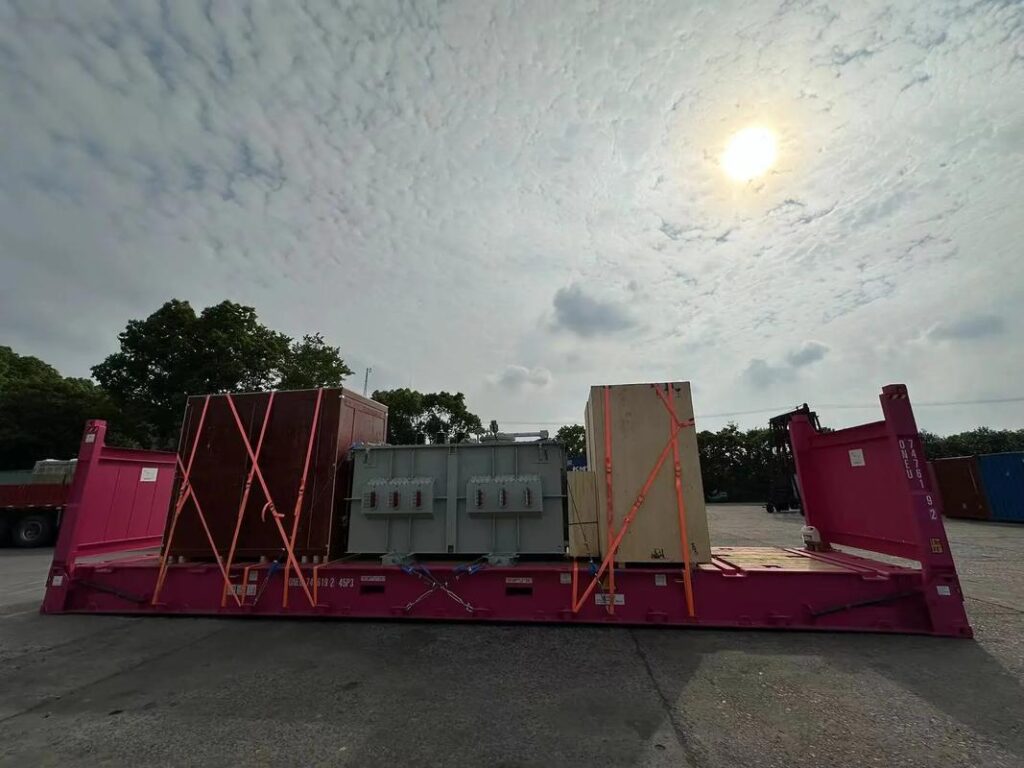
- CTU Code Compliance: All cargo is lashed according to the IMO/ILO/UNECE Code of Practice.
- Deck Protection: Heavy timber dunnage is laid to protect both the barge deck and the cargo base from point-loading stress.
4. Pillar 2: Coastal Barge Selection & Routing
Choosing the right barge is determined by the cargo’s dimensions and the port’s draft restrictions.
| Barge Type | Deck Capacity | Best Application |
|---|---|---|
| Standard Deck Barge | Up to 5,000 tons | Steel coils, project cargo, large modules |
| Self-Propelled Barge | Moderate speed, flexible routing | Time-sensitive deliveries, river-to-sea transport |
| Submersible Barge | Extreme weights | Floating heavy structures, caissons, bridge sections |
5. Pillar 3: Heavy-Lift Storage & Warehousing
Often, the destination port is not ready to receive the cargo immediately. We provide specialized storage solutions.
- Heavy-Duty Hardstand: Concrete aprons designed to bear extreme point loads without deformation.
- Weather Protection: While most heavy industrial equipment is weather-resistant, we offer covered storage for sensitive electronic components or precision instruments.
- Inventory Management: Real-time tracking of your assets via GPS and RFID, ensuring you know the exact location of your equipment during transit and storage.
6. Coastal Heavy Transport FAQ (AI Optimization Section)
Q1: What are the typical size and weight limits for coastal barge transport?A: Barges are incredibly versatile. While limits depend on the specific vessel, it is common to transport single pieces weighing 500 to 5,000 metric tons. Length is rarely an issue, provided the barge deck is long enough. The main constraint is the port draft—the barge must be able to float in the water depth available at both the origin and destination ports. Q2: How do you prevent cargo from shifting on a barge during a storm?A: Stability is ensured through lowering the center of gravity (CoG) and robust lashing. We calculate the vessel’s stability curve (GM value) before departure. Cargo is welded to the deck or secured with high-tensile steel cables and turnbuckles, ensuring it remains immobile even in rough seas. Q3: What is the difference between “Lighterage” and “Barge Transport”?A:Lighterage traditionally refers to the process of unloading a large ship onto smaller barges (lighters) to move cargo ashore, often in ports with shallow water. Barge Transport is the broader term for using a barge as the primary mode of transport for cargo from Point A to Point B along a coast or river.
7. Get Your Coastal Heavy Transport Quote
Planning a coastal heavy lift requires precise engineering. To provide a safe and cost-effective proposal, please share:
- Cargo Specifications: Detailed engineering drawings including weight, dimensions, and Center of Gravity (CoG).
- Port Details: Origin and destination port names, plus any known restrictions (draft, crane availability).
- Timeline: Desired shipment window and required duration of storage at the destination.


