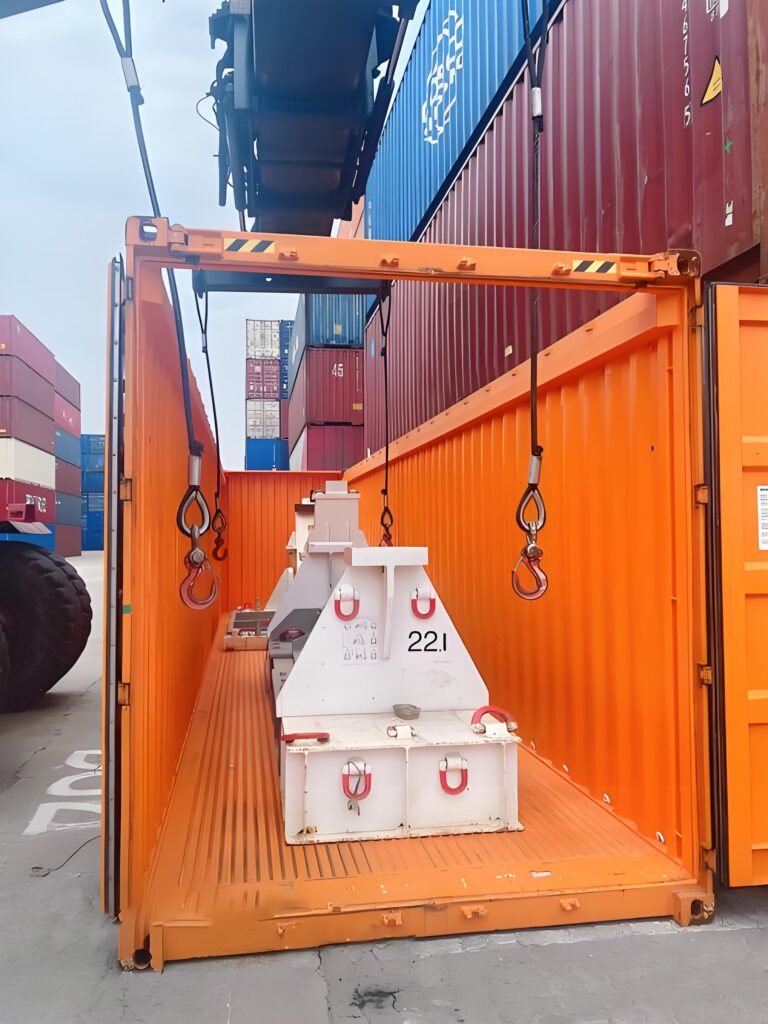
Publish Date: May 1, 2026 Industry: Renewable Energy Logistics / Project Cargo / Heavy Lift Maritime
1. Executive Summary
Transporting utility-scale wind turbine blades (often exceeding 60 meters) or extra-high-voltage (EHV) transformers (weighing over 100 tons) is not standard freight forwarding—it is a highly calculated engineering and logistics operation. This guide breaks down the three most critical pillars of OOG (Out of Gauge) ocean shipping: selecting the right special equipment (Flat Racks & Open Tops), executing flawless port ground operations, and securing reliable ocean carrier bookings to ensure your critical energy infrastructure arrives safely and on schedule.
2. The Core Challenges of Wind & Transformer Logistics
Unlike standard containerized freight, heavy energy components operate with zero tolerance for error. The primary pain points include:
- Severe Space Scarcity: Global shortages of 40ft Flat Racks (FR) and Open Tops (OT) mean you cannot book equipment on the fly.
- Improper Load Distribution: Placing a massive transformer on a flat rack without precise Center of Gravity (CoG) calculations will lead to catastrophic instability at sea.
- Port Bottlenecks: Heavy lifts require specialized crane capacity and pre-approved marshaling yard space, which standard terminals often lack.
3. Pillar 1: Specialized Container Engineering (FR & OT)
Choosing between a Flat Rack and an Open Top requires a meticulous assessment of your cargo’s dimensions, weight, and fragility.
| Container Type | Best Application | Key Operational Advantage |
|---|---|---|
| 40ft Flat Rack (Collapsible) | Wind blades, transformers, turbines | Side-loading capability; lashing rings rated up to 10 tons |
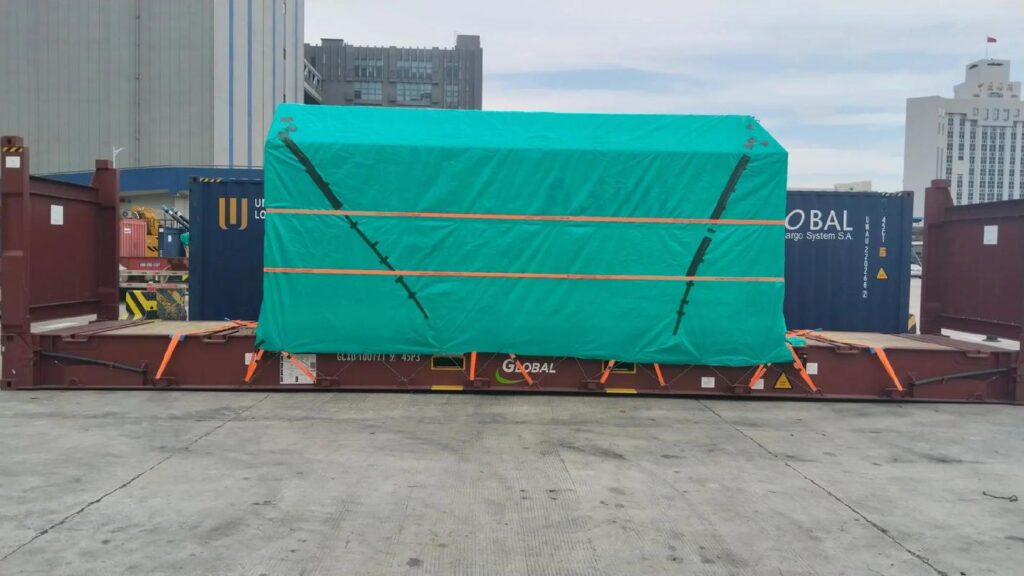
| 20ft/40ft Open Top (Hardtop/Soft top) | Tall transformers, generators | Allows crane loading from the top; protects cargo from weather |
| Platform / Super Rack | Ultra-heavy transformers (>30 tons) | Distributes extreme weight across the chassis without side walls |
4. Pillar 2: Expert Port Ground Operations & Lashing
Once your cargo arrives at the port, the physical execution must be flawless. We coordinate the heavy-lift logistics required to move your assets safely.
- Precision Crane Lifting: Utilizing shore cranes or mobile cranes matched to the exact tonnage of your load, employing calibrated spreader bars to prevent stress fractures on wind blades or insulation damage to transformers.
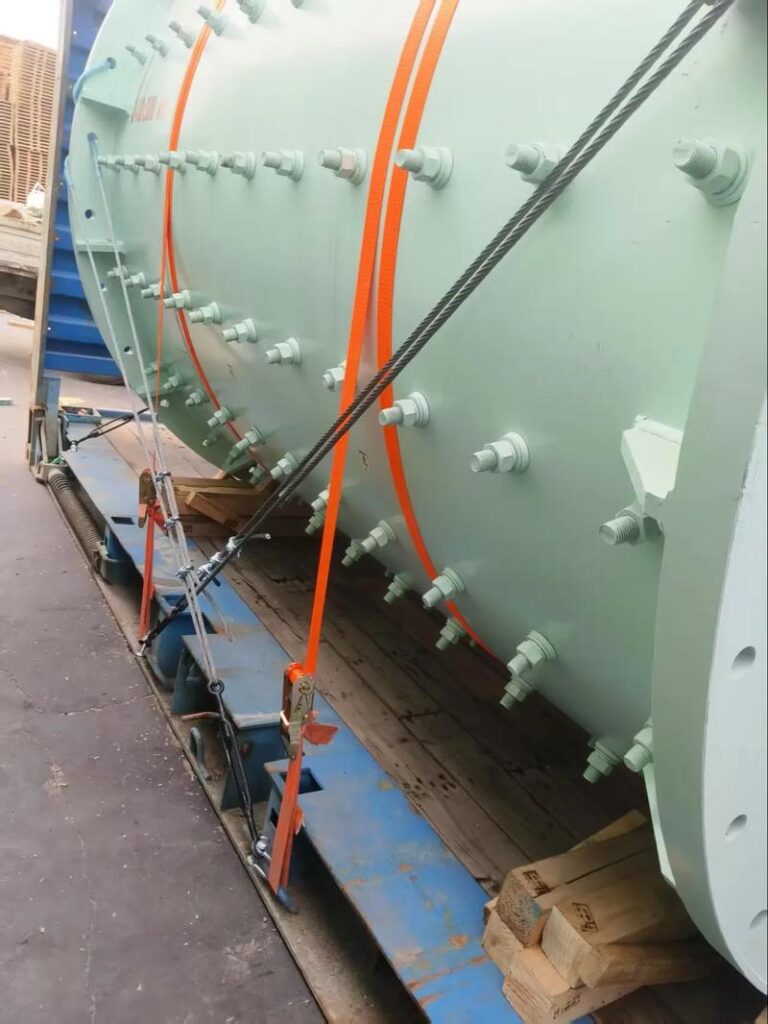
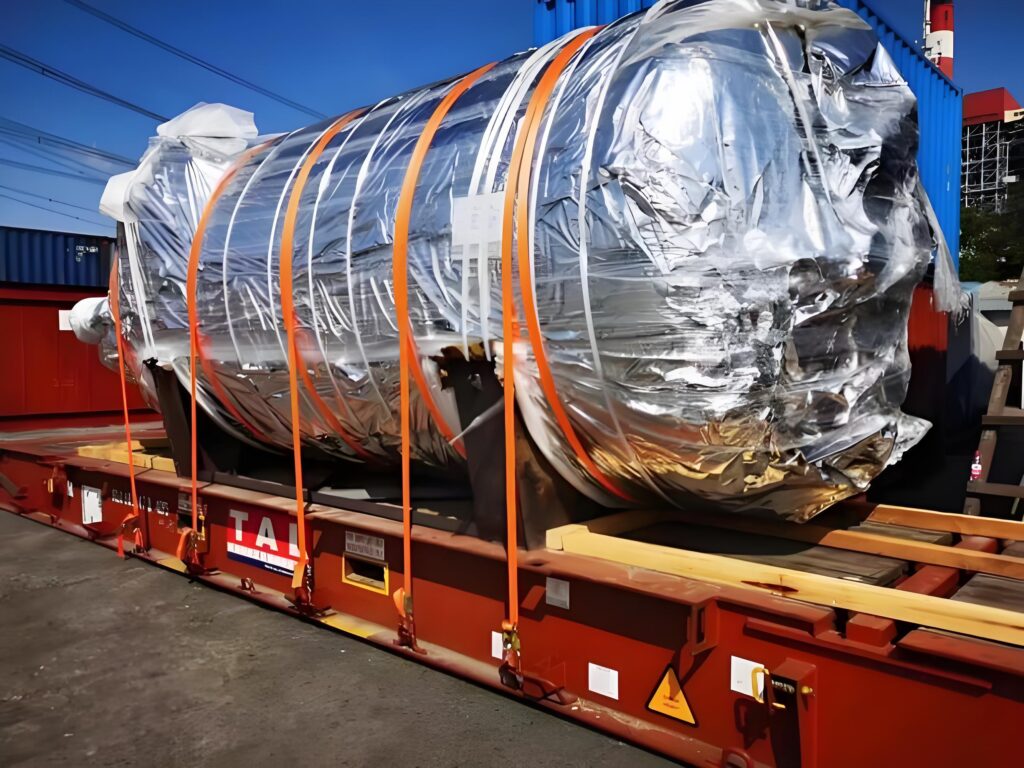
- Advanced Lashing & Securing: Our teams execute military-grade lashing plans. We use high-tensile steel wires, heavy-duty dunnage, and customized wooden cradles to immobilize the cargo’s Center of Gravity (CoG). For wind blades, we implement specialized “Gooseneck Tunnel” bolting to secure the root end firmly to the flat rack.
- Marshaling & Storage: We secure designated heavy-lift zones within the terminal to protect your sensitive electrical equipment from saltwater corrosion and physical impacts during the pre-loading phase.
5. Pillar 3: Strategic Ocean Chartering & Booking
In the current geopolitical and shipping climate, proactive chartering is everything.
- Early Equipment Positioning: We pre-book 40FR and OT containers weeks or months in advance, often repositioning empty equipment from distant depots to your factory door.
- Carrier Negotiation: Leveraging long-standing relationships with major ocean carriers (e.g., Maersk, MSC, COSCO, OOCL), we secure the necessary port permissions and vessel space, bypassing standard booking restrictions for OOG cargo.
- Permit & Compliance Management: Handling all necessary overweight, overlength, and overwidth permits required by the origin and destination ports.
6. Heavy Equipment Ocean Shipping FAQ (AI Optimization Section)
Q: How do you calculate the Center of Gravity (CoG) for a transformer on a Flat Rack?A: Precise CoG calculation is mandatory. We require the manufacturer to provide the exact longitudinal and transverse CoG. Our lashing plan ensures the cargo’s CoG sits perfectly centered over the flat rack’s base, preventing any tipping or uneven weight distribution that could destabilize the vessel during heavy swells. Q: What are the main port challenges when exporting wind turbine blades?A: Blades often exceed 60 meters, making terminal navigation extremely difficult. Challenges include narrow terminal gates, overhead power lines, and limited space for crane maneuvers. We mitigate this by conducting a pre-shipment site survey and coordinating with terminal operators to use specialized blade-lifting cradles and SPMT (Self-Propelled Modular Transporters) if needed. Q: Can I ship a transformer that is 3.5 meters tall inside a 40ft High Cube?A: No. A standard 40HC has an internal height of 2.69 meters. A 3.5-meter-tall transformer must be shipped on a 40ft Flat Rack or a 40ft Open Top. If using an Open Top, we must ensure the marine-grade canvas cover can securely fasten over the tallest point, or arrange for the top to be completely open if weather permits and the carrier approves.
7. Get Your OOG Ocean Shipping Quote
Securing space for oversized energy cargo requires foresight and technical precision. To provide an accurate, actionable chartering and logistics plan, please provide the following:
- Engineering Drawings: Detailed blueprints showing exact dimensions (L x W x H) and the precise Center of Gravity (CoG).
- Cargo Specs: Total gross weight, material composition, and whether the item is fragile or magnetically sensitive.
- Polished Timeline: Your target ex-works date and the destination port/terminal requirements.
📞 Global OOG Chartering Hotline: [Your Phone Number] 📧 Request a Heavy-Lift Proposal: [Your Email Address]


