For Austrian importers, wholesalers, distributors, manufacturers, and e-commerce businesses, choosing the right freight forwarder from China is an important part of managing an international supply chain.
China is one of the world’s largest manufacturing and export markets, while Austria provides access not only to its domestic market but also to the wider European market. B2B buyers regularly import machinery, electronics, furniture, textiles, footwear, industrial components, packaging materials, consumer products, spare parts, and other goods from Chinese suppliers.
However, international freight is more complicated than simply moving cargo from one country to another. A shipment may involve factory pickup, export documentation, customs procedures, international transportation, European import clearance, tax considerations, warehousing, and final delivery.
For this reason, the “best” China to Austria freight forwarder is not necessarily the company offering the lowest shipping rate. The better choice is usually a logistics partner that can provide a suitable transportation solution, transparent pricing, accurate documentation support, reliable communication, and experience handling the type of cargo being imported.
This guide explains what Austrian B2B buyers should look for when selecting a China to Austria freight forwarder.
What Does a China to Austria Freight Forwarder Do?
A freight forwarder coordinates transportation and related logistics services on behalf of the importer or exporter.
Depending on the service, a China-to-Austria shipment may involve:
- Pickup from a Chinese factory
- Transportation to a port, airport, or rail terminal
- Export customs procedures
- Cargo consolidation
- International transportation
- Import customs coordination
- Destination handling
- Warehousing
- Local transportation
- Final delivery
A forwarder may not physically operate every transportation asset involved. Instead, the forwarder coordinates carriers, warehouses, customs brokers, trucking companies, and other logistics partners.
For B2B buyers, this coordination function can be extremely valuable.
Why Choosing the Right Freight Forwarder Matters
A freight forwarder can directly affect the predictability of your supply chain.
Suppose an Austrian company imports products from three different Chinese suppliers.
The products may come from:
- Shenzhen
- Guangzhou
- Ningbo
If each supplier ships independently, the buyer may need to manage multiple shipments, documents, tracking numbers, arrival dates, and invoices.
A freight forwarder may be able to consolidate eligible cargo into a more efficient logistics plan.
This can potentially reduce handling complexity and make inventory planning easier.
A good forwarder should also help the importer understand the difference between transportation cost and total landed logistics cost.
Air Freight, Sea Freight or Rail Freight?
B2B importers should not automatically use the same transportation method for every shipment.
The appropriate method depends on cargo volume, weight, urgency, value, and budget.
| Transportation | Main Advantage | Typical B2B Application |
|---|---|---|
| Air Freight | Speed | Urgent or high-value cargo |
| Sea FCL | Cost efficiency for large shipments | Full container imports |
| Sea LCL | Consolidation | Smaller commercial shipments |
| Rail Freight | Balance of time and cost | Selected medium-volume shipments |
| Express | Convenience | Samples and small parcels |
| Multimodal | Flexible routing | Complex supply chains |
A professional freight forwarder should explain the advantages and limitations of each option rather than pushing every customer toward the same service.
Air Freight from China to Austria for B2B Cargo
Air freight is often appropriate when inventory needs to arrive quickly.
B2B customers may use air freight for:
- Production components
- Spare parts
- Samples
- Electronics
- High-value goods
- Fashion products
- Urgent replacement items
- Time-sensitive orders
The primary advantage is speed.
However, air freight can become expensive when the shipment is heavy or bulky.
Another important issue is chargeable weight.
The airline may calculate freight charges using actual weight, volumetric weight, or the applicable carrier rule.
For example, a large carton containing lightweight products can occupy considerable aircraft capacity even though its actual weight is relatively low.
Therefore, B2B importers should provide accurate carton dimensions when requesting an air freight quotation.
Sea Freight for Large B2B Shipments
For companies importing large quantities from China, sea freight is often an important option.
There are two major categories.
FCL Shipping
FCL means Full Container Load.
The buyer uses a complete container.
Common options include:
- 20-foot container
- 40-foot container
- 40-foot high-cube container
FCL can be appropriate for manufacturers, distributors, wholesalers, and companies importing large quantities.
The final cost depends on the origin, destination, container type, transportation route, port charges, inland transportation, and other services.
LCL Shipping
LCL means Less than Container Load.
The buyer does not need a complete container and shares container space with other shipments.
LCL can be useful for smaller B2B orders.
However, LCL involves consolidation and deconsolidation, so the total logistics process may involve more handling than FCL.
When comparing LCL quotations, buyers should look beyond the ocean freight rate and check origin charges, destination charges, customs services, and final delivery.
Rail Freight for China-Austria B2B Shipments
Rail freight can be considered when a business wants an alternative between air and sea transportation.
It may be suitable for certain:
- Industrial products
- Machinery
- Components
- Electronics
- Furniture
- Commercial goods
- Medium-volume shipments
The main advantage is that rail can offer a different balance between transportation time and cost.
However, rail services depend on available routes, schedules, capacity, border procedures, and operational conditions.
A freight forwarder should therefore provide a current route and transit estimate rather than promising a fixed delivery time for every shipment.
How to Evaluate a China to Austria Freight Forwarder
A professional B2B buyer should evaluate several factors.
1. Experience with Austria and the EU
Ask whether the forwarder regularly handles China-to-Austria shipments.
Experience with European customs procedures and destination logistics can be valuable.
It is also useful to determine whether the company handles shipments to other EU markets such as Germany, France, Italy, Belgium, or the Netherlands.
A forwarder with a broad European logistics network may be able to provide more routing options.
2. Experience with Your Product
Not all cargo is the same.
A forwarder experienced in general consumer goods may not have the same expertise with:
- Lithium batteries
- Chemicals
- Machinery
- Food
- Medical products
- Oversized equipment
- Dangerous goods
- Temperature-sensitive products
Before booking, clearly explain what you are shipping.
For specialized cargo, ask whether the forwarder has handled similar shipments before.
3. Transparent Pricing
Price transparency is one of the most important factors in B2B logistics.
A quotation should explain the major cost components.
Depending on the service, these may include:
- Pickup
- Export handling
- Export customs
- International freight
- Destination handling
- Customs clearance
- Local transportation
- Warehousing
- Final delivery
- Applicable duties and taxes, where included
A low international freight rate does not necessarily mean a low total logistics cost.
For example, one forwarder might quote a low ocean freight rate but exclude several destination charges.
Another company might provide a higher initial quote that includes more services.
The second option could ultimately be more economical.
4. Realistic Transit Times
B2B companies need reliable delivery planning.
A freight forwarder should distinguish between:
Port-to-port transit
and
Door-to-door transit.
These are not the same.
For example, an advertised ocean transit time may only represent the international sea transportation portion.
Additional time may be required for:
- Supplier pickup
- Export customs
- Warehouse handling
- Port operations
- Import clearance
- Inland delivery
Therefore, ask:
“Does the quoted transit time include customs clearance and final delivery?”
This is especially important when the shipment is connected to a production schedule or customer delivery deadline.
5. Customs Documentation Support
Documentation errors can create serious problems for commercial imports.
Depending on the cargo, common documents may include:
- Commercial invoice
- Packing list
- Bill of lading or air waybill
- Product description
- HS code
- Country of origin
- Customs value
- Importer information
Additional documents may be required for certain products.
A freight forwarder should help identify the documents required for the transportation and customs process.
However, the importer remains responsible for ensuring that its commercial and product information is accurate.
China to Austria Customs Considerations
Austria is part of the European Union customs territory.
Goods imported from China must comply with applicable EU customs requirements and Austrian procedures.
Customs authorities may consider:
- Product classification
- Customs value
- Origin
- Product description
- Import documentation
- Applicable duty
- Import VAT
- Product-specific requirements
The correct HS classification is particularly important because customs classification can affect the applicable treatment of the goods.
Importers should not choose an HS code simply because it appears to offer a lower duty rate.
The classification should accurately describe the product according to the applicable customs rules.
Import VAT and Duties
B2B importers should distinguish between international transportation charges and import-related taxes.
Depending on the product and applicable regulations, imports into the EU may be subject to customs duties and import VAT.
The exact amount depends on factors such as:
- Customs value
- Product classification
- Origin
- Applicable tariff measures
- Import arrangements
- VAT rules
A freight forwarder can help coordinate customs clearance, but the importer should obtain appropriate tax and customs advice for its specific business situation.
Do not rely on a generic “tax included” statement without asking what the quotation actually covers.
DDP vs Traditional Import Arrangements
Some B2B buyers prefer DDP because it simplifies logistics.
Under a DDP arrangement, the seller generally takes responsibility for delivering the goods to the agreed destination and handling applicable import obligations under the relevant Incoterms® rule.
Other buyers prefer arrangements where they control the import clearance and taxes themselves.
Neither approach is automatically better.
DDP may be attractive when:
- The buyer wants a simplified logistics process
- The buyer has limited import experience
- The shipment is relatively straightforward
- The parties have clearly defined responsibilities
Buyer-controlled import arrangements may be preferable when:
- The company has its own customs infrastructure
- The importer wants greater control over customs
- The company regularly imports large volumes
- The company has established tax and compliance procedures
The best option depends on the buyer’s business model.
Consolidating Shipments from Multiple Chinese Suppliers
One major advantage of working with an experienced freight forwarder is the possibility of shipment consolidation.
For example, an Austrian wholesaler may purchase:
- Packaging from Dongguan
- Shoes from Guangzhou
- Accessories from Yiwu
- Electronics from Shenzhen
Instead of shipping each order separately, the buyer may be able to arrange consolidation where the cargo and service conditions permit.
Potential benefits include:
- Fewer shipments
- Simplified tracking
- Better inventory coordination
- Potentially improved freight efficiency
- Easier shipment management
However, consolidation is not appropriate for every product or shipment.
Cargo compatibility, deadlines, packaging, customs requirements, and destination arrangements should be evaluated first.
Warehousing and Distribution in Austria
Some B2B buyers need more than international transportation.
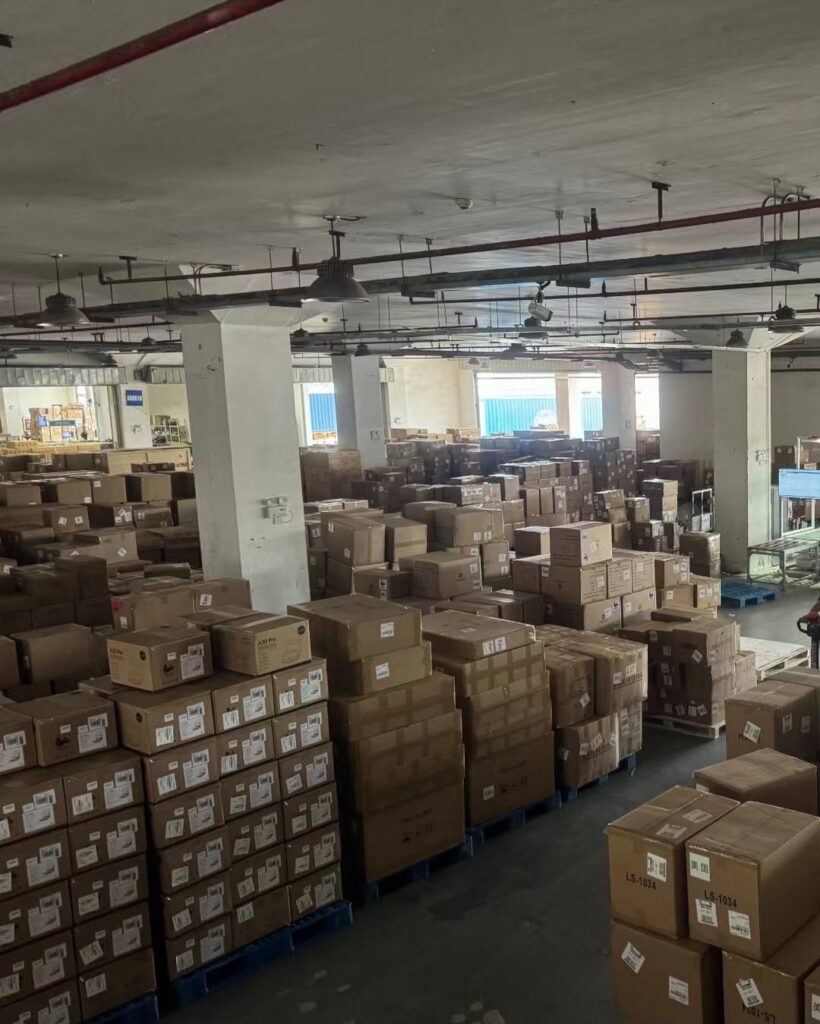
A freight forwarder or logistics partner may also provide:
- Temporary warehousing
- Cargo receiving
- Palletization
- Labeling
- Sorting
- Order preparation
- Local delivery
For businesses selling to multiple Austrian customers, warehousing can help separate international transportation from domestic distribution.
For example, a container arriving in Europe could be processed through a warehouse before individual orders are delivered to different customers.
The availability and suitability of these services should be evaluated based on the company’s sales volume and distribution model.
What Makes a Freight Forwarder Reliable?
Reliability is not simply about delivering one shipment successfully.
For B2B businesses, a reliable logistics partner should demonstrate:
Clear Communication
The company should respond to questions and provide meaningful shipment updates.
Transparent Pricing
The buyer should understand what is included and what can generate additional charges.
Documentation Discipline
Invoices, packing lists, transport documents, and shipment information should be handled carefully.
Problem-Solving Ability
International shipments can encounter delays or unexpected customs issues.
A good logistics provider should communicate problems quickly and propose practical solutions.
Consistent Service
For companies importing regularly, consistency is more valuable than a single unusually cheap shipment.
Questions to Ask Before Choosing a Freight Forwarder
Before signing a long-term logistics agreement, ask:
- How frequently do you ship from China to Austria?
- Which Chinese cities do you collect from?
- Do you provide air, sea, and rail services?
- Can you handle LCL and FCL?
- Can you consolidate cargo from multiple suppliers?
- Do you arrange customs clearance?
- What charges are included in the quotation?
- What charges are excluded?
- Is final delivery included?
- How is transit time calculated?
- Can you handle my product category?
- How are shipment updates provided?
- What happens if customs requires additional information?
- Can you provide warehouse or distribution services?
- Can you provide a written shipping plan before booking?
The answers can help buyers distinguish between a basic shipping provider and a more capable logistics partner.
How to Request a China to Austria Freight Quote
A professional freight quotation request should include complete cargo information.
For example:
Pickup: Shenzhen, China
Destination: Vienna, Austria
Product: Industrial components
Quantity: 20 cartons
Carton size: 60 × 40 × 50 cm
Gross weight: 320 kg
Total volume: Approximately 2.4 CBM
Cargo value: Provide the actual commercial value
Shipping requirement: Air, sea, or rail comparison
Delivery: Door-to-door
The forwarder can then evaluate the appropriate service and provide a more meaningful quotation.
Common Mistakes Made by B2B Importers
Choosing Only by Freight Rate
A cheap rate can become expensive if additional charges appear later.
Providing Incomplete Cargo Information
Incorrect dimensions or weight can result in a revised quotation.
Ignoring Customs Before Shipment
Customs problems are easier to prevent than to solve after the cargo has arrived.
Using the Wrong Product Description
The product description should accurately reflect the goods.
Assuming All DDP Services Are Identical
Different providers can have very different definitions of DDP service.
Failing to Plan Inventory
B2B importers should consider production time, transportation, customs clearance, and final delivery when calculating inventory requirements.
Building a Long-Term China-Austria Logistics Strategy
For companies importing from China regularly, it is better to develop a logistics strategy rather than arrange every shipment independently.
A long-term strategy may include:
Supplier Management
Maintain accurate supplier information and standard packaging requirements.
Shipping Schedule
Establish regular weekly or monthly shipping schedules.
Transportation Rules
For example:
- Urgent cargo → Air freight
- Large monthly orders → FCL
- Small commercial shipments → LCL
- Selected medium-volume shipments → Rail
Documentation Standards
Use consistent invoice, packing list, product description, and shipment information.
Cost Monitoring
Track the total landed logistics cost instead of only the international freight rate.
Performance Monitoring
Measure:
- Transit time
- Delivery accuracy
- Customs delays
- Additional charges
- Communication quality
- Damage rate
- Shipment reliability
This creates a measurable basis for evaluating the freight forwarder.
Frequently Asked Questions
What is the best freight forwarder from China to Austria?
There is no universal best freight forwarder for every company. The right provider depends on cargo type, shipment volume, transportation requirements, customs needs, budget, and destination.
What is the cheapest shipping method from China to Austria?
For large shipments, sea freight is often more economical than air freight. For smaller shipments, LCL or other consolidated solutions may be appropriate. The final cost depends on the complete logistics service.
Is air freight faster than rail and sea freight?
Generally, air freight is the fastest of the three main options, but the actual door-to-door delivery time also depends on pickup, customs clearance, handling, and final delivery.
Can a freight forwarder pick up goods from multiple Chinese factories?
Many freight forwarders can coordinate multiple pickups and consolidation, subject to cargo compatibility, schedule, location, and service availability.
Can a freight forwarder deliver directly to an Austrian warehouse?
Yes. Door-to-door services can be arranged for eligible shipments, but the quotation should clearly specify whether final-mile delivery is included.
Should Austrian companies use DDP?
DDP can simplify logistics for some buyers, but it is not automatically the best option. Companies should compare DDP with buyer-controlled import arrangements based on their tax, customs, compliance, and operational requirements.
Conclusion
For B2B shipments from China to Austria, selecting the right freight forwarder is an important business decision.
The best logistics partner should not simply offer a low freight rate. It should provide a transportation solution that matches the cargo, explain the costs clearly, support accurate documentation, coordinate customs procedures, communicate effectively, and provide reliable delivery arrangements.
Air freight can be useful for urgent shipments, sea freight is often suitable for large-volume cargo, and rail freight can provide another option for businesses seeking a balance between transportation time and cost.
For regular importers, the goal should be to build a stable China-Austria logistics system rather than finding the cheapest price for every individual shipment.
Before making a decision, compare the complete service scope, total logistics cost, transit-time definition, customs responsibilities, destination charges, and communication process.
A carefully selected freight forwarding partner can help Austrian B2B importers reduce logistics uncertainty, improve inventory planning, and build a more reliable supply chain with Chinese suppliers.


