Importing goods from China to Austria involves more than international transportation. A successful shipment requires coordination between Chinese suppliers, freight forwarders, carriers, customs authorities, and the final delivery provider.
For Austrian importers, wholesalers, manufacturers, e-commerce businesses, and distributors, door-to-door shipping from China to Austria can simplify this process by combining supplier pickup, export procedures, international transportation, import customs clearance, and final delivery into one coordinated logistics service.
However, door-to-door shipping does not eliminate customs requirements. Importers still need accurate product information, appropriate documentation, correct customs classification, and compliance with applicable EU requirements.
This guide explains how China-to-Austria door-to-door logistics works, what happens during customs clearance, which documents are commonly required, how transportation costs are calculated, and how importers can avoid common logistics problems.
What Is China to Austria Door-to-Door Shipping?
Door-to-door shipping means that the logistics provider coordinates transportation from the supplier’s location in China to the agreed delivery address in Austria.
Depending on the service, the process may include:
- Pickup from the Chinese supplier
- Export warehouse handling
- Export customs procedures
- International transportation
- Import customs clearance
- Destination handling
- Inland transportation
- Final delivery in Austria
The transportation method can be:
- Air freight
- Sea freight
- Rail freight
- Multimodal transportation
- Express or parcel services for smaller shipments
The exact services included should always be confirmed in writing.
A quotation described as “door-to-door” should specify the pickup point, delivery point, customs responsibilities, and any excluded charges.
Why Choose Door-to-Door Shipping from China to Austria?
Door-to-door logistics is particularly attractive to companies that do not want to manage every stage of international transportation themselves.
One Logistics Contact
Instead of contacting different companies for pickup, international freight, customs clearance, and final delivery, the importer can work with one logistics provider.
Easier Shipment Management
The forwarder coordinates different transportation stages and provides shipment updates.
Simplified Logistics Planning
The importer can plan around one overall transportation process instead of several independent bookings.
Suitable for Different Shipment Sizes
Depending on the service provider, door-to-door solutions may be available for:
- Small parcels
- Commercial samples
- LCL shipments
- FCL containers
- Air cargo
- Rail shipments
- Large commercial shipments
China to Austria Door-to-Door Shipping Process
Understanding the complete process helps importers know where delays or additional costs may occur.
Step 1: Supplier Pickup in China
The process begins when the freight forwarder collects the cargo from the Chinese supplier.
The pickup location could be:
- Shenzhen
- Guangzhou
- Dongguan
- Shanghai
- Ningbo
- Yiwu
- Qingdao
- Other manufacturing areas
Pickup costs depend on the distance, cargo size, vehicle requirements, and warehouse conditions.
For multiple suppliers, the forwarder may also arrange several pickups and consolidate eligible shipments.
Step 2: Cargo Inspection and Warehouse Handling
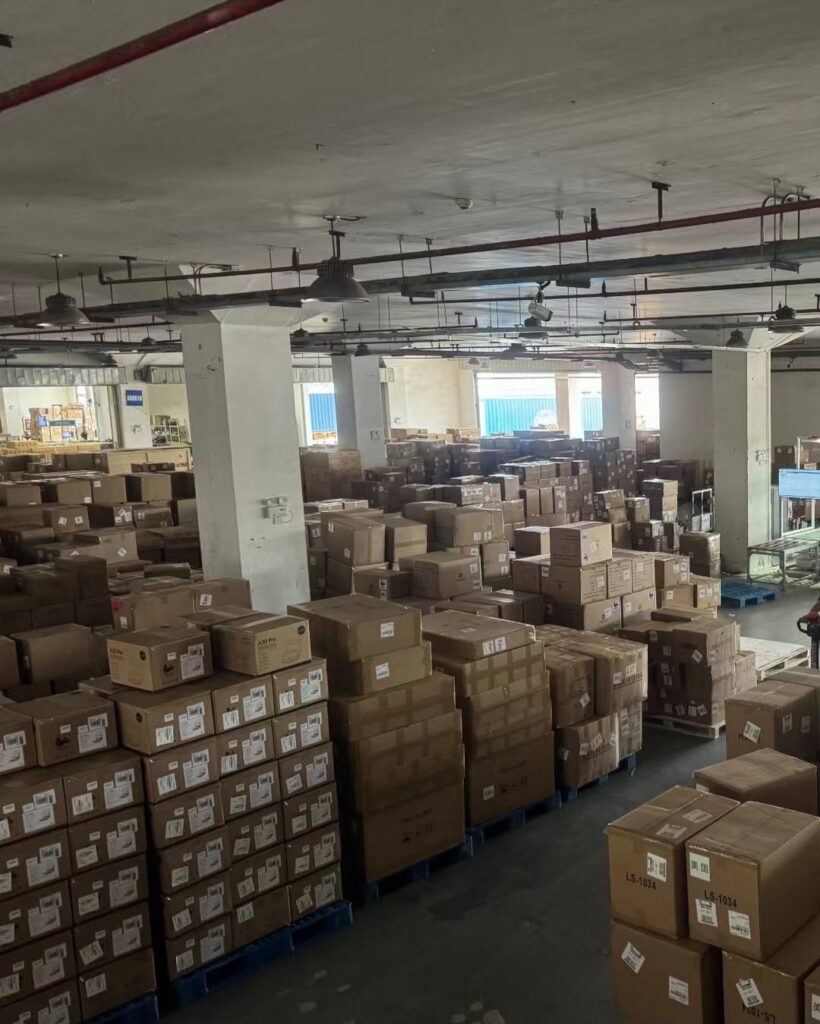
After pickup, cargo may be delivered to a logistics warehouse.
Depending on the service, warehouse operations may include:
- Cargo receiving
- Weight verification
- Dimension measurement
- Label checking
- Carton counting
- Consolidation
- Palletization
- Repacking
- Export documentation preparation
This stage is particularly useful when goods come from several Chinese suppliers.
However, warehouse handling can create additional charges if special services are required.
Step 3: Export Customs Clearance in China
Commercial exports from China generally require the appropriate export customs procedures.
The documentation may include:
- Commercial invoice
- Packing list
- Product description
- HS code
- Export information
- Transportation documents
The exact requirements depend on the product and transaction structure.
Incorrect product descriptions, inconsistent quantities, or incomplete documentation can delay the shipment.
For this reason, importers should provide accurate information before the cargo reaches the export warehouse.
Step 4: International Transportation
After export procedures, the cargo begins international transportation.
The choice of transportation method depends on shipment characteristics.
Air Freight
Air freight is suitable when delivery speed is important.
Typical applications include:
- Samples
- Electronics
- Spare parts
- High-value products
- Urgent replenishment orders
- Small commercial shipments
Air freight is usually more expensive than sea transportation for large or heavy cargo.
Sea Freight
Sea freight is commonly used for larger shipments.
It can be arranged as:
- FCL
- LCL
FCL is generally suitable for larger quantities, while LCL can be used when the shipment does not require a full container.
Rail Freight
Rail freight can provide an alternative for certain commercial shipments.
It may be considered when the importer wants a different balance between speed and transportation cost.
Actual routes and schedules should be confirmed before booking because international rail services can change.
Step 5: Arrival in the EU and Import Customs Clearance
One of the most important stages is import customs clearance.
Austria is part of the European Union customs territory, so goods imported from China must comply with applicable EU customs procedures.
Customs authorities may examine:
- Product classification
- Customs value
- Country of origin
- Product description
- Import documentation
- Applicable customs duty
- Import VAT
- Product-specific requirements
The exact requirements depend on the goods.
For example, electronics, machinery, batteries, chemicals, food products, medical products, toys, and other regulated products may require additional documentation or compliance measures.
What Documents Are Required for Customs Clearance?
The exact documentation depends on the shipment and product, but common documents include:
Commercial Invoice
The invoice normally contains information such as:
- Seller
- Buyer
- Product description
- Quantity
- Unit price
- Total value
- Currency
- Country of origin
- Applicable trade terms
Packing List
The packing list may contain:
- Number of cartons
- Carton dimensions
- Gross weight
- Net weight
- Packaging information
Transport Document
Depending on the transportation method, this may be:
- Bill of lading
- Sea waybill
- Air waybill
- Rail transport document
HS Code
The HS code is used to classify the imported product for customs purposes.
Incorrect classification can create customs problems or incorrect duty calculations.
Product Documentation
Certain products may require additional documents, certificates, declarations, technical information, or other evidence of compliance.
Importers should determine these requirements before shipping.
How Customs Value Is Important
Customs valuation is an important part of import clearance.
The customs value can affect the calculation of applicable customs duties and other import charges.
Importers should therefore avoid artificially declaring an incorrect cargo value.
The commercial documentation should accurately represent the transaction.
If customs authorities have questions about the declared value, the importer may need to provide additional supporting documentation.
Accurate invoices and consistent transaction records can make the customs process easier.
Import VAT and Customs Duties
When goods enter the EU from China, applicable customs duties and import VAT may arise depending on the product and circumstances.
The exact amount depends on factors such as:
- Product classification
- Customs value
- Origin
- Applicable tariff measures
- Import arrangement
- Tax rules
Importers should distinguish between:
International freight cost
and
Import taxes and duties.
They are not the same thing.
A shipping quotation should clearly explain whether duties and taxes are included.
DDP Door-to-Door Shipping
Some importers prefer a DDP arrangement because it can simplify the logistics process.
DDP means Delivered Duty Paid under Incoterms® rules.
Under the DDP rule, the seller generally bears responsibility for delivering the goods to the agreed destination and handling applicable import obligations, including duties and taxes, subject to the contractual arrangement and applicable law.
A China-to-Austria DDP service may therefore combine:
- Supplier pickup
- Export clearance
- International freight
- Import customs procedures
- Applicable duties and taxes
- Final delivery
However, importers should never assume that every company using the term “DDP” provides exactly the same service.
Ask for a written explanation of:
- What is included
- What is excluded
- Who handles customs
- Who is responsible for taxes
- What happens during customs inspection
- Whether final delivery is included
Door-to-Door Shipping Cost from China to Austria
There is no universal door-to-door shipping price.
A logistics provider normally considers several factors.
Cargo Weight
Heavy cargo generally costs more to transport.
For air freight, chargeable weight may be based on actual or volumetric weight according to the applicable carrier rules.
Cargo Volume
Large-volume cargo can require more transportation and warehouse capacity.
Shipping Method
Air, sea, and rail have different pricing structures.
Origin Location
Pickup from a factory far from the export gateway can increase inland transportation costs.
Destination Location
Delivery to a major Austrian city may have a different cost from delivery to a remote location.
Product Type
Certain products require special handling or documentation.
Customs Requirements
Complex customs procedures can increase service costs.
Final-Mile Delivery
Residential delivery, restricted-access locations, special vehicles, or scheduled delivery can create additional charges.
How Air Freight Charges Can Be Calculated
Air freight often uses chargeable weight.
A commonly used volumetric formula is:
Length × Width × Height ÷ 6000
For example, a carton measuring:
80 × 50 × 40 cm
would have a volumetric weight of:
80 × 50 × 40 ÷ 6000 = 26.67 kg
If the actual gross weight is 18 kg, the applicable carrier rules may result in the shipment being charged according to volumetric weight.
The exact divisor and calculation method can vary, so the importer should confirm the carrier’s pricing rule.
Sea Freight Door-to-Door
Sea freight is often appropriate for large B2B shipments.
FCL Door-to-Door
The importer books a complete container.
The logistics process may include:
Factory → Export Terminal → Port → International Transportation → EU Customs → Inland Delivery → Austrian Warehouse
FCL can be suitable for large orders of:
- Furniture
- Machinery
- Building materials
- Industrial components
- Consumer goods
- Packaging products
LCL Door-to-Door
For smaller shipments, LCL can be used to share container space with other cargo.
The process may involve:
Factory → Consolidation Warehouse → Port → International Transportation → Deconsolidation → Customs → Final Delivery
LCL can reduce the need to book a complete container but may involve additional handling.
Rail Door-to-Door Shipping
Rail transportation can be considered for selected cargo where the importer wants an alternative to air and sea.
A multimodal rail shipment can involve:
Factory Pickup → Chinese Rail Terminal → International Rail Transportation → European Terminal → Customs → Truck Delivery → Austria
The actual route depends on the service available at the time of booking.
Importers should ask whether the quoted transit time includes:
- Pickup
- Terminal handling
- Customs
- Final delivery
Product Compliance for Austrian Imports
Customs clearance and product compliance are related but not identical.
A shipment may clear customs and still require the importer to meet applicable product regulations before the goods are placed on the Austrian or wider EU market.
Depending on the product, requirements may concern:
- Product safety
- Labeling
- Electrical safety
- Machinery requirements
- Battery regulations
- Chemical regulations
- Packaging obligations
- CE-related requirements where applicable
- Other sector-specific rules
Therefore, B2B importers should identify compliance requirements before ordering large quantities.
A freight forwarder can support logistics and customs coordination, but the importer should not assume that the forwarder automatically takes responsibility for every product compliance obligation.
How to Choose a China to Austria Door-to-Door Freight Forwarder
A professional logistics provider should be evaluated on several criteria.
China Pickup Network
Can the company collect goods from your supplier’s location?
Austria Delivery Capability
Can it deliver directly to your warehouse, office, or distribution center?
Customs Experience
Does it have experience coordinating China-EU import shipments?
Product Knowledge
Has it handled your product category before?
Pricing Transparency
Does the quotation clearly explain included and excluded charges?
Tracking
Can you receive meaningful shipment updates?
Problem Resolution
How does the company respond when customs or transportation problems occur?
Communication
Can the company provide timely answers in English or another suitable business language?
For regular B2B importers, these factors can be more important than a small difference in freight rates.
Questions to Ask Before Booking
Before confirming a shipment, ask:
- Is the service truly door-to-door?
- Is pickup from my Chinese supplier included?
- Is export customs clearance included?
- Is import customs clearance included?
- Are duties and taxes included?
- Is final delivery in Austria included?
- What charges are excluded?
- Does the transit time include customs clearance?
- What documents are required?
- Can you handle my specific product?
- Can you provide cargo tracking?
- What happens if customs inspects the shipment?
- Are warehouse charges included?
- Are remote-area delivery charges included?
- What happens if the shipment is delayed?
Getting these answers before shipping can prevent many misunderstandings.
Common China to Austria Shipping Problems
1. Incorrect Weight or Dimensions
If the actual cargo differs significantly from the original information, the freight cost may be recalculated.
2. Incorrect Product Description
A vague or inaccurate description can create customs questions.
3. Incorrect HS Classification
An incorrect HS code can affect customs processing and duty treatment.
4. Missing Documents
Incomplete documentation can delay customs clearance.
5. Unexpected Destination Charges
Some low-cost quotations exclude destination handling, storage, customs, or final delivery.
6. Product Compliance Problems
Certain goods may require additional documentation or compliance measures.
7. Unrealistic Transit Expectations
International transportation involves several stages. A quoted transportation time is not always the same as the complete door-to-door delivery time.
How to Reduce China to Austria Logistics Costs
Cost control does not necessarily mean choosing the cheapest freight forwarder.
Instead, importers can improve efficiency through better planning.
Consolidate Shipments
Combine eligible orders from multiple suppliers when practical.
Improve Packaging
Reduce unnecessary packaging volume without compromising product protection.
Plan Orders Earlier
Avoid expensive emergency air freight whenever possible.
Compare Transportation Modes
Request air, sea, and rail options for suitable shipments.
Use Accurate Cargo Information
Correct weight and dimensions reduce quotation adjustments.
Negotiate Regular Shipping Volumes
Companies with stable shipping volumes may be able to negotiate better logistics arrangements.
Monitor Total Landed Cost
Evaluate:
Product Cost + Freight + Customs + Taxes + Local Delivery + Other Logistics Charges
rather than focusing only on the international freight rate.
China to Austria Door-to-Door Shipping Checklist
Before shipment, confirm:
- [ ] Supplier pickup address
- [ ] Austrian delivery address
- [ ] Product description
- [ ] Quantity
- [ ] Number of cartons
- [ ] Carton dimensions
- [ ] Gross weight
- [ ] Total CBM
- [ ] Cargo value
- [ ] HS code
- [ ] Shipping method
- [ ] Incoterms®
- [ ] Customs responsibilities
- [ ] Duty and tax arrangements
- [ ] Included charges
- [ ] Excluded charges
- [ ] Transit-time definition
- [ ] Product compliance
- [ ] Tracking arrangements
This checklist can help prevent avoidable problems.
Frequently Asked Questions
How long does China to Austria door-to-door shipping take?
There is no single transit time for all shipments. Air, sea, and rail have different transportation schedules, while pickup, customs clearance, handling, and final delivery also affect the total time.
Ask the freight forwarder for a complete door-to-door estimate rather than only an international transportation time.
What is the cheapest way to ship from China to Austria?
For large commercial shipments, sea freight is often more economical than air freight. Smaller shipments may be suitable for LCL or consolidated services.
The lowest-cost solution depends on the shipment’s weight, volume, urgency, and destination.
Can a freight forwarder handle customs clearance?
Many freight forwarders can coordinate customs clearance through their own or partner customs services. The exact arrangement should be confirmed before booking.
Can I ship from multiple Chinese suppliers?
In many cases, a freight forwarder can coordinate multiple pickups and consolidate eligible cargo.
The feasibility depends on supplier locations, product characteristics, shipping schedules, and customs requirements.
Is DDP the same as door-to-door shipping?
No.
Door-to-door describes the physical delivery scope, while DDP is an Incoterms® trade rule that defines responsibilities between seller and buyer.
A shipment can be door-to-door without being DDP.
Do I need a commercial invoice?
For commercial international shipments, an invoice is commonly required for customs valuation and clearance. The exact documentation depends on the shipment and applicable rules.
Can all products be shipped from China to Austria?
Not necessarily.
Some products are subject to additional import, transport, safety, or compliance requirements. These should be checked before shipment.
Final Thoughts
China to Austria door-to-door logistics can simplify international shipping for importers by coordinating supplier pickup, export procedures, international transportation, import customs clearance, and final delivery.
However, a successful shipment depends on accurate information and clearly defined responsibilities.
Before booking, provide the freight forwarder with accurate cargo details, confirm the HS classification, clarify customs requirements, verify whether duties and taxes are included, and ask exactly what the quoted transit time covers.
For urgent cargo, air freight may be appropriate. For large-volume shipments, sea freight can offer better cost efficiency. Rail freight can provide another option for selected commercial shipments.
The most reliable China to Austria logistics strategy is not simply to find the lowest freight rate. It is to select a logistics solution that provides transparent costs, accurate documentation, appropriate transportation, professional customs coordination, realistic delivery expectations, and dependable final-mile service.
For businesses importing from China regularly, building a stable door-to-door logistics process can make purchasing, inventory planning, and European distribution considerably easier to manage.


