Shipping commercial goods from China to the Netherlands involves much more than booking an ocean container or an air shipment.
For an importer, the shipment needs to move through several stages:
Supplier → Pickup → Export Clearance → International Transportation → Netherlands Import Clearance → Final Delivery
If any part of this process is poorly planned, the shipment can face delays, unexpected charges, customs problems, or delivery issues.
The good news is that the process becomes much easier when you understand what needs to happen before the cargo leaves China.
This guide explains how to ship goods from China to the Netherlands step by step, including supplier pickup, consolidation, LCL and FCL shipping, air freight, customs clearance, documentation, DDP options, and final delivery.
Step 1: Confirm Your Product and Shipping Requirements
Before contacting a freight forwarder, collect the basic information about your shipment.
You should know:
- Product name
- Product description
- Quantity
- Number of cartons
- Carton dimensions
- Gross weight
- Total CBM
- Product value
- Supplier location
- Netherlands delivery address
- Preferred shipping method
- Required delivery date
For example:
Product: Industrial components
Quantity: 500 pieces
Cartons: 20
Total weight: 850 kg
Total volume: 5.2 CBM
Supplier: Dongguan, China
Destination: Rotterdam, Netherlands
The more accurate this information is, the more useful your freight quotation will be.
Do not simply tell a forwarder:
“I have some goods. How much is shipping to the Netherlands?”
A professional quotation requires actual cargo information.
Step 2: Decide Which Shipping Method to Use
The next decision is transportation mode.
The main options are:
- Sea freight
- Air freight
- LCL
- FCL
- DDP
- Express for smaller shipments
Sea Freight
Sea freight is generally suitable for larger commercial shipments where transportation cost is more important than speed.
LCL
LCL allows smaller shipments to share container space with other cargo.
FCL
FCL uses an entire container for your shipment.
Air Freight
Air freight is more suitable when delivery speed is more important than transportation cost.
DDP
DDP can provide a more comprehensive door-to-door solution, depending on the agreed service and quotation.
For a broader overview of LCL shipping from China to Europe, see China LCL Shipping to Europe: Transit Time, Cost, and Customs Clearance Guide.
Step 3: Compare LCL and FCL
If you are shipping by sea, you need to determine whether LCL or FCL is appropriate.
Choose LCL When:
- Cargo volume is relatively small
- You do not need a full container
- You are testing a new supplier
- You have several small orders
- You want to consolidate multiple purchases
Consider FCL When:
- Cargo volume is large
- You have a full-container order
- The cargo is bulky
- The cargo requires dedicated container space
- You want to reduce consolidation and deconsolidation handling
The correct decision should be based on total logistics cost, rather than only the basic ocean freight rate.
A useful comparison of FCL and LCL for China-Europe shipping is available in Sea Freight from China to Europe – FCL vs LCL Cost Comparison.
Step 4: Choose a Chinese Loading Location
China has many manufacturing and export regions.
Your supplier may be located in:
- Shenzhen
- Guangzhou
- Dongguan
- Foshan
- Xiamen
- Ningbo
- Shanghai
- Yiwu
- Qingdao
- Tianjin
The location of the factory affects pickup arrangements and the choice of export port.
For example, a supplier in Guangdong may have a different logistics plan from a supplier in Zhejiang.
Do not automatically choose a port simply because its advertised ocean freight rate looks lower.
The forwarder should consider:
Factory location + pickup cost + port charges + vessel schedule + transit time + destination delivery
Step 5: Ask the Supplier for Cargo Information
Before arranging pickup, confirm the shipment details with your Chinese supplier.
Ask for:
- Commercial invoice
- Packing list
- Number of cartons
- Carton dimensions
- Gross weight
- Net weight
- Product description
- HS code
- Ready date
- Pickup address
If the goods are not yet packed, confirm the estimated final dimensions.
This is important because freight charges are often calculated using actual cargo measurements.
A difference between estimated and actual CBM can affect the final freight cost.
Step 6: Arrange Factory Pickup or Warehouse Delivery
You normally have two choices.
Factory Pickup
The freight forwarder collects the cargo directly from the supplier.
This is convenient when the supplier does not have its own export logistics arrangement.
Supplier Delivers to a China Warehouse
The supplier sends the cargo to the forwarder’s warehouse.
This can be useful when you are purchasing from multiple suppliers.
For example:
Supplier A → China Warehouse
Supplier B → China Warehouse
Supplier C → China Warehouse
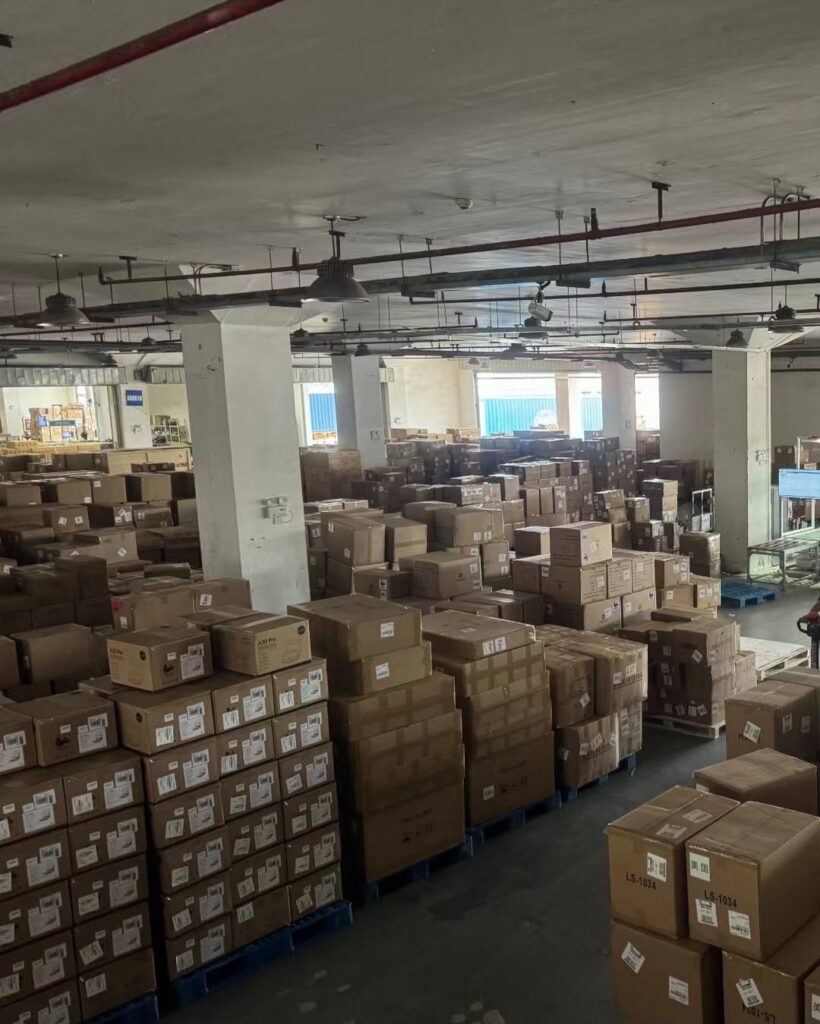
The forwarder receives and checks the shipments before consolidating them.
This is particularly useful for LCL shipments.
Step 7: Consolidate Cargo From Multiple Suppliers
If you purchase from several factories, consolidation can simplify the shipment.
Suppose you buy:
- 2 CBM from Shenzhen
- 1.5 CBM from Dongguan
- 2 CBM from Foshan
Instead of arranging three independent international shipments, the cargo may be sent to one consolidation warehouse.
The warehouse can:
- Receive the cargo.
- Check package information.
- Measure the shipment.
- Weigh the cargo.
- Record supplier information.
- Consolidate compatible cargo.
- Prepare export documentation.
- Arrange international transportation.
This is one of the major advantages of using a freight forwarder experienced in China supplier consolidation.
Step 8: Check the Cargo Before Export
Do not wait until the shipment reaches Europe to discover a packaging or quantity problem.
Before export, confirm:
- Number of cartons
- Product quantity
- Package condition
- Dimensions
- Weight
- Shipping marks
- Product description
- Invoice information
For high-value cargo, you may also consider inspection or additional warehouse checking before shipment.
Finding a problem in China is usually much easier than trying to correct it after the cargo has reached the Netherlands.
Step 9: Prepare Export Customs Documents
Commercial shipments leaving China need the appropriate export documentation and procedures.
Common documents include:
- Commercial invoice
- Packing list
- Sales documentation
- Export declaration information
- Shipping instructions
- Product information
- Relevant certificates where required
The exact requirements depend on the cargo and the export arrangement.
Incorrect product descriptions or inconsistent quantities can create unnecessary customs questions.
Make sure the commercial invoice and packing list match the actual cargo.
Step 10: Complete Export Customs Clearance
After the cargo is ready, export customs procedures are completed in China.
The shipment can then move toward the selected port or airport.
For sea freight, this may involve:
Factory → Warehouse → Chinese Port → Vessel
For air freight:
Factory → Warehouse → Airport → Aircraft
The exact process depends on the shipment arrangement.
Step 11: Ship the Cargo From China
Once export procedures are completed, the international transportation stage begins.
Sea Freight
Sea freight is generally used for larger and less urgent shipments.
A typical route may involve a Chinese port followed by ocean transportation toward Europe.
Air Freight
Air freight is appropriate when the importer needs faster transportation.
However, air freight is normally more expensive and should be compared against the value of faster inventory replenishment.
For a broader China-Europe logistics overview, see Streamlining China-to-Europe Freight: Tips for Faster and Safer Shipments in 2026.
Step 12: Track the Shipment During Transit
Do not wait until the estimated arrival date to check the shipment.
Ask the freight forwarder for:
- Bill of lading or air waybill information
- Vessel or flight information
- Departure date
- Estimated arrival
- Transshipment information where applicable
- Destination handling status
- Customs status
For ocean freight, schedules can change because of:
- Port congestion
- Vessel delays
- Weather
- Transshipment
- Operational disruptions
- Customs issues
Therefore, the original estimated delivery date should be treated as a planning estimate rather than a guaranteed date.
Step 13: Prepare for Netherlands Import Customs
This is one of the most important stages.
When the cargo arrives in the Netherlands, import procedures need to be handled according to the shipment and product.
The importer may need information including:
- Commercial invoice
- Packing list
- Bill of lading
- HS code
- Customs value
- Product description
- Import documentation
- Product-specific compliance documents where applicable
The customs authority may assess:
- Customs value
- Import duty
- VAT
- Product classification
- Regulatory requirements
Do not assume that every product has the same customs requirements.
Electronics, machinery, food-related products, chemicals, batteries, textiles, and other product categories can have different compliance considerations.
Step 14: Pay Import Duties and Taxes
The final import cost is not necessarily equal to the international freight charge.
Your total landed cost may include:
Product Cost
China Pickup
Export Charges
International Freight
Destination Charges
Customs Clearance
Import Duty
VAT
Final Delivery
This is why comparing only the ocean freight rate can produce a misleading result.
For a broader China-Europe cost reference, see How Much Does It Cost to Ship from China to Europe in 2026?.
Step 15: Arrange Final Delivery in the Netherlands
After customs clearance and cargo release, the goods need to reach the final destination.
The destination may be:
- Warehouse
- Factory
- Distribution center
- Office
- Retail location
- Fulfillment center
The final delivery can involve local trucking or other inland transportation.
Make sure the freight forwarder has the correct:
- Company name
- Delivery address
- Contact person
- Phone number
- Postcode
- Delivery requirements
An incorrect postcode or incomplete delivery address can create unnecessary delays.
Step 16: Consider Door-to-Door Shipping
Some importers prefer to avoid managing each stage separately.
In that case, door-to-door shipping may be more convenient.
A typical structure is:
Chinese Supplier → Pickup → Export Customs → International Freight → Netherlands Customs → Final Delivery
Door-to-door does not automatically mean that every tax or customs cost is included.
Before booking, ask exactly what the quotation covers.
Step 17: Understand DDP Shipping
DDP means Delivered Duty Paid under the agreed Incoterms arrangement.
Depending on the service structure, a DDP shipment may include:
- China pickup
- Export customs
- International transportation
- Import customs coordination
- Applicable duties and taxes
- Final delivery
However, never assume that every quotation labelled “DDP” contains exactly the same services.
Ask the forwarder for a written cost and responsibility breakdown.
You can also read DDP Shipping from China Explained: Taxes, Duties and Delivery before deciding whether DDP is suitable for your shipment.
Step 18: Check the Cargo After Delivery
Once the goods arrive, inspect the shipment before putting it into inventory.
Check:
- Carton quantity
- Package condition
- Product quantity
- Visible damage
- Product model
- Labels
- Accessories
If damage is discovered, document it immediately with photographs and delivery records.
Do not throw away damaged packaging before determining whether a transport claim is necessary.
Common Mistakes When Shipping From China to the Netherlands
Mistake 1: Comparing Only the Freight Rate
A low ocean freight rate may be followed by significant origin or destination charges.
Always compare the complete logistics cost.
Mistake 2: Providing Incorrect Cargo Dimensions
If the actual shipment is larger than originally declared, the final charge may increase.
Mistake 3: Choosing LCL or FCL Without Comparing Both
When cargo volume is close to the economic break-even point, request both options.
Mistake 4: Ignoring Customs
Import customs should be considered before the goods leave China.
Mistake 5: Using an Incomplete Product Description
“Parts” or “accessories” may not provide enough information for accurate classification.
Use a clear commercial product description.
Mistake 6: Waiting Until Arrival to Prepare Documents
Prepare the necessary information before the shipment reaches the Netherlands.
Mistake 7: Assuming DDP Means Everything Is Free
DDP is a logistics arrangement, not a promise that there are no costs.
Always check what the quotation includes.
What Information Should You Send to a Freight Forwarder?
A good quotation request should include:
Product:
Quantity:
Cartons:
Dimensions:
Gross weight:
Total CBM:
Supplier city:
Supplier address:
Netherlands destination:
Postcode:
Cargo value:
HS code:
Ready date:
Preferred shipping method:
For example:
Product: Kitchen furniture components
Quantity: 1,000 pieces
Cartons: 50
Total CBM: 12.5 CBM
Gross weight: 2,100 kg
Supplier: Foshan, China
Destination: Rotterdam, Netherlands
Service requested: LCL door-to-door
This is enough information for a freight forwarder to begin comparing suitable transportation options.
How to Reduce China-to-Netherlands Shipping Problems
The best way to reduce logistics problems is to plan before the cargo is ready.
Use this sequence:
1. Confirm the product
2. Confirm supplier location
3. Calculate weight and CBM
4. Compare LCL/FCL/air
5. Check customs requirements
6. Confirm quotation inclusions
7. Arrange pickup
8. Verify documents
9. Track international transportation
10. Prepare Netherlands customs
11. Arrange final delivery
12. Inspect cargo after arrival
This process reduces surprises and gives the importer greater control over the shipment.
China to Netherlands Shipping Checklist
Before booking:
- [ ] Product details confirmed
- [ ] Supplier address confirmed
- [ ] Carton quantity confirmed
- [ ] Weight confirmed
- [ ] CBM confirmed
- [ ] Product value confirmed
- [ ] HS code checked
- [ ] Shipping method selected
- [ ] LCL/FCL compared
- [ ] Customs requirements reviewed
- [ ] Freight quotation received
- [ ] Origin charges confirmed
- [ ] Destination charges confirmed
- [ ] Delivery address confirmed
- [ ] Insurance requirements reviewed
- [ ] Documents prepared
Frequently Asked Questions
What is the easiest way to ship goods from China to the Netherlands?
For many small and medium-sized importers, working with one freight forwarder to coordinate pickup, international transportation, customs, and final delivery can simplify the process.
Can I ship from multiple Chinese suppliers?
Yes. A freight forwarder can potentially collect goods from multiple suppliers and consolidate them at a China warehouse before international transportation.
Should I use LCL or FCL?
LCL is generally considered for smaller shipments, while FCL is more suitable for larger cargo. When your shipment is between the two options, ask for both quotations.
Can I ship from China to the Netherlands by air?
Yes. Air freight is available for commercial shipments and is generally considered when speed is more important than transportation cost.
Do I need a customs broker?
The exact arrangement depends on your import structure and service agreement. A freight forwarder may coordinate customs clearance directly or work with an appropriate customs service provider.
Can I use DDP shipping?
DDP may be available for suitable shipments. Before booking, confirm who is responsible for import clearance, duties, taxes, and final delivery.
How much does it cost to ship goods from China to the Netherlands?
There is no single price. The cost depends on cargo volume, weight, product type, origin, destination, shipping method, customs requirements, and final delivery.
How long does shipping from China to the Netherlands take?
Transit time depends on the transportation method, route, port, carrier, customs, and final delivery location. Sea freight normally takes considerably longer than air freight, while LCL can involve additional consolidation handling.
Final Thoughts
Shipping goods from China to the Netherlands becomes much easier when the process is planned from the beginning.
The most important point is not simply choosing the cheapest freight rate.
A successful shipment requires coordination between:
Supplier + Warehouse + Freight Forwarder + Customs + Carrier + Netherlands Delivery
Before shipping, calculate your cargo volume and weight, compare LCL and FCL where appropriate, prepare the commercial documents, check customs requirements, and confirm exactly what your freight quotation includes.
For larger or more complex shipments, a door-to-door or DDP solution may simplify the process. For importers who already have their own customs and delivery arrangements, a port-to-port or port-to-door service may provide greater control.
The right China-to-Netherlands shipping solution is the one that matches your cargo, budget, delivery schedule, customs requirements, and business model.


