Importing goods from China to Austria can be complicated when buyers need to coordinate international transportation, customs clearance, import procedures, taxes, and final delivery separately.
For many importers, DDP shipping from China to Austria can provide a more convenient door-to-door logistics solution. Instead of managing every stage independently, the importer can work with a freight forwarder to coordinate transportation from the Chinese supplier to the final delivery address in Austria.
However, DDP is not simply a shipping method. It is an international trade term with specific responsibilities between the seller and buyer. Importers should understand what DDP means, what may be included in a quotation, how customs clearance works, and which questions should be answered before booking.
This guide explains the China to Austria DDP shipping process in practical terms.
What Is DDP Shipping?
DDP stands for Delivered Duty Paid.
Under the DDP Incoterms® rule, the seller generally takes responsibility for arranging transportation to the agreed destination and handling import-related obligations, including applicable duties and taxes, subject to the specific contractual arrangement and local legal requirements.
For a China-to-Austria shipment, a DDP logistics solution may involve:
- Pickup from the Chinese supplier
- Export customs clearance
- International transportation
- Import customs procedures
- Applicable duties and taxes
- Destination transportation
- Final delivery in Austria
The exact scope depends on the agreed commercial terms and logistics arrangement.
Therefore, buyers should always ask for a written explanation of what the DDP quotation includes.
Why Do Importers Choose DDP from China to Austria?
DDP can be attractive because it simplifies logistics management.
Without a coordinated door-to-door solution, an importer may need to arrange:
- Supplier pickup
- Export logistics
- International freight
- Customs clearance
- Import-related charges
- Local transportation
- Final delivery
For inexperienced importers, coordinating these stages can be difficult.
With a properly arranged DDP service, the logistics provider can coordinate most or all of these steps.
This can be particularly useful for:
- Small and medium-sized businesses
- E-commerce sellers
- Wholesale importers
- New importers
- Companies without an internal logistics department
- Buyers purchasing from multiple Chinese suppliers
How China to Austria DDP Shipping Works
A typical DDP shipment can follow several stages.
Step 1: Supplier Prepares the Goods
The Chinese manufacturer completes production and prepares the cargo for shipment.
The importer should confirm:
- Product quantity
- Product specifications
- Packaging
- Carton dimensions
- Gross weight
- Product value
- Commercial invoice information
Accurate information is important because transportation and customs calculations depend on the cargo details.
Step 2: Freight Forwarder Collects the Cargo
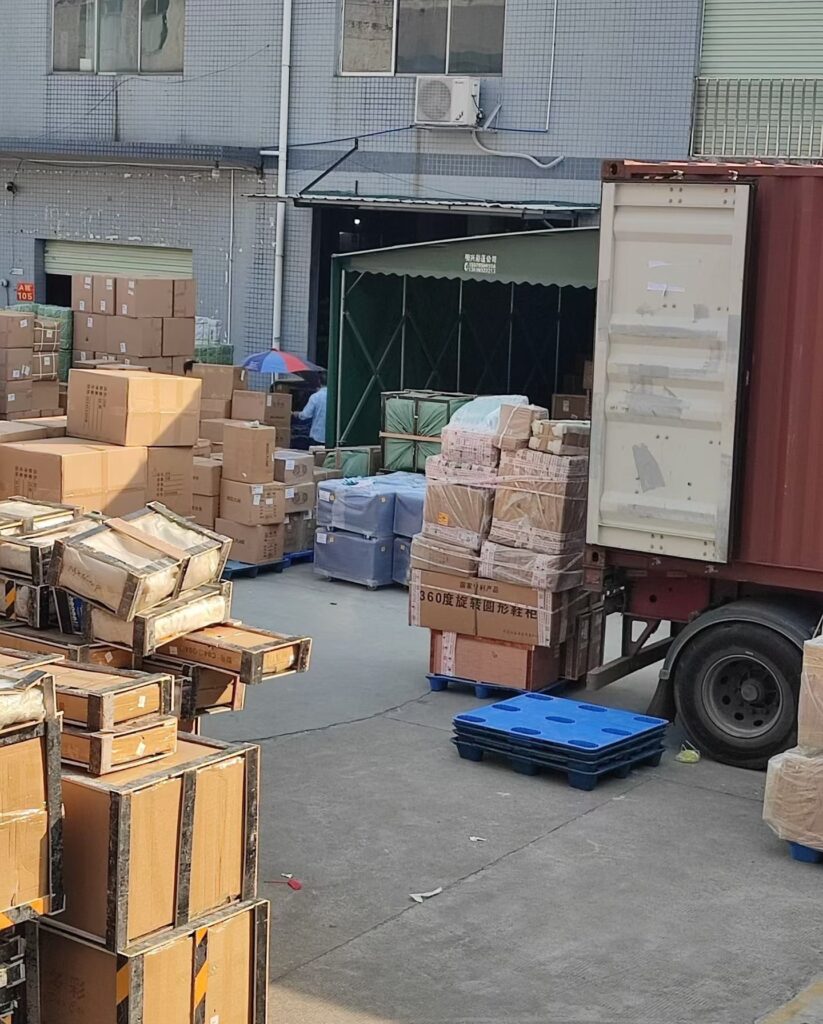
The freight forwarder arranges pickup from the supplier’s factory or warehouse.
China has many major manufacturing and logistics centers, including Shenzhen, Guangzhou, Dongguan, Shanghai, Ningbo, Yiwu, and Qingdao.
Pickup costs can vary depending on the distance between the factory and the export warehouse, airport, or port.
Step 3: Export Customs Clearance
Before leaving China, commercial cargo generally needs to complete the applicable export procedures.
The documentation can include:
- Commercial invoice
- Packing list
- Product description
- HS code
- Export information
- Transportation documents
The exact requirements depend on the product and shipment.
Step 4: International Transportation
The cargo is transported from China toward Europe.
Depending on the shipment, the transportation method may include:
- Air freight
- Sea freight
- Rail freight
- Multimodal transportation
The best option depends on the cargo’s weight, volume, value, urgency, and budget.
Step 5: Import Customs Clearance
Once the cargo reaches the European customs territory, the shipment must undergo the applicable import procedures.
This is an important stage of the DDP process.
Customs authorities may examine:
- Product classification
- Customs value
- Country of origin
- Product description
- Import documentation
- Applicable duties
- Applicable taxes
- Product compliance
If additional documents are required, clearance may take longer.
Step 6: Final Delivery in Austria
After the required import procedures are completed, the cargo can be transported to the agreed destination.
The final destination could be:
- Warehouse
- Office
- Factory
- Distribution center
- E-commerce fulfillment location
- Other commercial address
The quotation should clearly state whether final-mile delivery is included.
What Does a China to Austria DDP Quote Usually Include?
A DDP quotation may include several logistics costs.
Depending on the provider, these can include:
- Factory pickup
- Export customs clearance
- International transportation
- Destination handling
- Import customs clearance
- Duties and taxes
- Local transportation
- Final delivery
However, not every DDP quote includes exactly the same services.
For this reason, importers should not compare DDP quotations by price alone.
A quote of €2,000 and another quote of €2,300 may look different, but the cheaper quote could exclude important charges.
Ask the freight forwarder to provide a clear breakdown.
What Is Not Always Included in DDP?
One of the most common misunderstandings is assuming that “DDP” means every possible cost is included.
Additional costs may arise from situations such as:
- Customs inspection
- Storage caused by documentation problems
- Special handling
- Oversized cargo
- Remote-area delivery
- Residential delivery
- Restricted products
- Demurrage or detention
- Re-delivery
- Changes to the delivery address
- Additional compliance requirements
The exact treatment depends on the shipping contract and service provider.
Before booking, ask:
“What charges are excluded from this DDP quotation?”
This simple question can prevent many unexpected costs.
DDP Shipping Costs from China to Austria
There is no fixed DDP price for every shipment.
The total cost depends on several variables.
Cargo Weight
Heavy cargo may have a higher transportation cost, especially when air freight is used.
Cargo Volume
Large but lightweight cargo may be charged according to volumetric weight in air freight.
Product Type
Different products can have different customs and compliance requirements.
Cargo Value
Customs duties and taxes may be affected by the customs value and applicable regulations.
Shipping Method
Air, sea, rail, and multimodal transportation have different cost structures.
Delivery Location
Delivery to central Vienna can have different costs from delivery to a remote location.
Customs Requirements
Products requiring additional documentation or special procedures can increase the total logistics cost.
Air DDP Shipping from China to Austria
Air DDP is suitable when the importer needs relatively fast door-to-door delivery.
It may be appropriate for:
- Samples
- Clothing
- Shoes
- Electronics
- Spare parts
- Small machinery
- High-value products
- Urgent commercial cargo
The advantage is shorter transportation time compared with ocean freight.
The disadvantage is that the transportation cost can be significantly higher for heavy or bulky shipments.
For air DDP, the freight forwarder should explain whether the quotation is calculated using actual weight or chargeable volumetric weight.
Sea DDP Shipping from China to Austria
Sea DDP can be attractive for large shipments where transportation cost is more important than speed.
It can be used for:
- Furniture
- Machinery
- Large quantities of consumer products
- Building materials
- Industrial components
- Wholesale cargo
Both FCL and LCL solutions may be available.
FCL DDP
The importer uses a complete container.
This is generally suitable for larger shipments.
LCL DDP
The cargo shares container space with other shipments.
This can be useful for smaller commercial shipments that do not require a complete container.
Because LCL involves consolidation and deconsolidation, importers should ask how the quoted transit time is calculated.
Rail DDP Shipping from China to Austria
Rail transportation can be considered when the importer wants an alternative between air and sea.
Rail DDP may be suitable for:
- Industrial products
- Machinery
- Electronics
- Furniture
- Commercial goods
- Medium-volume shipments
Rail schedules and routes can change, so the freight forwarder should provide a current transportation plan.
The importer should also ask whether the quoted transit time includes customs clearance and final delivery.
DDP and Austrian Customs
Austria is part of the European Union customs territory.
Therefore, goods imported from China must comply with applicable EU customs rules and Austrian procedures.
The customs process may require information such as:
- Commercial invoice
- Packing list
- Product description
- HS code
- Country of origin
- Customs value
- Importer information
- Relevant product documentation
The requirements can vary substantially depending on the product.
For example, electronics, machinery, batteries, chemicals, food products, medical products, toys, and other regulated products may have additional requirements.
Importers should identify these requirements before the shipment leaves China.
DDP Does Not Remove Product Compliance Requirements
This is an important point for new importers.
A DDP logistics service does not automatically make a product compliant for sale in Austria or the wider EU market.
Depending on the product, the importer may need to consider requirements related to:
- Product safety
- Labeling
- Technical documentation
- CE-related requirements where applicable
- Packaging
- Electrical safety
- Battery regulations
- Chemical regulations
- Environmental obligations
- Other product-specific rules
The exact requirements depend on the product category.
A freight forwarder can assist with logistics and customs coordination, but importers should ensure that their products meet the applicable legal requirements before commercial importation.
How to Choose a China to Austria DDP Freight Forwarder
Choosing the right logistics provider is important because DDP involves multiple stages.
1. Ask About China-Austria Experience
Ask whether the company regularly handles shipments to Austria and other EU destinations.
Experience with your specific product category is also valuable.
2. Request a Written Quotation
The quotation should identify the major services included.
For example:
- Pickup
- Export clearance
- International freight
- Import clearance
- Duties and taxes
- Final delivery
3. Ask About Excluded Charges
This is one of the most important questions.
Ask the provider to list possible additional charges.
4. Check How Transit Time Is Defined
A quoted “10-day transit time” does not necessarily mean that the goods will arrive at the Austrian warehouse within 10 calendar days.
Confirm whether the estimate includes:
- Pickup
- Export customs
- International transportation
- Import clearance
- Final delivery
5. Confirm Tracking and Communication
Ask how shipment updates will be provided.
A professional logistics provider should be able to communicate important milestones such as:
- Pickup completed
- Cargo received
- Export clearance completed
- Departure
- Arrival
- Customs status
- Final delivery
Information Needed for a DDP Quote
To receive an accurate China to Austria DDP quotation, provide as much information as possible.
Supplier Information
- Factory name
- Pickup city
- Warehouse address
Cargo Information
- Product name
- Quantity
- Number of cartons
- Carton dimensions
- Gross weight
- Total CBM
- Cargo value
Product Information
- HS code
- Material
- Intended use
- Whether the product contains batteries
- Whether the product is regulated
Destination Information
- Austrian city
- Postal code
- Delivery address
- Warehouse or commercial location
Shipping Requirements
Specify whether you need:
- Air DDP
- Sea DDP
- Rail DDP
- LCL DDP
- FCL DDP
Accurate information allows the forwarder to evaluate the shipment properly.
Common DDP Shipping Mistakes
Mistake 1: Choosing the Lowest Price
The cheapest quotation is not necessarily the best option.
A very low price can indicate that certain services or charges are excluded.
Mistake 2: Providing an Incorrect Product Description
Incorrect product information can create customs problems.
Use a clear and accurate description.
Mistake 3: Ignoring HS Classification
HS classification can affect customs treatment and applicable duties.
Importers should verify the classification rather than relying blindly on an informal product name.
Mistake 4: Assuming DDP Means No Responsibilities
DDP simplifies logistics, but the buyer should still understand the commercial and legal responsibilities associated with importing the goods.
Mistake 5: Shipping Regulated Goods Without Checking Requirements
Products such as batteries, chemicals, electronics, food, and certain machinery can have additional requirements.
Check these before shipment.
China to Austria DDP Shipping Checklist
Before booking, review the following checklist:
- [ ] Product description confirmed
- [ ] Quantity confirmed
- [ ] Weight confirmed
- [ ] Carton dimensions confirmed
- [ ] Total CBM calculated
- [ ] Cargo value confirmed
- [ ] HS code checked
- [ ] Product compliance reviewed
- [ ] Shipping method selected
- [ ] DDP quotation received
- [ ] Included services confirmed
- [ ] Excluded charges confirmed
- [ ] Customs responsibilities confirmed
- [ ] Delivery address confirmed
- [ ] Transit time definition confirmed
- [ ] Tracking method confirmed
This checklist can help reduce avoidable logistics problems.
Frequently Asked Questions About China to Austria DDP Shipping
Is DDP shipping from China to Austria door-to-door?
A DDP service can be arranged as a door-to-door solution, but the exact scope depends on the contract and logistics provider. Always confirm whether final delivery is included.
Does DDP include customs clearance?
DDP generally involves the seller taking responsibility for import clearance under the applicable Incoterms® arrangement. However, the exact operational arrangement should be confirmed with the logistics provider.
Does DDP include duties and taxes?
Under the DDP Incoterms® rule, the seller generally bears applicable import duties and taxes, subject to the contract and applicable law. A freight quotation should clearly explain which charges are included.
Can I use DDP for small shipments?
Yes. Depending on the cargo, air, LCL, courier, or other consolidated DDP solutions may be available.
Is DDP cheaper than handling customs myself?
Not necessarily.
DDP can simplify logistics, but the total price depends on transportation, customs, taxes, delivery, cargo characteristics, and the provider’s service structure.
Can all products be shipped by DDP?
No. Certain products may have restrictions, special documentation requirements, or compliance obligations. Product eligibility should be checked before booking.
Final Thoughts
China to Austria DDP shipping can be an effective logistics solution for importers who want a simpler door-to-door process.
The main advantage is convenience: transportation, customs coordination, import-related procedures, and final delivery can be organized as part of one logistics solution.
However, importers should not select a DDP service based only on a low quoted price.
A reliable China to Austria freight forwarding service should provide a transparent quotation, explain what is included, identify possible additional charges, clarify customs responsibilities, and provide realistic transportation information.
Before shipping, prepare accurate cargo information, verify product requirements, confirm the HS code and customs value, and make sure the DDP quotation clearly defines the responsibilities of each party.
With proper preparation and a reliable logistics partner, DDP can make the process of importing goods from China to Austria considerably easier and more predictable.


