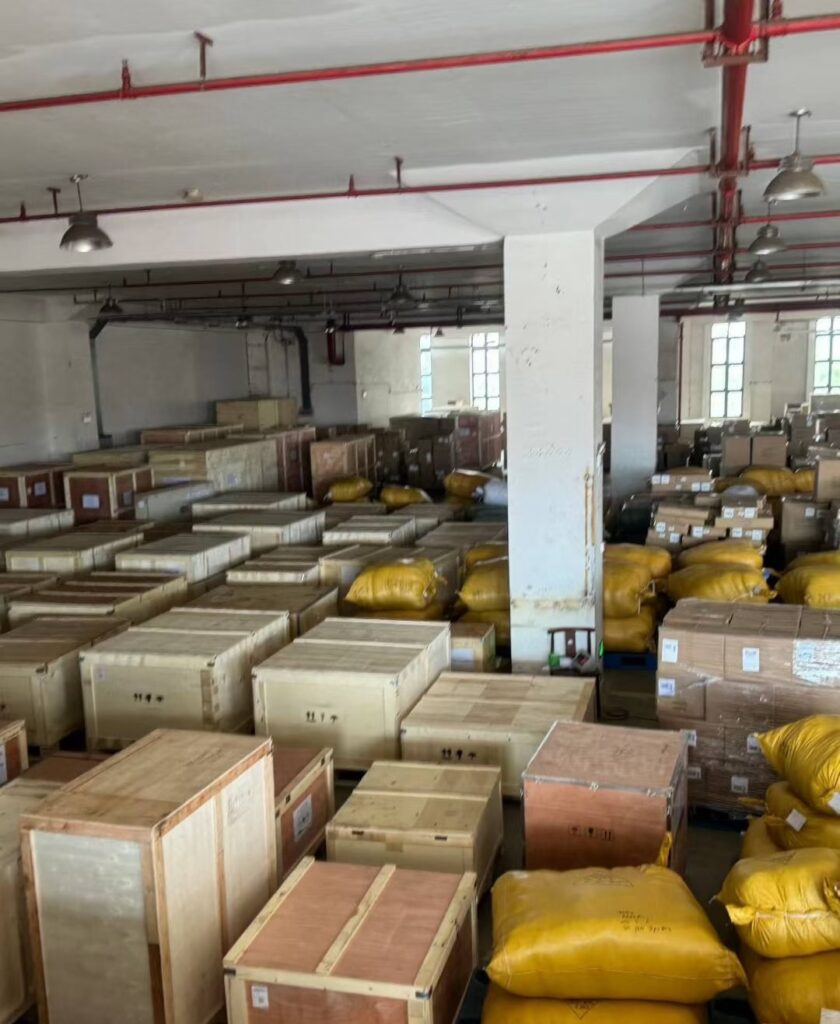
Shipping goods from China to Austria has become an important part of international trade between Asian manufacturers and European importers. Austrian companies purchase a wide range of products from China, including machinery, electronics, furniture, clothing, footwear, industrial components, packaging materials, consumer products, and spare parts.
Choosing the right transportation method is critical because shipping cost, transit time, cargo volume, customs requirements, and delivery location can vary significantly from one shipment to another.
For most commercial shipments, the main options are air freight, sea freight, and rail freight. Courier services can also be useful for small parcels and samples, while door-to-door logistics can combine several transportation stages into one service.
This guide explains how China to Austria shipping works and how importers can choose the most suitable transportation solution.
China to Austria Shipping Options
There is no single shipping method that is best for every importer.
The appropriate solution depends on the shipment’s characteristics.
| Shipping Method | Speed | Cost Level | Best For |
|---|---|---|---|
| Air Freight | Fast | Higher | Urgent and high-value cargo |
| Sea Freight | Slowest | Lower for large cargo | FCL and LCL shipments |
| Rail Freight | Medium | Medium | Time-sensitive commercial cargo |
| Express | Very Fast | High for larger cargo | Samples and small parcels |
| Door-to-Door | Depends on service | Depends on method | Importers wanting simpler logistics |
The right choice should be based on the total logistics requirement rather than the international freight rate alone.
China to Austria Air Freight
Air freight is generally the first option considered when an importer needs faster delivery.
Cargo is transported by aircraft from China to Europe and then delivered to Austria through the agreed logistics network.
Air freight can be suitable for:
- Electronic products
- Fashion products
- Shoes
- Samples
- Spare parts
- Industrial components
- High-value products
- Urgent replenishment orders
For businesses with limited inventory or strict delivery schedules, paying more for air transportation can sometimes be justified by the shorter transportation time.
Advantages of Air Freight
The main advantage is speed.
Other benefits may include:
- Frequent flight schedules
- Faster international transportation
- Suitable for smaller shipments
- Good option for urgent cargo
- Lower inventory exposure during transportation
However, air freight is normally more expensive than sea freight for large and heavy shipments.
Importers should also remember that the quoted air transit time may refer only to the flight or airport-to-airport segment. Pickup, export customs, handling, import clearance, and final delivery can add additional time.
Air Freight Volumetric Weight
Air freight pricing is not always based on actual weight.
Carriers may compare actual weight with volumetric weight and charge according to the applicable pricing rule.
A commonly used formula is:
Volumetric Weight = Length × Width × Height ÷ 6000
For example, if one carton measures:
60 × 40 × 50 cm
the volumetric weight would be:
60 × 40 × 50 ÷ 6000 = 20 kg
If the actual gross weight is only 12 kg, the carrier may use the applicable volumetric weight for pricing.
The exact calculation method and divisor can vary depending on the carrier and service, so importers should confirm the formula before booking.
China to Austria Sea Freight
Sea freight remains an important option for companies importing large quantities of products from China.
It is particularly useful when the cargo is too large or heavy for economical air transportation.
Sea freight can be divided mainly into:
- FCL
- LCL
FCL Sea Freight
FCL means Full Container Load.
The importer books an entire container for the shipment.
Common container options include:
- 20-foot container
- 40-foot container
- 40-foot high-cube container
FCL can be suitable for:
- Machinery
- Furniture
- Large quantities of consumer goods
- Industrial products
- Building materials
- Large wholesale orders
One advantage of FCL is that the cargo remains within the container during the main transportation process rather than being consolidated with multiple customers’ shipments.
LCL Sea Freight
LCL means Less than Container Load.
Instead of renting an entire container, the importer shares container space with other shipments.
This can be useful when the cargo volume is relatively small.
For example, an importer who has several cubic meters of goods may not need a complete container. LCL allows the cargo to be consolidated with other shipments.
However, LCL normally involves additional consolidation and deconsolidation operations, so the total transit process can be more complicated than FCL.
China to Austria Rail Freight
Rail freight offers another transportation option for commercial shipments between China and Europe.
It can provide a balance between speed and cost depending on the available route and service.
Rail transportation may be considered for:
- Industrial equipment
- Machinery
- Electronics
- Furniture
- Automotive components
- Consumer products
- Commercial cargo requiring a shorter transit time than traditional ocean transportation
Rail freight is especially worth evaluating when sea freight is too slow but air freight is too expensive.
However, rail schedules, routes, border procedures, capacity, and operational conditions can change. Importers should therefore request a current route and transit estimate instead of relying on a fixed historical transit time.
How to Choose Between Air, Sea and Rail Freight
The most important factors are:
1. Cargo Weight
Light shipments may be more suitable for air freight.
Heavy shipments often become more economical by sea or rail.
2. Cargo Volume
A few cartons may be easily handled by air freight.
Large commercial shipments may be better suited to LCL or FCL sea freight.
3. Delivery Deadline
If the goods are urgently required, air freight may be the better choice.
If the importer has several weeks available, sea freight may offer a lower transportation cost.
Rail freight can provide an alternative when the importer needs a middle ground.
4. Product Value
For high-value products, shorter transportation times can reduce the amount of inventory tied up in transit.
For lower-value bulk products, transportation cost may be the dominant consideration.
5. Product Characteristics
Not every product can be handled in exactly the same way.
Batteries, chemicals, food products, medical equipment, machinery, and other specialized cargo may have additional transportation or documentation requirements.
Importers should disclose the exact product information before receiving a final quotation.
China to Austria Door-to-Door Shipping
Many importers prefer door-to-door transportation because they do not want to coordinate multiple logistics companies.
A door-to-door service can potentially include:
- Supplier pickup in China
- Export transportation
- Export customs clearance
- International transportation
- Import customs procedures
- Destination transportation
- Final delivery in Austria
The exact service scope depends on the logistics provider and shipping arrangement.
For example, a shipment could be collected from a factory in Shenzhen and eventually delivered to a warehouse in Vienna.
The important point is to confirm whether the quotation actually includes all transportation stages.
China to Austria DDP Shipping
DDP is often requested by importers who want a simplified door-to-door shipping solution.
Under a DDP arrangement, the logistics provider may coordinate transportation and import-related procedures according to the agreed terms.
This can be attractive for:
- Small and medium-sized importers
- E-commerce sellers
- Wholesale buyers
- Businesses without their own logistics department
- Companies unfamiliar with European import procedures
However, DDP should not simply be interpreted as “no customs problems.”
Before shipping, buyers should confirm:
- Product classification
- HS code
- Import eligibility
- Applicable duties
- VAT treatment
- Required certificates
- Customs documentation
- Importer responsibilities
A professional forwarder should clearly explain what is included in the DDP quotation.
Customs Clearance When Shipping from China to Austria
Austria is part of the European Union customs territory.
Commercial imports from China therefore need to comply with applicable EU customs procedures and product requirements.
Typical shipping documents may include:
- Commercial invoice
- Packing list
- Transport document
- Product description
- HS code
- Country of origin
- Customs value
- Importer information
Some products can require additional documentation.
For example, certain electrical products, machinery, batteries, chemicals, food products, and other regulated goods may have specific requirements.
Importers should not wait until the cargo reaches Europe before checking compliance requirements.
It is better to verify the requirements before production and shipment.
How Much Does It Cost to Ship from China to Austria?
There is no universal China to Austria shipping price.
The final cost depends on several variables.
For Air Freight
The cost may depend on:
- Chargeable weight
- Origin airport
- Destination airport
- Airline
- Service level
- Fuel and security charges
- Customs and handling
- Final delivery
For Sea Freight
The cost can depend on:
- FCL or LCL
- Container size
- Cargo volume
- Origin port
- Destination port
- Port charges
- Inland transportation
- Customs services
- Final delivery
For Rail Freight
The price may depend on:
- Cargo weight
- Cargo volume
- Origin
- Destination
- Route
- Rail service
- Container type
- Customs and handling
- Final-mile delivery
Therefore, importers should provide complete shipment information before requesting a quotation.
Information Needed for a China to Austria Shipping Quote
A freight forwarder normally needs the following information:
Pickup Information
Provide the factory or warehouse city in China.
Examples include:
- Shenzhen
- Guangzhou
- Dongguan
- Shanghai
- Ningbo
- Yiwu
- Qingdao
Delivery Information
Provide the destination city and postal code in Austria.
Examples include:
- Vienna
- Graz
- Linz
- Salzburg
- Innsbruck
Cargo Information
Provide:
- Product name
- Number of cartons
- Carton dimensions
- Gross weight
- Total volume
- Cargo value
- HS code, if available
Service Requirements
Tell the forwarder whether you need:
- Air freight
- Sea freight
- Rail freight
- LCL
- FCL
- Door-to-door
- DDP
- Warehouse delivery
Accurate information helps reduce the possibility of unexpected charges later.
Common Problems When Shipping from China to Austria
Incorrect Cargo Information
Incorrect weight, dimensions, product descriptions, or quantities can result in quotation changes.
Measure and verify the cargo before booking.
Incomplete Documents
Missing or inconsistent documents can delay customs procedures.
Make sure the invoice and packing list contain accurate information.
Choosing a Service Based Only on Price
A low freight rate may not include destination charges, customs services, or final delivery.
Always compare the total logistics cost.
Ignoring Product Compliance
European import requirements vary depending on the product.
Certain products may require additional compliance documentation.
Misunderstanding Transit Time
A quoted “transit time” may not include:
- Pickup
- Export customs
- Warehouse handling
- Import clearance
- Final delivery
Ask the forwarder exactly which transportation stages are included.
Step-by-Step China to Austria Shipping Process
Step 1: Prepare Cargo Information
Collect the product name, dimensions, weight, quantity, value, and destination.
Step 2: Compare Shipping Methods
Request quotations for air, sea, and rail where appropriate.
Step 3: Select the Service
Choose the transportation method based on delivery time and total cost.
Step 4: Arrange Supplier Pickup
The freight forwarder collects the goods from the Chinese supplier.
Step 5: Export Customs
The shipment completes the required export procedures in China.
Step 6: International Transportation
The cargo moves to Europe by the selected transportation method.
Step 7: Import Customs Clearance
The shipment undergoes the applicable customs process.
Step 8: Final Delivery
The cargo is transported to the agreed destination in Austria.
Practical Tips for Austrian Importers
If you regularly purchase products from China, consider establishing a standard logistics process.
First, maintain accurate supplier and product information.
Second, keep commercial invoices and packing lists consistent.
Third, confirm product compliance before placing large orders.
Fourth, compare multiple transportation methods instead of automatically using the same shipping method for every shipment.
Finally, work with a freight forwarder that can provide clear communication throughout the shipment.
For example, a business may use air freight for urgent spare parts, sea freight for monthly container imports, and rail freight for selected medium-sized commercial shipments.
Using different transportation methods strategically can improve both logistics efficiency and cost control.
Frequently Asked Questions
What is the best way to ship from China to Austria?
There is no single best method. Air freight is suitable for urgent shipments, sea freight is generally suitable for larger shipments where cost is important, and rail freight can provide another option between air and sea.
Is sea freight cheaper than air freight?
For many large shipments, sea freight is generally more economical than air freight. However, the actual cost depends on cargo volume, weight, route, service level, and destination charges.
Can I ship from a Chinese factory directly to Austria?
Yes. A freight forwarder can often arrange factory pickup in China and coordinate international transportation and final delivery to Austria.
Can I ship small quantities from China to Austria?
Yes. Small shipments can be transported through courier, air freight, or LCL services depending on the cargo.
Should I choose LCL or FCL?
If the shipment is large enough to justify a full container, FCL may be more efficient. Smaller shipments can use LCL to share container space.
Can a freight forwarder handle customs clearance?
Many freight forwarders offer customs coordination or clearance services. The exact responsibility should be confirmed before booking.
How can I get an accurate shipping quotation?
Provide the pickup location, delivery location, product description, carton dimensions, gross weight, quantity, cargo value, and preferred shipping method.
Conclusion
China to Austria shipping requires careful coordination between suppliers, freight forwarders, carriers, customs authorities, and final-mile delivery providers.
Air freight, sea freight, and rail freight each have different advantages. Air freight focuses on speed, sea freight is often suitable for large-volume shipments, while rail freight can offer an alternative balance between transportation time and cost.
The best shipping solution depends on your cargo, budget, delivery deadline, and import requirements.
Before booking, compare the complete logistics cost rather than only the international freight rate. Confirm the shipping terms, customs responsibilities, documentation, transit-time definition, and final delivery arrangements.
With accurate cargo information and a suitable China to Austria freight forwarding solution, importers can make their supply chain more predictable and reduce unnecessary logistics risks.


