
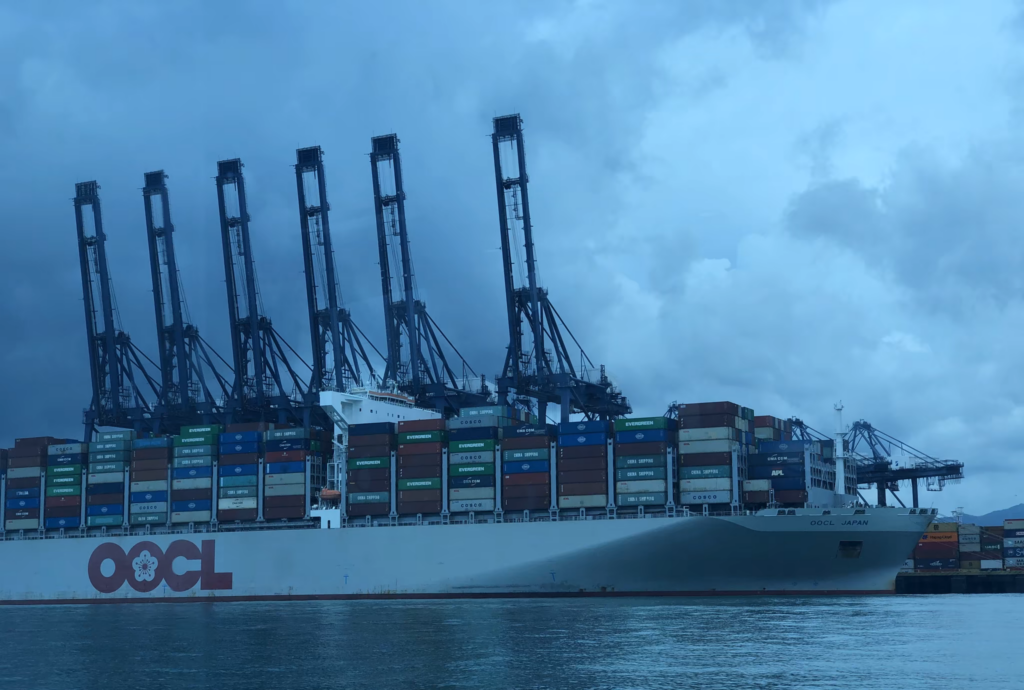
If you’ve ever Googled “China to Iceland sea freight cost,” you’ve probably seen quotes ranging from $2,700 to $6,500 for a full container—and that wide spread is exactly why so many importers get burned. The truth is, shipping a container from Shanghai or Shenzhen to Reykjavík isn’t a simple “price per box” transaction. Every shipment routes through a European transshipment hub (Rotterdam, Hamburg, or Antwerp), and each handoff creates a new line item on your invoice. This article pulls back the curtain on what China–Iceland sea freight actually costs in 2026, how pricing is structured, where hidden fees lurk, and how a professional forwarder delivers transparent, all-in quotes with free on-site estimation—so you know exactly what you’ll pay before your cargo leaves the factory.
💰 The Real Cost Breakdown: What You’re Paying For
A China–Iceland sea freight quote isn’t just “ocean freight.” It’s a stack of charges accumulated across three countries. Here’s the honest anatomy:
1. Ocean Freight (Base Rate)
This is the “headline” number—the cost of moving your container from the Chinese port to Reykjavík via a European hub.
| Container | 2026 Base Rate Range (USD) |
|---|---|
| 20GP | $2,700 – $4,500 |
| 40GP / 40HQ | $3,400 – $6,400 |
| LCL per CBM | $150 – $300 |
💡 Why the range? Rates fluctuate weekly based on fuel prices, capacity, and geopolitical factors. A 20GP quoted at $2,800 in March might be $4,200 by September.
2. Origin Charges (China)
| Fee | Code | Typical Amount | Notes |
|---|---|---|---|
| Terminal Handling Charge | ORC/THC | $120–$180 | Charged by the terminal |
| Export Customs Declaration | — | $30–$60 | Filed with China Customs |
| Documentation Fee | DOC | $30–$50/BL | Bill of Lading, CO, etc. |
| Seal Fee | — | $5–$10 | Container seal |
| VGM Submission | SOLAS | $10–$25 | Mandatory verified gross mass |
| ENS (Entry Summary Declaration) | ENS | ~$35 | EU transit manifest filing |
3. Surcharges (Can Add $500–$1,200 per Container)
| Surcharge | What It Is | Typical Amount |
|---|---|---|
| Bunker Adjustment Factor | Fuel price fluctuation | $150–$400/container |
| Low Sulphur Surcharge | IMO 2020 compliance | $50–$120/container |
| Peak Season Surcharge | Capacity crunch (Jul–Oct) | $200–$600/container |
| Emergency Risk Surcharge | Geopolitical route changes | $100–$300/container |
| Equipment Imbalance Surcharge | Container shortage at origin | $50–$200/container |
4. Transshipment Fees (Rotterdam/Hamburg)
Since your container changes vessels at a European hub, additional handling applies:
- Transshipment handling: $80–$150 per container
- Feeder booking fee: $30–$60
- Port storage (if delay): €50–€120/day after free time expires
5. Destination Charges (Iceland)
| Fee | Typical Amount (USD) | Notes |
|---|---|---|
| Destination THC | $150–$250 | Reykjavík terminal handling |
| Import Customs Clearance | $80–$150 | Per entry |
| ISPM 15 Inspection (if wood) | $50–$120 | Per pallet if flagged |
| Demurrage & Detention | $80–$180/day | After 5–7 free days |
| Last-Mile Delivery (Reykjavík) | $400–$1,200 | Depends on weight & distance |
6. Taxes (Not Always Included in Freight Quotes)
- Customs Duty: 0–76% (avg. ~10% on CIF value)
- VAT: 24% on CIF + duty (no de minimis)
- Under DDP: Forwarder pays these and builds them into the quote
- Under FOB/CIF: Buyer pays upon arrival
📊 2026 All-In Rate Reference (Port-to-Port, Including Common Surcharges)
These are realistic all-in estimates for a 20GP and 40HQ from major Chinese ports to Reykjavík, including base ocean freight, origin THC, BAF, LSS, and ENS:
| Departure Port | 20GP (All-In Est.) | 40HQ (All-In Est.) | Transit Time |
|---|---|---|---|
| Shanghai | $3,200 – $4,800 | $4,000 – $6,800 | 35–45 days |
| Shenzhen (Yantian) | $3,100 – $4,900 | $3,900 – $7,000 | 35–45 days |
| Ningbo | $3,250 – $4,750 | $3,800 – $6,900 | 38–48 days |
| Qingdao | $3,100 – $5,000 | $3,900 – $7,100 | 38–50 days |
| Guangzhou (Nansha) | $3,200 – $4,900 | $3,800 – $6,900 | 38–48 days |
| Tianjin | $4,800 – $5,200 | $6,800 – $7,200 | ~55 days |
🔴 Critical note: These are port-to-port. Add $500–$1,500 for door-to-door delivery in the Reykjavík area, depending on final address and cargo weight.
🆓 What “Free Quote + On-Site Estimation” Really Means
Free Quote (Remote)
A professional forwarder provides a no-obligation written quote based on the information you supply:
- Commodity description & HS code
- Gross weight & dimensions (or CBM)
- Pickup address in China
- Delivery address in Iceland
- Desired Incoterm (FOB, CIF, DDP, etc.)
This quote should be itemized—not a single lump sum—so you can see exactly what each component costs.
On-Site Estimation (现场估价)
For certain shipment types, a remote quote isn’t enough. A reputable forwarder offers free on-site visits to:
| Scenario | Why On-Site Matters |
|---|---|
| Factory stuffing | Assessing whether the factory has space, equipment, and road access for a container |
| Heavy lift / oversized cargo | Measuring exact dimensions, weight distribution, and crane requirements |
| Personal effects / household goods | Taking a room-by-room inventory and calculating true volume |
| Project cargo | Evaluating loading/unloading conditions at both origin and destination |
| Fragile or high-value goods | Recommending specialized packing (crating, cushioning, climate control) |
The benefit: No “surprise” volume upgrades or weight penalties after the fact. What the estimator measures is what you pay for. ✅ Pro tip: If a forwarder refuses to do on-site estimation for a complex shipment and insists on quoting from photos or descriptions alone, that’s a red flag for potential post-booking price inflation.
🕵️ The 5 Most Common “Hidden Fees” (And How to Avoid Them)
1. Destination Charge Markup
Some forwarders quote a low ocean freight but their Icelandic agent tacks on inflated destination fees—$300–$500 above market rate. Avoid it: Ask for a destination charge tariff from the Icelandic partner before booking. Confirm it in writing.
2. BAF/LSS Not Included in “All-In” Quote
A quote says “$3,200 all-in” but BAF ($250) and LSS ($80) are “to be collected at origin.” Avoid it: Demand a line-item breakdown. If BAF/LSS aren’t listed, ask: “Are these included or additional?”
3. Weight/Volume Discrepancy After Pickup
Your supplier says “2 CBM, 300kg” but the forwarder’s warehouse measures “3.2 CBM, 420kg”—and charges you the difference at a premium rate. Avoid it: Request on-site estimation or ask the forwarder to measure at origin before final billing. Get a photo of the measurement screen.
4. Customs Inspection Fees
If Icelandic customs inspects your container, the handling fee (~$150–$300) is often passed to the importer—even under DDP. Avoid it: Clarify in advance: “Who pays if customs inspects and charges a handling fee?” Some forwarders absorb this; others pass it on.
5. Demurrage & Detention (D&D)
Your container sits at Reykjavík port for 10 days because you didn’t arrange trucking in time. D&D kicks in at $80–$180/day. Avoid it: Confirm free time at destination (typically 5–7 days combined). Pre-arrange trucking before the vessel arrives.
📋 What You Need to Provide for an Accurate Quote
The more precise your information, the more accurate (and binding) your quote will be. Send this to your forwarder:
| Information | Why It Matters |
|---|---|
| Commodity name (with HS code if known) | Determines duty rate and any restrictions |
| Gross weight | Affects trucking, crane needs, and freight class |
| Dimensions / CBM | Determines LCL rate or container size |
| Pickup address (China) | Trucking cost and transit time to port |
| Delivery address (Iceland) | Last-mile cost; remote area surcharge check |
| Cargo ready date | Determines which sailing to book |
| Incoterm (FOB/CIF/DDP) | Defines who pays which portion |
| Special requirements | DG, batteries, temperature control, insurance |
🔍 How to Verify a Quote Is Truly “Transparent”
Ask your forwarder these 5 questions:
- ✅ “Is BAF, LSS, and ENS included in this quote?”
- ✅ “Can you provide the destination charge list from your Icelandic partner?”
- ✅ “What is the free time for demurrage/detention at Reykjavík port?”
- ✅ “If my cargo measures differently at origin, will you re-quote before charging me?”
- ✅ “Under DDP, who pays if customs inspects and charges a fee?”
A forwarder who answers clearly, in writing, with itemized numbers is one you can trust. One who dodges, says “don’t worry about it,” or gives vague assurances—walk away.
📊 LCL vs. FCL: Which Is More Cost-Effective?
| Factor | LCL (per CBM) | FCL 20GP | FCL 40HQ |
|---|---|---|---|
| Cost at ~10 CBM | $1,500–$3,000 | $3,200–$4,800 | — |
| Cost at ~28 CBM | $4,200–$8,400 | $3,200–$4,800 | — |
| Cost at ~60 CBM | $9,000–$18,000 | — | $4,000–$6,800 |
| Break-even point | — | ~12–14 CBM | ~26–30 CBM |
| Risk of damage | Higher (shared container) | Lower (sealed) | Lower (sealed) |
| Transit time | +5–10 days (CFS handling) | Fastest (direct to vessel) | Fastest |
💡 Rule of thumb: If your cargo exceeds 12–14 CBM, FCL is almost always cheaper and safer. Below that, LCL wins on cost.
🌦️ Seasonal Price Fluctuations: When to Book
| Period | Price Trend | Booking Lead Time |
|---|---|---|
| Jan–Mar | Lowest rates of the year | 2 weeks |
| Apr–Jun | Stable, moderate rates | 2–3 weeks |
| Jul–Aug | Rising (pre-peak) | 3 weeks |
| Sep–Oct | Peak season (+20–35% surcharges) | 3–4 weeks |
| Nov–Dec | High air rates; ocean stabilizes late Dec | 3 weeks |
🏁 Bottom Line
Shipping from China to Iceland by sea in 2026 costs $2,700–$6,400 for a full container and $150–$300 per CBM for LCL—but the final bill depends entirely on surcharges, destination fees, and how transparent your forwarder is. “Free quote + on-site estimation” isn’t just a marketing phrase—it’s your first line of defense against inflated invoices and surprise charges. A forwarder who will send someone to your factory, measure your goods in person, and give you a written itemized quote with no hidden fees is worth their weight in gold on the Iceland lane. Your next move: Gather your cargo details and request itemized, all-in quotes from 2–3 forwarders. Compare not just the ocean freight number, but the total landed cost including destination charges. The cheapest headline rate is almost never the cheapest total cost.


