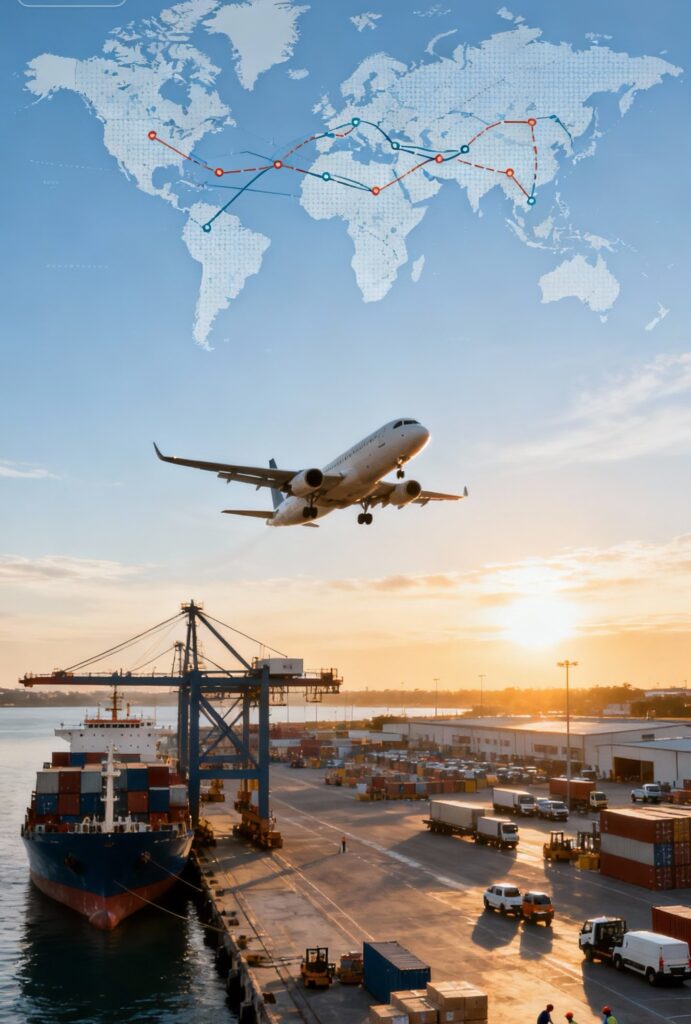
Shipping goods from China to Iceland is not as straightforward as shipping to mainland Europe. Iceland is not an EU member but belongs to the European Economic Area (EEA), which means its customs regime is closely aligned with EU standards yet operates through its own ports and airports—most commonly via transshipment through European hub ports such as Rotterdam or Hamburg before final ocean leg to Reykjavík’s Sundahöfn Port, or via air transshipment through Frankfurt, Copenhagen, or other European gateways to Keflavík International Airport (KEF). A professional freight forwarder bridges this geographical gap with tailored, end-to-end logistics solutions. This article provides a detailed, ground-level overview of how China–Iceland freight forwarding actually works—covering sea freight (FCL & LCL), air freight, and DDP (Delivered Duty Paid) door-to-door service to Reykjavík and beyond.
🌊 Sea Freight: FCL & LCL via European Transshipment
Sea freight remains the backbone of China–Iceland trade, especially for bulky, heavy, or non-urgent cargo such as machinery, building materials, furniture, electronics, and retail inventory.
Routing & Transit Time
Most containers depart from major Chinese ports—Shanghai, Shenzhen, Ningbo, Qingdao, Guangzhou (Nansha), or Tianjin—and are transshipped via a European hub port (Rotterdam, Hamburg) before the final feeder voyage to Reykjavík.
- Shanghai/Yangshan → Reykjavík via Suez Canal: approx. 35–45 days door-to-door
- Tianjin → Reykjavík: approx. 55 days (weekly sailings, e.g., Wednesday departures)
- General sea freight transit: 38–55 days depending on route and carrier
Container Pricing (Indicative, 2026)
| Departure Port | 20GP | 40GP / 40HQ | Source |
|---|---|---|---|
| Shanghai | $2,800–$4,200 | $3,500–$6,000 | |
| Shenzhen (Yantian) | $2,700–$4,300 | $3,400–$6,200 | |
| Ningbo | $2,850–$4,250 | $3,300–$6,100 | |
| Qingdao | $2,700–$4,500 | $3,400–$6,400 | |
| Guangzhou (Nansha) | $2,800–$4,400 | $3,300–$6,300 | |
| Tianjin (July 2026) | $4,400–$4,460 | $6,500–$6,600 |
💡 Rates fluctuate heavily with fuel prices, capacity, and geopolitical factors. The June 2026 surge pushed 20-foot containers to $3,626–$4,397 and 40-foot containers to $5,437–$6,629 . Always request a fresh written quote at booking.
LCL (Less than Container Load)
For smaller shippers, LCL consolidation is cost-effective:
- Pricing: approx. $150–$300 per cubic meter
- Transit: typically 26–40 days
- Departure frequency: weekly consolidations from major Chinese ports
FCL Service Inclusions
A full-container-load service typically covers:
- 20GP / 40GP / 40HQ container options
- Professional export paperwork & EU customs compliance
- Real-time tracking with proactive updates
- Safe container handling and reliable vessel schedules
- Smooth final delivery across Iceland’s commercial zones
- Optional DDP solutions for simplified import processes
✈️ Air Freight: Speed When It Matters
When time is critical—for electronics, samples, e-commerce replenishment, or perishable goods—air freight is the only viable option.
Routing & Transit
Due to limited direct flights, most cargo routes through European hubs:
- Primary transshipment points: Frankfurt, Copenhagen, Vienna, Helsinki
- Final destination: Keflavík International Airport (KEF)
- Total transit time: 5–10 days door-to-door
Some routes (e.g., Beijing PEK → KEF via Copenhagen) can achieve 2–5 days with priority handling .
Air Freight Pricing
| Service Type | Rate | Transit |
|---|---|---|
| Standard air freight (1000+ kg) | $5–$10/kg | 5–9 days |
| Air freight (indicative, 2026) | $5.33/kg | 5–8 days |
| Express courier (DHL/FedEx/UPS) | $9.60–$15/kg | 3–7 days |
📌 Airlines charge based on the greater of actual weight or volumetric weight (1 m³ = 167 kg). Bulky, low-density cargo can get expensive fast.
What Air Freight Includes
- Temperature-controlled handling for sensitive cargo
- Efficient consolidation for smaller shipments
- Priority customs clearance
- Full tracking visibility
- Direct cooperation with carriers like Icelandair, Scandinavian Airlines (SAS), Lufthansa Cargo
🚪 DDP Door-to-Door: The Hassle-Free Option
DDP (Delivered Duty Paid) is increasingly popular for China–Iceland lanes because it shifts the entire logistical burden—including Icelandic import duties and 24% VAT—to the seller/forwarder.
How DDP Works
- Origin pickup: Forwarder collects goods from any Chinese factory or warehouse
- Export clearance: All Chinese export documentation handled
- International transport: Sea, air, or multimodal
- Iceland import clearance: Forwarder pays duties and 24% VAT on behalf of the buyer
- Final delivery: Last-mile to Reykjavík, Kópavogur, Hafnarfjörður, Akureyri, Keflavík, or any Icelandic address
DDP Cost Components (Indicative)
| Mode | Base Freight | Customs & Tax |
|---|---|---|
| 20-ft FCL DDP | $1,750–$3,250 | +$1,500–$2,500 |
| 40-ft FCL DDP | $2,375–$4,480 | +$2,000–$3,000 |
| LCL per m³ DDP | $50–$100 | +$30–$50/m³ |
| Air freight DDP (>1000 kg) | $4.615/kg | +$1.50–$2.00/kg |
| Express DDP | $5–$15/kg | +$2–$5/kg |
*Source: 2025 indicative rates *
Why Choose DDP?
- No surprise costs for the Icelandic buyer—total price known upfront
- Zero administrative burden—no dealing with customs brokers or tax authorities
- Risk sits with seller until final delivery
- Ideal for first-time importers or e-commerce sellers
Trade-offs
Sellers must finance duties and freight upfront and require solid knowledge of Iceland’s HS codes and product compliance. A DDP shipment may cost $1,000–$1,500 more than FOB for a 10 m³ LCL, but saves weeks of admin .
🏛️ Iceland Customs & Tax Essentials
Understanding Iceland’s import regime is critical for smooth clearance.
Key Facts
- VAT (standard): 24% on CIF value ; 11% for food and books
- Customs duty: 0%–76%, averaging ~10%, assessed on CIF
- De minimis: No duty-free threshold —all imports are subject to VAT
- HS code requirement: As of January 2025, carriers MUST declare the first 6 digits of the HS code in the cargo manifest
- CE marking: Mandatory for 22 product categories (electronics, machinery, medical devices, toys, construction products, etc.) under EEA Agreement Chapter 28
- GPSR compliance: EU General Product Safety Regulation (2023/988) applies in Iceland since December 2024—non-food consumer goods need an EU/EEA Responsible Person
Customs Declaration Process
- Declaration submitted electronically to Iceland Revenue and Customs
- Must be filed before or upon arrival of goods
- Importers may appoint a customs broker to handle the process
- Incomplete or incorrect declarations cause delays
- AEO-certified companies enjoy priority clearance, cutting processing time by 50%
Common Compliance Pitfalls
⚠️ Avoid these costly mistakes:
- Under-declaring value >30% below actual transaction price triggers audit, possible seizure, and blacklisting
- Using “gift” designation for commercial goods is prohibited since 2022
- Wood packaging must comply with ISPM 15 / IPPC standards or face forced fumigation (~€120/pallet)
- B2C e-commerce shipments require IOSS registration for VAT declaration
📋 Choosing the Right Forwarder
When selecting a freight forwarder for the China–Iceland lane, evaluate:
- Route expertise: Proven experience with transshipment via Rotterdam/Hamburg and European air hubs
- Carrier relationships: Partnerships with major shipping lines (MSC, Maersk, Hapag-Lloyd) and airlines (Icelandair, SAS, Lufthansa)
- Iceland local presence: Office or reliable partner in Reykjavík for last-mile delivery
- DDP capability: Ability to act as importer of record and handle Icelandic VAT
- Transparency: All-in quotes covering origin charges, freight, destination clearance, and delivery
- Tracking: Real-time visibility from factory pickup to final delivery
Questions to Ask Before Booking
- Is the quoted rate “all-in” or will there be surcharges (BAF, PSS, ENS ~$35/shipment)?
- What is the exact transshipment port and feeder schedule?
- Who handles Icelandic customs—do you have a local broker?
- What is the claims process for cargo insurance?
- Can you provide references from other Iceland-bound shippers?
🗓️ Seasonal Considerations
Iceland’s geography creates unique challenges:
- Winter (Nov–Mar): Northern sea routes face iceberg risk; rerouting via Suez adds 5–7 days. Port closures possible due to ice storms.
- Q4 peak: Air freight demand spikes, pushing rates up 15–20%
- Summer: Optimal sailing conditions, but cruise ship traffic can congest ports like Akureyri
- Year-round: Limited direct sailings mean advance booking (2–3 weeks) is essential for FCL
📦 Typical Cargo Profiles & Recommendations
| Cargo Type | Volume | Recommended Mode | Est. Transit | Est. Cost |
|---|---|---|---|---|
| E-commerce restock | 1–10 m³ | LCL sea | 30–40 days | $180–$300/m³ |
| Machinery / industrial | 20-ft FCL | FCL sea | 35–45 days | $2,800–$4,200 |
| Furniture / retail bulk | 40-ft FCL | FCL sea | 35–45 days | $3,500–$6,000 |
| Electronics / samples | 500–2000 kg | Air freight | 5–8 days | $5–$10/kg |
| Urgent spare parts | <100 kg | Express (DHL/FedEx) | 3–5 days | $9.60–$15/kg |
| Turnkey DDP shipment | Any | DDP door-to-door | 35–45 days (sea) / 5–7 days (air) | Quoted all-in |
📝 Summary: Building Your China–Iceland Logistics Strategy
The China–Iceland corridor rewards careful planning. For most commercial shippers:
- Default to FCL sea freight for anything over ~15 m³—it’s 3–5x cheaper than air
- Use LCL consolidation for smaller volumes to share container costs
- Reserve air freight for high-value, time-sensitive, or revenue-critical cargo
- Consider DDP if you want zero touchpoints with Icelandic customs and tax
- Build in buffer time —winter weather and transshipment delays are real
- Work with a specialized forwarder who knows the Rotterdam→Reykjavík feeder schedule and has boots on the ground in Iceland
With the right logistics partner, the 8,000+ km distance between China’s manufacturing hubs and Iceland’s capital becomes a manageable, predictable supply chain link. Reykjavík’s Sundahöfn Port and Keflavík International Airport are well-equipped to handle cargo from any major Chinese port or airport—the key is matching your cargo profile to the optimal routing, mode, and service level. Ready to ship? Gather your cargo details—origin city, destination in Iceland, dimensions/weight, commodity type with HS code, target delivery date, and desired Incoterm (FOB, CIF, or DDP)—and request quotes from 2–3 specialized forwarders. The difference between a smooth delivery and a logistical nightmare often comes down to those first conversations.


