Shipping goods from China to Belarus requires more planning than a standard international shipment because Belarus is a landlocked country. Depending on the cargo, budget, urgency, and destination, businesses may use air freight, rail freight, road transportation, sea freight combined with inland transportation, or a multimodal solution.
For importers, the goal is not simply to find the lowest freight rate. A reliable shipping plan should consider the complete logistics cost, transportation route, customs requirements, cargo characteristics, delivery time, and final destination.
This guide explains how businesses can organize shipments from China to Belarus from the initial supplier pickup to final delivery.
1. Determine Your Shipping Requirements
Before contacting a freight forwarder, collect the basic information about the shipment.
You should normally know:
- Chinese pickup city
- Belarus destination
- Product name
- Product quantity
- Number of cartons or packages
- Dimensions of each package
- Gross weight
- Total volume
- Cargo value
- Preferred delivery method
- Required delivery time
For example:
Pickup: Guangzhou, China
Destination: Minsk, Belarus
Product: Shoes
Quantity: 500 cartons
Gross weight: 4,000 kg
Delivery: Commercial warehouse
Providing complete information allows the forwarder to select an appropriate transportation method and calculate the quotation more accurately.
2. Choose the Right Shipping Method
The main transportation options include air freight, rail freight, sea-land transportation, and multimodal logistics.
Air Freight
Air freight is generally suitable for urgent, high-value, or relatively small shipments.
Common examples include:
- Electronics
- Samples
- Spare parts
- High-value products
- Urgent inventory
- Small commercial shipments
The main advantage is speed.
The disadvantage is cost. Air freight normally has a higher transportation cost per kilogram than rail or sea-based solutions.
Air freight quotations may also use chargeable weight, which means the dimensions of the cargo can be just as important as its actual weight.
Rail Freight
Rail freight is an important option for commercial shipments between China and Belarus.
It can be suitable for:
- Machinery
- Auto parts
- Furniture
- Industrial products
- General merchandise
- Manufacturing materials
- Larger commercial shipments
Rail can provide a balance between transportation cost and transit time.
However, actual transit times can vary because of railway schedules, border procedures, customs clearance, terminal operations, and other logistics conditions.
Sea Freight Plus Inland Transportation
Belarus has no coastline, so sea freight cannot provide direct port delivery into Belarus.
However, businesses can use a sea-and-land logistics solution.
A simplified transportation chain could be:
China → International seaport → Transit location → Rail/truck → Belarus → Final destination
This option may be considered for large and less time-sensitive shipments.
It can be particularly relevant for cargo that would be expensive to transport by air.
Multimodal Transportation
Multimodal transportation combines two or more transportation methods.
For example:
Factory pickup by truck → rail transportation → Belarus delivery by truck
Or:
Factory pickup → sea transportation → inland rail/truck → Belarus
The advantage is flexibility.
The freight forwarder coordinates multiple stages instead of requiring the importer to arrange every carrier separately.
3. Find a Reliable China-to-Belarus Freight Forwarder
The freight forwarder can play an important role in coordinating the shipment.
When evaluating a logistics company, look at:
Route Experience
Ask whether the company regularly handles China-to-Belarus cargo.
Transportation Options
A forwarder that can compare air, rail, road, and multimodal solutions may be able to offer a more suitable option.
Customs Coordination
Ask what customs services are included and which party is responsible for the relevant customs procedures.
Cargo Handling
Make sure the company can handle your particular product.
Communication
International shipments can involve suppliers, warehouses, carriers, customs agents, and destination delivery companies.
Good communication helps resolve problems more efficiently.
Transparent Quotation
Ask for a detailed quotation rather than only a single price.
4. Compare the Total Shipping Cost
The cheapest quoted freight rate is not necessarily the cheapest logistics solution.
A complete shipping cost can involve:
Factory pickup
Warehouse handling
Export customs clearance
International transportation
Transit charges
Destination handling
Customs-related costs
Final delivery
Other applicable charges
The exact cost structure depends on the shipping arrangement.
Before booking, ask the forwarder to identify which costs are included and excluded.
5. Prepare Your Commercial Documents
Documentation is one of the most important parts of international shipping.
Common documents may include:
- Commercial invoice
- Packing list
- Sales contract
- Transport document
- Product description
- Certificate of origin when applicable
- Product-specific certificates or permits where required
The exact documents depend on the product and applicable customs requirements.
For example, machinery, electronics, food, chemicals, batteries, and medical products may have different requirements.
The importer should provide accurate product information before shipment.
6. Confirm the Product’s Import Requirements
Before shipping, check whether the product is subject to special import or regulatory requirements.
Some categories require additional attention, including:
- Food
- Medical products
- Chemicals
- Batteries
- Electronics
- Machinery
- Radio equipment
- Cosmetics
- Agricultural products
Do not assume that every product can be imported using standard documentation.
If the product requires additional certification or compliance documentation, identify this before the cargo leaves China.
This can help avoid unnecessary delays.
7. Arrange Pickup from the Chinese Supplier
Once the shipping plan is confirmed, the freight forwarder can arrange pickup from the supplier.
The pickup process may include:
- Confirming supplier information
- Confirming cargo availability
- Scheduling the truck
- Collecting the cargo
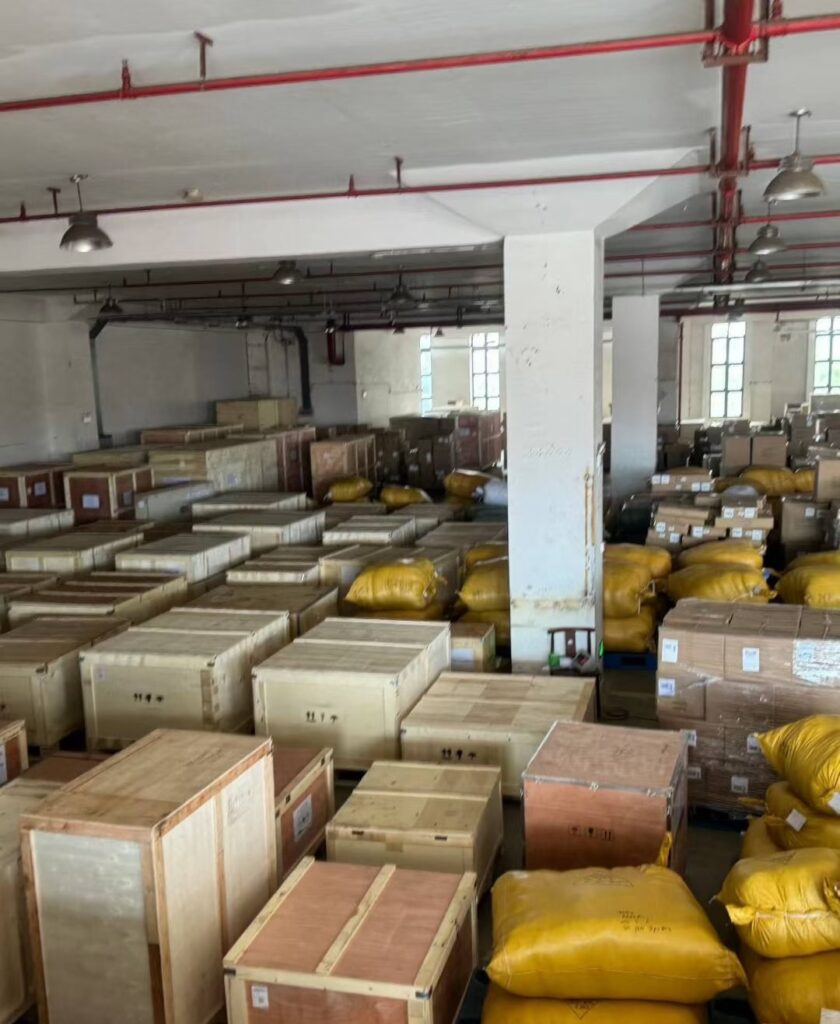
- Delivering the goods to the logistics warehouse
- Weighing and measuring the shipment
- Checking packaging and labels
For businesses purchasing from multiple factories, the forwarder may also arrange several pickups and consolidate the goods.
8. Consolidate Cargo When Appropriate
Suppose a Belarusian importer purchases goods from four Chinese suppliers:
- Supplier A: Guangzhou
- Supplier B: Shenzhen
- Supplier C: Dongguan
- Supplier D: Foshan
Instead of sending four international shipments, the importer may arrange for the goods to be collected at a consolidation warehouse.
The general process can be:
Multiple factories → China warehouse → Cargo consolidation → Export clearance → International transportation → Belarus
This can simplify supply chain management.
Whether consolidation is economical depends on the cargo volume, locations, transportation method, and warehouse charges.
9. Check Packaging Before International Transportation
Good packaging is essential for long-distance transportation.
The packaging should be appropriate for:
- Handling
- Loading and unloading
- Warehouse storage
- Transit
- Humidity exposure where applicable
- Stacking
- Mechanical impact
For fragile products, additional protection may be necessary.
For machinery and heavy equipment, reinforced packaging or wooden cases may be appropriate depending on the product and transportation method.
Packaging should also be compatible with applicable import and transport requirements.
10. Calculate Chargeable Weight
For air freight, the forwarder may calculate both actual weight and volumetric weight.
A simplified volumetric calculation for air cargo is commonly based on:
Length × Width × Height ÷ Carrier-specific volumetric factor
The actual divisor can vary by carrier and service.
For example, a carton measuring:
60 × 40 × 50 cm
has a volume of:
120,000 cm³
The chargeable weight is determined according to the applicable carrier calculation and compared with the actual gross weight.
Therefore, when requesting an air freight quotation, always provide both:
Actual weight + package dimensions
11. Complete Export Customs Procedures in China
Before the cargo leaves China, the shipment must follow applicable export customs requirements.
The necessary commercial information generally includes:
- Product description
- Quantity
- Value
- Seller information
- Buyer information
- Packing details
- Applicable customs classification information
Accurate documentation is important.
If the actual cargo differs significantly from the documents, customs or the carrier may require additional verification.
A freight forwarder can coordinate the logistics side of the export process, but the exporter should ensure that the commercial information provided is truthful and complete.
12. International Transportation to Belarus
After export procedures are completed, the cargo enters the international transportation stage.
The route depends on the selected service.
Air Freight
China → International air route → Destination/transit airport → Belarus delivery
Rail Freight
China → Rail network → Transit/border points → Belarus
Sea + Land
China → Seaport → International sea transportation → Inland transportation → Belarus
Multimodal
China factory → Truck → Rail/sea/air → Transit hub → Truck → Belarus
The actual route should be confirmed with the freight forwarder because international transportation networks and operating conditions can change.
13. Belarus Customs Clearance
When the cargo reaches the applicable customs point, import procedures need to be completed.
The importer may need to provide:
- Commercial invoice
- Packing list
- Transport documents
- Contract
- Product information
- Customs-related information
- Certificates or permits where applicable
Import duties and taxes depend on the specific product, customs classification, origin, customs value, and applicable regulations.
Do not estimate customs costs using a general percentage without checking the actual product classification and applicable rules.
14. Final Delivery in Belarus
After the necessary customs procedures are completed, the cargo can be transported to the final destination.
The destination could be:
- Minsk warehouse
- Distribution center
- Factory
- Retail warehouse
- Business address
- Other agreed commercial location
Door-to-door service can simplify this stage because the freight forwarder coordinates transportation through to the final destination.
However, the buyer should confirm exactly what the quoted door-to-door service includes.
15. How to Ship Heavy Machinery from China to Belarus
Heavy machinery requires more preparation than ordinary cartons.
Before requesting a quotation, provide:
- Equipment name
- Quantity
- Dimensions
- Gross weight
- Center-of-gravity information when relevant
- Packaging method
- Loading requirements
- Cargo value
- Pickup address
- Delivery address
The forwarder may need to evaluate:
- Loading equipment
- Truck capacity
- Rail equipment
- Container suitability
- Terminal handling
- Oversized cargo restrictions
- Final-mile delivery
For oversized machinery, the lowest basic freight rate may not represent the lowest total logistics cost.
16. How to Ship Lithium Batteries
Lithium batteries require special transportation planning.
Depending on the type of battery and transportation method, additional documentation and packaging requirements may apply.
The forwarder may request:
- Battery type
- Watt-hour rating or capacity
- SDS/MSDS
- UN information where applicable
- Product photographs
- Packaging information
- Relevant test documentation
Never describe lithium batteries simply as “electronics” or “general cargo” if they are subject to special transportation rules.
Accurate declaration is essential.
17. How to Track a China-to-Belarus Shipment
Tracking depends on the transportation method and carrier.
Depending on the service, tracking information may include:
- Warehouse receiving status
- Export clearance status
- Departure information
- Transit information
- Border processing
- Arrival information
- Customs status
- Final delivery
For commercial shipments, ask the forwarder how shipment updates will be provided before booking.
18. Common Problems and How to Avoid Them
Customs Delays
Cause: Incomplete or inconsistent documentation.
Solution: Prepare accurate documents before shipment.
Unexpected Charges
Cause: The original quotation did not clearly define included and excluded charges.
Solution: Request a detailed quotation.
Delivery Delays
Cause: Border procedures, customs inspections, carrier schedules, or other operational issues.
Solution: Build reasonable time into the purchasing plan.
Incorrect Freight Calculation
Cause: Incorrect weight or dimensions.
Solution: Provide accurate cargo measurements.
Special Cargo Rejection
Cause: The product was not declared correctly.
Solution: Provide complete product information before booking.
19. Questions to Ask Before Shipping
Before confirming your China-to-Belarus shipment, ask the freight forwarder:
- Which transportation method do you recommend?
- What route will the cargo take?
- What is the estimated transit time?
- How is the freight calculated?
- Is the quotation based on actual or chargeable weight?
- Is supplier pickup included?
- Is export customs clearance included?
- Is Belarus customs clearance included?
- Are duties and taxes included?
- Is final delivery included?
- What charges are excluded?
- Can you handle my product category?
- What documents do you need?
- How will I receive tracking information?
These questions can help the importer understand the actual service before payment and shipment.
20. Example China-to-Belarus Shipping Process
A typical commercial shipment could follow this process:
1. Buyer places an order with Chinese supplier
↓
2. Buyer provides cargo information to freight forwarder
↓
3. Forwarder confirms transportation solution
↓
4. Cargo is collected from the factory
↓
5. Cargo arrives at the China warehouse
↓
6. Cargo is weighed, measured, checked, and consolidated if necessary
↓
7. Export customs procedures are completed
↓
8. Cargo begins international transportation
↓
9. Cargo reaches the applicable Belarus customs point
↓
10. Import customs procedures are completed
↓
11. Cargo is released
↓
12. Final delivery to the buyer
This process can vary depending on the transportation method and shipment type.
Frequently Asked Questions
What is the best way to ship from China to Belarus?
There is no single best method. Air freight is generally suitable for urgent shipments, rail can be suitable for many commercial shipments, and sea plus inland transportation may be considered for large, less time-sensitive cargo.
Is rail cheaper than air freight?
Generally, rail can be more economical for larger commercial cargo, while air freight is usually more expensive per kilogram. Actual rates depend on the cargo, route, and current market conditions.
Can I ship from multiple Chinese suppliers?
Yes. Cargo consolidation can be used when operationally suitable. Several supplier orders can potentially be collected at a Chinese warehouse before international transportation.
Can I ship directly to my warehouse in Belarus?
Door-to-door services may be available. Confirm whether the quotation includes customs clearance, duties and taxes, destination charges, and final delivery.
How do I get an accurate freight quote?
Provide the pickup city, destination, product description, quantity, carton dimensions, total weight, cargo value, and preferred delivery method.
What is the most important information for a freight forwarder?
The product description, weight, volume, dimensions, origin, destination, and any special cargo characteristics are particularly important.
Conclusion
Shipping goods from China to Belarus requires coordination between suppliers, warehouses, transportation providers, customs representatives, and final-mile delivery companies.
The most suitable logistics solution depends on several factors:
- Cargo weight
- Cargo volume
- Product type
- Transportation urgency
- Budget
- Customs requirements
- Final destination
- Special handling requirements
For urgent shipments, air freight can provide speed. For many commercial shipments, rail can offer a practical balance between cost and transit time. For large, less time-sensitive cargo, sea transportation combined with inland logistics may also be considered.
The most important principle is to compare the complete logistics solution rather than only the basic freight rate.
Before booking, provide accurate cargo information and request a transparent quotation that clearly explains the route, estimated transit time, included services, excluded charges, customs responsibilities, and final delivery arrangements. This gives importers a much clearer basis for selecting a reliable China-to-Belarus shipping solution.


