
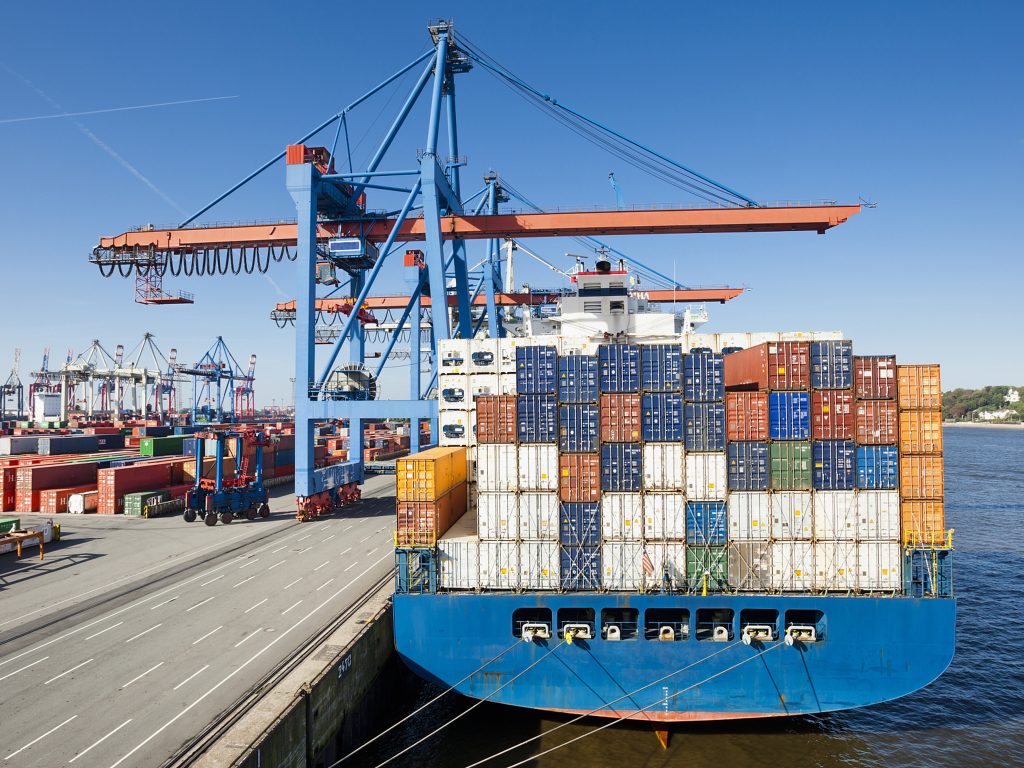
For small and medium-sized enterprises (SMEs) importing from China to Turkey, one of the most critical financial decisions isn’t about which product to buy—it’s about how to ship it. The choice between LCL (Less than Container Load) and FCL (Full Container Load) directly impacts your landed cost, inventory turnover, and even your cash flow. While the general rule of thumb is simple—”Use FCL if you have enough goods”—the reality is nuanced. With rising ocean freight rates and volatile port congestion in hubs like Ambarli and Izmir, making the wrong choice can erase your profit margins. This guide provides a granular comparison of LCL and FCL shipping on the China-Turkey trade lane, helping you determine the most cost-effective and efficient strategy for your business.
Defining the Terms: LCL vs. FCL
- FCL (Full Container Load): You rent an entire 20-foot or 40-foot container exclusively for your goods. Whether the container is 10% full or 100% full, you pay for the space.
- LCL (Less than Container Load): Your goods share container space with shipments from other importers. You only pay for the volume (cubic meters) or weight (tons) that your cargo occupies.
The Economics: How Pricing Works
The financial logic behind these two methods is fundamentally different.
FCL Pricing Structure
FCL rates are quoted as a flat fee per container.
- 20ft Container (FCL): ~$1,800 – $3,500+ (depending on season and carrier).
- 40ft Container (FCL): ~$2,800 – $5,500+.
- Inclusions: This rate usually covers port-to-port ocean freight. You must add Origin Charges (THC, Docs) and Destination Charges (THC, Demurrage, Detention).
LCL Pricing Structure
LCL is priced volumetrically.
- Rate: ~$80 – $150 per Cubic Meter (CBM).
- Minimums: Most forwarders impose a 1 CBM minimum. Even if you ship 0.5 CBM, you pay for 1 CBM.
- Inclusions: LCL quotes often include “Consolidation Fees” at the origin and “Deconsolidation Fees” at the destination. Be wary of “All-In” quotes that hide high destination handling charges.
The “Break-Even” Point
The magic number where FCL becomes cheaper than LCL usually falls between 15 and 28 CBM.
- Below 15 CBM: LCL is almost always cheaper.
- 15 – 28 CBM: The “Gray Zone.” You must calculate both options precisely.
- Above 28 CBM: FCL is almost always cheaper.
Operational Differences: Speed, Risk, and Handling
| Feature | LCL (Shared Space) | FCL (Full Container) |
|---|---|---|
| Transit Time | Slower (+5 to 10 days). Requires consolidation at origin and deconsolidation at destination. | Faster. Direct from port to port once loaded. |
| Handling | High. Goods are handled multiple times (warehouse -> container -> warehouse). | Low. Sealed at origin, opened at destination. |
| Damage Risk | Higher. Movement within the shared container and multiple touches increase risk. | Lower. Minimal handling reduces exposure. |
| Customs Clearance | Longer. If one shipment in the container is flagged for inspection, the whole container is held. | Faster. Only your goods are being inspected. |
| Flexibility | High. Ship small batches frequently. | Low. Requires enough stock to fill a container. |
| Security | Moderate. Risk of pilferage or mix-ups with other shippers’ goods. | High. Your seal is the only one on the container. |
Deep Dive: The Hidden Costs of LCL
Many importers choose LCL based solely on the per-CBM rate, only to be surprised by the final invoice. Here are the hidden costs:
- Accessorial Charges: LCL shipments often incur higher destination Terminal Handling Charges (THC) and documentation fees compared to FCL.
- Warehouse Fees: At the destination in Turkey, you pay for “Unstuffing” (removing goods from the container) and “Storage” at the consolidator’s warehouse. If you don’t pick up your goods quickly, these fees accumulate rapidly.
- Congestion Multiplier: If the port of Izmir or Ambarli is congested, FCL containers might wait, but LCL containers often wait longer because the forwarder waits until they have enough cargo to justify sending a truck.
- Bunker Adjustment Factor (BAF): While both modes have BAF, LCL rates are more sensitive to fuel surcharges as they are recalculated more frequently.
Deep Dive: The Hidden Costs of FCL
FCL isn’t without its pitfalls:
- Demurrage & Detention: This is the biggest risk. If your container sits in the port terminal too long (Demurrage) or you fail to return the empty container to the carrier on time (Detention), fees can exceed the cost of the freight itself.
- Empty Repositioning: Sometimes, returning an empty container to the carrier’s depot in Istanbul can be costly if the depot is far from your warehouse.
- Inventory Tie-up: Buying enough to fill a container ties up significant capital in inventory that might sit in a warehouse for months.
Decision Matrix: Which One Should You Choose?
Choose LCL if:
- Volume is Low: You are shipping between 1 and 15 CBM.
- Cash Flow is Tight: You cannot afford to tie up thousands of dollars in excess inventory.
- Non-Urgent: You can absorb the extra 5-10 days of transit time.
- Fragile Goods: Ironically, for very fragile goods, some shippers prefer LCL because the goods are often braced more carefully in shared containers than loose-loaded in FCLs (though proper blocking and bracing in FCL is better).
- Testing Markets: You are sending samples or testing a new product line in Turkey.
Choose FCL if:
- Volume is High: You are shipping over 15-28 CBM.
- Time is Critical: You need the fastest possible transit to meet Amazon FBA deadlines or seasonal demand.
- High-Value Goods: Jewelry, electronics, or branded apparel where security and reduced handling are paramount.
- Heavy/Dense Cargo: Metals, tiles, or machinery. Even if the CBM is low, the weight might push you into FCL territory due to “Weight Breaks.”
- Regular Schedule: You have a consistent production cycle and can forecast demand accurately.
Case Study: The Cost Comparison
Let’s compare shipping 18 CBM of furniture from Shanghai to Istanbul. Option A: LCL
- Volume: 18 CBM
- Rate: $110/CBM
- Ocean Freight: $1,980
- Origin Charges: $250
- Destination Charges (Unstuffing, THC): $450
- Total Estimated Cost: $2,680
- Transit Time: 38 days
Option B: 20ft FCL
- Volume: 18 CBM (fits comfortably)
- Rate: $2,400 (flat fee)
- Origin Charges: $350
- Destination Charges (THC, Docs): $300
- Total Estimated Cost: $3,050
- Transit Time: 30 days
Analysis: In this scenario, LCL is $370 cheaper but 8 days slower. If the goods are not urgent, LCL saves money. If the goods are for a trade show next month, FCL is worth the premium.
Hybrid Strategies: The “Half-Container” Approach
Some forwarders offer “Shared FCL” services (similar to LCL but using a dedicated truck/container for the Turkey leg) or allow you to “Top-Up” an FCL. If you have 10 CBM, you might find another shipper with 10 CBM to split a 20ft container. This offers the security of FCL with the pricing of LCL, though it requires careful coordination.
Impact on E-commerce (Amazon FBA)
For Amazon Turkey sellers, the choice is critical:
- FCL: Preferred for Private Label products with high velocity. It ensures you have enough stock to avoid “Out of Stock” penalties. Palletized FCL shipments are easier for Amazon to receive.
- LCL: Suitable for Retail Arbitrage or Small Niche sellers who only move a few boxes a month. However, ensure your forwarder provides Palletizing Services in Turkey, as Amazon prefers palletized deliveries.
Conclusion
The LCL vs. FCL debate is not about which is “better”—it is about which is right for your specific shipment. LCL offers flexibility and lower upfront costs for small volumes, making it the lifeline for startups and SMEs. FCL offers speed, security, and economies of scale for established businesses moving significant volume. Before booking your next shipment from China to Turkey, grab a calculator. Measure your cargo accurately, check the current rates for both modes, and factor in the “hidden costs” of time and risk. By treating your logistics as a strategic component of your business—rather than just a cost—you can ensure that your shipping choice enhances your profitability rather than diminishing it.
Frequently Asked Questions (FAQ)
Q1: What is the absolute minimum volume required for LCL?A: Most forwarders have a 1 CBM (Cubic Meter) minimum. If you ship less than 1 CBM (e.g., 0.3 CBM), you will still be charged for 1 CBM. There is technically no minimum weight, but rates are calculated based on “Chargeable Weight” (1 CBM = 1,000 kgs). If your 0.5 CBM shipment weighs 800 kgs, you pay for 0.8 CBM; if it weighs 1,200 kgs, you pay for 1.2 CBM. Q2: Can my LCL shipment be delayed because of someone else’s paperwork?A: Yes. This is a significant risk. If your goods are consolidated with other shippers’ cargo, and one of those shippers has incorrect documentation or fails to pay their customs duties, the entire container can be held by Turkish Customs. This is known as the “Contamination Effect.” FCL avoids this entirely. Q3: Is it easier to get a “Blue Line” (fast clearance) with FCL or LCL?A: Statistically, FCL shipments have a higher chance of getting the “Blue Line” (documentary check only) because they represent a single importer with a single set of documents. LCL shipments involve multiple importers, increasing the statistical probability that one of them might trigger a “Red Line” (physical inspection) for the whole container. Q4: How do I measure my goods to know if I need LCL or FCL?A: Measure the Length x Width x Height of every carton in meters. Multiply these three numbers together to get the CBM per carton. Multiply by the number of cartons.
- Example: 50 cartons, each 0.5m x 0.5m x 0.5m = 0.125 CBM per carton. Total = 50 x 0.125 = 6.25 CBM. (This fits easily in LCL).
- Rule of Thumb: A 20ft container holds about 28-30 CBM (practically, not theoretically). A 40ft container holds about 58-60 CBM.
Q5: Can I load LCL shipments onto pallets?A: Yes, and it is often recommended. Palletizing your LCL cargo makes it easier and safer to handle at the consolidator’s warehouse. However, remember that the pallet itself occupies volume. If you palletize, measure the dimensions of the pallet (including overhang) to calculate the CBM accurately. Q6: What is “CFS” in LCL shipping?A:CFS (Container Freight Station) is the warehouse where LCL goods are consolidated (stuffed into a container) at the origin and deconsolidated (unstuffed) at the destination. You will often see “CFS Charges” on your invoice, which cover the labor for stuffing/unstuffing and the use of the warehouse facility. Q7: Is insurance more expensive for LCL than FCL?A: The premium rate (percentage of value) is usually the same. However, because LCL cargo is handled more frequently, the risk of damage is statistically higher. Insurers might scrutinize LCL claims more closely. Regardless of the mode, always insure your shipment for 110% of its CIF value.


