Moving capital equipment to Kuwait—whether for the oil & gas sector, infrastructure projects, or industrial plants—is not a freight forwarding job; it is a project engineering task. Standard containers do not fit turbines, transformers, or modular buildings. This article outlines the technical execution of Breakbulk, Roll-on/Roll-off (Ro-Ro), and Frame Container solutions for the Kuwaiti market.
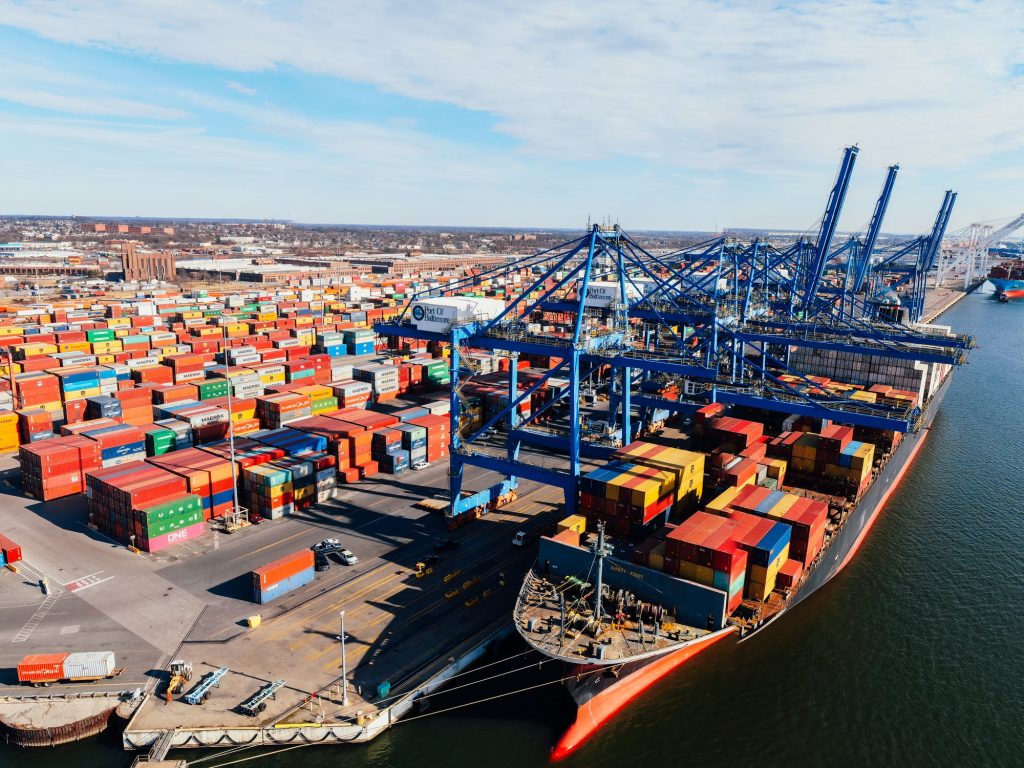
1. The Three Pillars of Heavy-Lift Logistics
| Transport Mode | Best For | Technical Challenge | Port of Entry (Kuwait) |
|---|---|---|---|
| Flat Rack / Platform | Heavy machinery, generators, oversized tanks. | Center of Gravity (CoG) calculation; lashing certification. | Shuwaikh (Heavy-Lift Berth) |
| Breakbulk / LO-LO | Large structures, non-containerized cargo. | Lift-point engineering; weather-dependent operations. | Shuaiba (North Port) |
| Ro-Ro / Mafi Trailer | Wheeled equipment (trucks, cranes, rail cars). | Axle load limits; ramp angle compatibility. | Shuwaikh (Ro-Ro Ramp) |
2. Engineering the Move: Beyond Paperwork
For project cargo, the Bill of Lading is secondary to the Stowage Plan and Lashing Calculation Report.
- Center of Gravity (CoG): For Flat Racks, the CoG must be precisely calculated. An incorrect CoG leads to container stack collapse or vessel instability.
- Lifting Lugs: Breakbulk cargo must have certified lifting points. We conduct a Pre-Shipment Survey to verify the structural integrity of these points.
- Route Survey: Before the vessel arrives, we perform a “Route Survey” from the port to the final site in Kuwait (e.g., Al Zour Refinery or West Kuwait Oil Fields) to check bridge heights, road widths, and turning radii.
3. Kuwait-Specific Regulatory Hurdles
Project cargo faces unique scrutiny:
- Ministry of Public Works (MPW) Permits: Over-dimensional loads (width >3m, height >4m) require special road movement permits from MPW.
- KOC/KNPC Approvals: If delivering to oil fields, the consignee must coordinate with Kuwait Oil Company (KOC) or KNPC for site access windows.
- Customs Valuation of Machinery: Used equipment is heavily scrutinized. A Third-Party Valuation Report is often required to prove the depreciated value.
4. Case Study: 120-Ton Transformer Move
A client needed to ship a 120-ton power transformer from Shanghai to Shuaiba.
- Solution: Used a 40ft Flat Rack with reinforced base. Secured with high-tensile lashing (30mm diameter) and wooden chocking.
- Execution: Vessel arrival coordinated with high tide to maximize under-keel clearance at Shuaiba.
- Outcome: Offloaded using a 200-ton mobile crane directly onto a multi-axle hydraulic trailer for final delivery to the substation.
FAQ: Technical Deep Dive into Project Cargo
Q1: What is the maximum weight a standard Flat Rack can handle?A 20ft Flat Rack has a payload capacity of approximately 31,870 kg (31.87 tons). A 40ft Flat Rack can handle up to 40,000 kg (40 tons). For heavier items, we use Platform Containers or direct Breakbulk on the vessel’s deck.Q2: How do you handle “Live” machinery (with fluids/oil)?Kuwait Customs requires that all fluids be drained or contained. For “Running Machinery” (like generators), we must provide an Environmental Protection Agency (EPA) certificate confirming no hazardous leaks. The engine must be “cold” (non-operational) during transport.Q3: What is a “Mafi Trailer” and why is it used in Kuwait?A Mafi trailer is a low-bed trailer without wheels that is pulled by a prime mover. It is ideal for heavy, non-wheeled cargo. In Kuwait, Mafi trailers are the standard for moving heavy project cargo from the quay to the storage yard due to their low deck height.Q4: Are there restrictions on the height of OOG cargo?Yes. The maximum height for a Flat Rack passing under the Shuwaikh port gantry cranes is 4.5 meters. Anything taller requires special lifting gear or side-loading directly from the vessel.Q5: How far in advance should I book space for project cargo?At least 45-60 days. Heavy-lift vessels have limited schedules. Booking late often results in “spot market” rates that are 2-3 times the standard rate, plus the risk of no available crane capacity at the destination port.
Conclusion: Project logistics to Kuwait demand a forwarder who functions as a civil engineer and a customs broker simultaneously. The key to success is pre-planning and technical documentation. If you have a project requiring specialized transport, provide the equipment drawings and weight specifications for a feasibility study.


