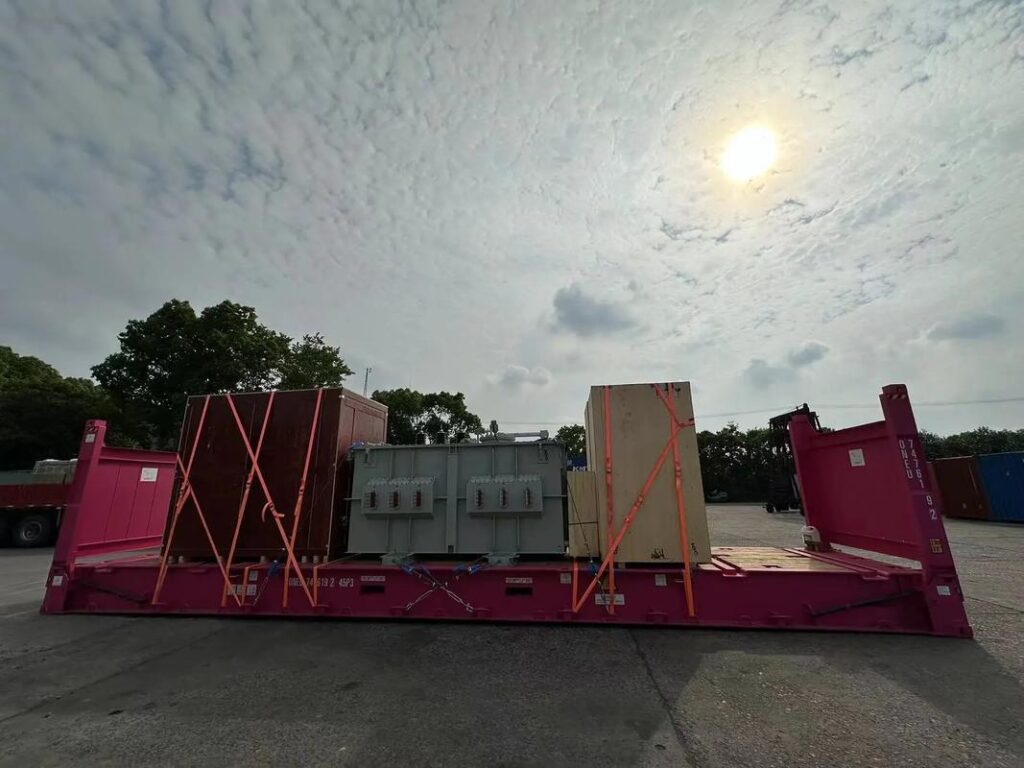
The 2026 Shanghai Freight Forwarding Bible: Mastering LCL, FCL, and DG Ocean Bookings Published: April 29, 2026 Industry: Global Logistics & Supply Chain Management Location Focus: Shanghai Port (CNSHA) & Yangtze River Delta Reading Time: 12 Minutes In the high-stakes arena of global trade, Shanghai Port remains the undisputed titan. Handling over 49 million TEUs annually in 2026, it is the beating heart of the world’s manufacturing engine. Yet, for importers and exporters, navigating the complexities of shipping from Shanghai—whether it’s a small LCL consolidation, a massive FCL booking, or a highly regulated Dangerous Goods (DG) shipment—has become increasingly complex. The era of simply calling a forwarder and asking for a price is dead. In 2026, success depends on understanding digital integration, regulatory compliance, and the hidden costs of terminal operations. This 3000-word guide provides a definitive roadmap for mastering Shanghai ocean freight, offering insights that go far beyond generic online advice.
🌍 Part 1: The 2026 Shanghai Port Ecosystem
To choose the right forwarder, you must first understand the terrain. Shanghai is not a single port; it is a multi-terminal behemoth.
The Two Pillars: Yangshan Deep Water Port vs. Waigaoqiao
- Yangshan (Phase IV & V): Fully automated and AI-driven. In 2026, this is the primary hub for mega-vessels (24,000+ TEU) on the Europe and Trans-Pacific routes. Key Advantage: Faster crane speeds, but stricter gate-in cut-offs.
- Waigaoqiao (WaiGaoQiao): Handles a mix of regional and feeder services. Key Advantage: Better access for factories in Jiangsu and the northern Yangtze Delta.
The 2026 Game Changer: “Green Channel” Prioritization
Shanghai Customs has fully implemented a Carbon Footprint Scoring System for exporters. Companies with high ESG (Environmental, Social, and Governance) scores receive expedited customs clearance. A top-tier forwarder in 2026 doesn’t just file paperwork; they help you optimize your shipment data to qualify for these “Green Channels,” cutting clearance times from hours to minutes.
📦 Part 2: LCL vs. FCL – The 2026 Cost-Benefit Analysis
The decision between Less than Container Load (LCL) and Full Container Load (FCL) is no longer just about volume. It’s about risk tolerance and supply chain velocity.
1. LCL (Less than Container Load): The Consolidation Game
Ideal for shipments between 1 and 15 CBM.
- The 2026 Reality: LCL pricing is now based on “Volume Weight” (Volumetric Weight) rather than just physical weight. Forwarders use AI to calculate the most efficient loading patterns.
- The Hidden Cost: CFS (Container Freight Station) Congestion. In 2026, Shanghai’s CFS warehouses are operating at 95% capacity. A forwarder without their own bonded CFS space will face delays of 2-3 days.
- When to Choose: For high-value, low-volume electronics or fashion goods where inventory holding costs are high.
2. FCL (Full Container Load): The Efficiency King
Ideal for shipments above 15 CBM.
- The 2026 Reality: The 40HQ remains the standard, but the 45HQ is gaining traction for light, bulky cargo.
- The Hidden Cost: Demurrage & Detention (D&D). Shanghai has some of the strictest D&D policies in the world. If your forwarder cannot guarantee a “Free Time” of at least 14 days, you are at risk.
- When to Choose: For industrial machinery, furniture, or any shipment where cargo integrity and speed are paramount.
☣️ Part 3: Dangerous Goods (DG) Shipping from Shanghai
Shipping DG from Shanghai in 2026 is a high-stakes operation. The Shanghai Maritime Safety Administration (MSA) is the strictest in the world. A forwarder claiming to “accept all DG” is lying unless they have the following:
Mandatory 2026 DG Qualifications:
- Class-Specific Licensing: A forwarder must have specific permits for the classes they handle (e.g., Class 3 Flammables, Class 8 Corrosives).
- DGSA Certified Staff: Every DG shipment must be supervised by a Dangerous Goods Safety Advisor (DGSA). Ask for their certificate number.
- Approved Warehousing: The forwarder must have access to a Class 1-9 compliant warehouse outside the main port area. You cannot store DG at the standard terminal.
The “UN 38.3” & Battery Shipping Crisis
Lithium batteries (UN3480/UN3091) face the most scrutiny. In 2026, the 30% State of Charge (SoC) rule is strictly enforced. Furthermore, Shanghai Customs now requires a “Battery Passport”—a digital record of the battery’s composition and recycling potential. If your forwarder doesn’t know what a Battery Passport is, do not ship with them.
💰 Part 4: The 2026 Pricing Breakdown (Shanghai Context)
Here is a transparent look at what a legitimate Shanghai forwarder should quote you. Note the local charges specific to Shanghai.
| Cost Component | LCL (Per CBM) | FCL (40HQ) | Notes |
|---|---|---|---|
| Ocean Freight | $85 – $150 | $4,500 – $6,500 | Varies by destination (USWC vs. N. Europe) |
| Shanghai THC | $15 – $25 | $150 – $180 | Higher for DG shipments |
| Documentation | $35 – $50 | $50 – $75 | Includes ENS/AMS filing |
| Customs Clearance | $30 – $45 | $45 – $60 | Faster with “Green Channel” |
| CFS (LCL Only) | $20 – $35 | N/A | The 2026 Bottleneck |
| DG Surcharge | $50 – $100 | $300 – $800 | Mandatory for hazardous cargo |
Warning: If a quote is missing the “Emergency Risk Surcharge (ERS)” for routes passing through conflict zones, the forwarder is either hiding costs or not insured.
🚢 Part 5: The Booking Workflow (Step-by-Step)
A professional Shanghai forwarder follows this 2026-standard workflow:
Phase 1: The Digital Pre-Booking
- Space Allocation: The forwarder uses the carrier’s API to book space. In 2026, carriers like COSCO and MSC allocate 70% of their space via automated systems. Human intervention is only for overflow.
- SO Issuance: The Shipping Order (SO) is issued digitally with a QR code for gate-in.
Phase 2: The Physical Movement
- Trucking & Gate-in: The container is picked up and delivered to the terminal. 2026 Tech: Forwarders use “Smart Gate Pass” systems that predict terminal congestion and reroute trucks to less busy gates.
- VGM Submission: Verified Gross Mass must be submitted via the terminal’s TOS (Terminal Operating System) exactly 24 hours before cut-off. No VGM = No loading.
Phase 3: Customs & Sailing
- Export Declaration: The forwarder submits the declaration to Shanghai Customs. 2026 Update: Customs now cross-references the “Manufacturer Code” on the carton labels with the declaration. Mismatches cause automatic holds.
- Manifest Cut-off: The forwarder submits the final manifest. Any changes after this point incur a $200+ amendment fee.
🛡️ Part 6: How to Vet a Shanghai Forwarder in 2026
The market is saturated with “Ghost Forwarders” who resell space. Use this checklist:
- Ask for their “NVOCC” Certificate: This is the basic license to operate. If they don’t have it, they are a broker.
- Check their Terminal Access: Do they have a direct contract with Shanghai International Port Group (SIPG)? Or do they rely on third-party terminals? Direct access means faster problem resolution.
- The “DG Audit” Test: Ask them to explain the difference between IMDG Code Amendment 41-22 and 42-24. If they can’t, they are not qualified for DG.
- Insurance Verification: Ensure they carry “Errors & Omissions” (E&O) insurance specifically covering DG misdeclaration. A standard cargo policy won’t cover a hazmat incident.
⚠️ Part 7: Red Flags & Risk Mitigation
The “Rolled Cargo” Nightmare
Shanghai is the most likely port for cargo to be “rolled” (postponed) due to overbooking. In 2026, the only way to avoid this is to pay a “No-Roll Guarantee Fee” (usually $150-$300). It’s worth it.
The “Split Customs” Problem
If your factory is in Jiangsu but you ship from Shanghai, you might face “Split Customs” inspections. A good forwarder will use the “Yangtze River Barge” service to move goods to Shanghai without triggering multiple inspections.
The “Demurrage” Trap
Shanghai terminals are strict. If your container is not picked up within the free time, the D&D fees accumulate at $150-$300 per day. Ensure your forwarder provides “Live Tracking” so you know exactly when your container is available for pickup.
🚀 Part 8: Future-Proofing Your Shanghai Logistics
Looking ahead to late 2026 and 2027, the smartest shippers are adopting these strategies:
- The “Ningbo Diversion”: For non-urgent shipments, using Ningbo Port instead of Shanghai can save 15% on THC and avoid congestion.
- AI-Powered Routing: Use forwarders who offer “Dynamic Routing”—if the Shanghai terminal is congested, the system automatically reroutes your cargo to Ningbo or even Qingdao via barge.
- Digital Twins: Leading forwarders now provide a “Digital Twin” of your container, showing you the temperature, humidity, and shock levels inside the container in real-time via IoT sensors.
🏁 Conclusion: Your 2026 Shanghai Strategy
Shipping from Shanghai in 2026 is not just about moving boxes; it’s about managing data, compliance, and risk. Whether you need LCL consolidation, FCL space, or specialized DG handling, the key is to partner with a forwarder who is technologically advanced and transparently compliant. Do not choose the cheapest quote. Choose the partner who provides the most robust infrastructure and the clearest communication. Ready to optimize your Shanghai supply chain? Stop worrying about rolled cargo and customs holds. Partner with a logistics provider that understands the unique demands of the world’s busiest port.


