Shipping goods from China to South Korea involves navigating a unique regional logistics system. While the geographical distance is incredibly short, miscalculating how Less than Container Load (LCL) volumes are charged, messing up your tariff declarations, or misunderstanding how the “last mile” works in Korea can turn a simple shipment into an expensive logistical nightmare.
To help you seamlessly navigate the logistics chain, here is a definitive FAQ guide breaking down the mechanics of LCL shipping, South Korean tariffs, and destination port delivery.
1. The Mechanics of LCL (Less than Container Load) Shipping
Q1: How exactly is the volume and weight calculated for China-to-Korea LCL?
LCL freight on the China-Korea line is priced based on Revenue Tons (RT). This means the shipping line will charge you based on whichever is greater: the total volume in Cubic Meters (CBM) or the total weight in Tons (1,000 kg).
- The Ratio: The standard industry conversion ratio for sea freight is 1 CBM = 1,000 kg.
- Example A (Volume-Heavy): You are shipping 3 CBM of plastic toys that weigh 500 kg. Since 3 CBM is greater than 0.5 tons, you are billed for 3 RT.
- Example B (Weight-Heavy): You are shipping 1 CBM of heavy iron bolts that weigh 1,500 kg (1.5 tons). Since 1.5 tons is greater than 1 CBM, you are billed for 1.5 RT.
Q2: What is a “Min Charge” in LCL?
Most freight forwarders operating the China-Korea route enforce a 1 CBM minimum charge. If your total shipment volume is only 0.4 CBM and it weighs 100 kg, you will still be billed for a full 1 CBM of ocean freight and destination terminal handling fees. If you have multiple tiny parcels, it is always more economical to consolidate them into a single larger box before booking space.
2. Decoding South Korean Tariffs and Taxes
Q3: How do I eliminate the standard 8% South Korean import duty?
South Korea’s standard import tariff for general manufactured goods is 8%. However, because of the China-Korea Free Trade Agreement (CKFTA), thousands of product categories qualify for a reduced tariff or a complete 0% duty exemption.
To legally claim this 0% rate, your Chinese factory or forwarder must apply for a formal China-Korea FTA Certificate of Origin (Form K) through China Customs or the China Council for the Promotion of International Trade (CCPIT) before the ship sails. This document must be transmitted electronically to your Korean buyer’s customs broker to clear the shipment under the preferential tariff rate.
Q4: How is the South Korean Import VAT calculated?
Every commercial shipment entering South Korea is subject to a flat 10% Value Added Tax (VAT), regardless of whether the tariff duty is exempted by the FTA.
The Calculation Formula:
- CIF Cargo Value includes the actual cost of your goods, the domestic Chinese trucking, export clearance, and the ocean freight across the sea.
- If you are a business importer registered in South Korea, this 10% VAT is generally refundable or can be used to offset your local corporate tax liabilities later.
3. Port Handling & Last-Mile Destination Delivery
Q5: What happens to my cargo after it docks at Incheon or Busan?
Once the ship docks, the operational steps depend heavily on whether you shipped via FCL or LCL:
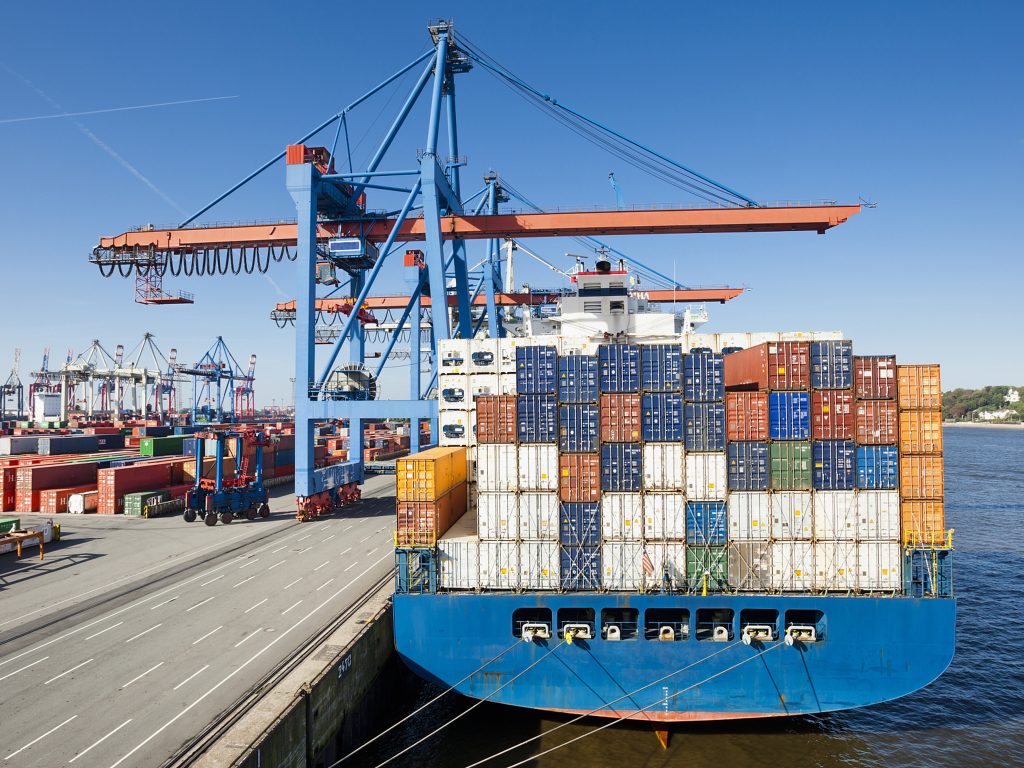
- FCL Flow: The full container is lifted off the ship directly onto the terminal yard. Once your broker transmits the customs approval, a container truck picks up the entire steel box and drives it straight to your factory or warehouse.
- LCL Flow: The container is moved from the ship to a local CFS (Container Freight Station) warehouse inside the port zone. Workers cut the seal and manually unload (de-consolidate) your pallets alongside goods belonging to other importers. Your local delivery truck can only pick up your cargo after this manual sorting and customs clearance are completed.
Q6: How does the “Last-Mile” delivery work inside South Korea?
South Korea boasts one of the most efficient domestic distribution networks in the world. Once your cargo clears the port gates at Incheon, Pyeongtaek, or Busan, you have three primary choices for land delivery to your final destination:
| Delivery Channel | Best For | Operational Reality |
|---|---|---|
| Local Courier (CJ Logistics, Hanjin, Lotte) | Small boxes, cartons, individual e-commerce parcels under 30 kg. | Incredibly fast. Parcels clearing Incheon customs in the morning are usually delivered anywhere in mainland Korea by the next afternoon. |
| Kyungdong Delivery (경동택배 / Specialized Cargo) | Oversized pallets, crates, heavy goods, or industrial items up to 500 kg. | The gold standard for heavy B2B logistics in Korea. They utilize forklifts and tail-lift trucks to handle bulky items safely at lower rates than a dedicated truck. |
| Dedicated Truck (1-Ton Bongo, 5-Ton, or Container Chassis) | Full container loads, massive machinery, or precise time-sensitive assembly line deliveries. | Direct point-to-point hauling from the port terminal straight to your warehouse loading dock. |
Summary Checklist for a Flawless Delivery
To ensure your China-to-Korea logistics pipeline operates smoothly without unexpected costs:
- Always confirm your billing units (RT) with your forwarder to verify whether your cargo is volume-heavy or weight-heavy.
- Ensure your Form K FTA Certificate is issued with 100% accurate matching HS codes to wipe out the 8% import duty.
- Choose the right last-mile channel—don’t pay for a dedicated truck if Kyungdong Cargo can deliver your pallet for a fraction of the price.


